

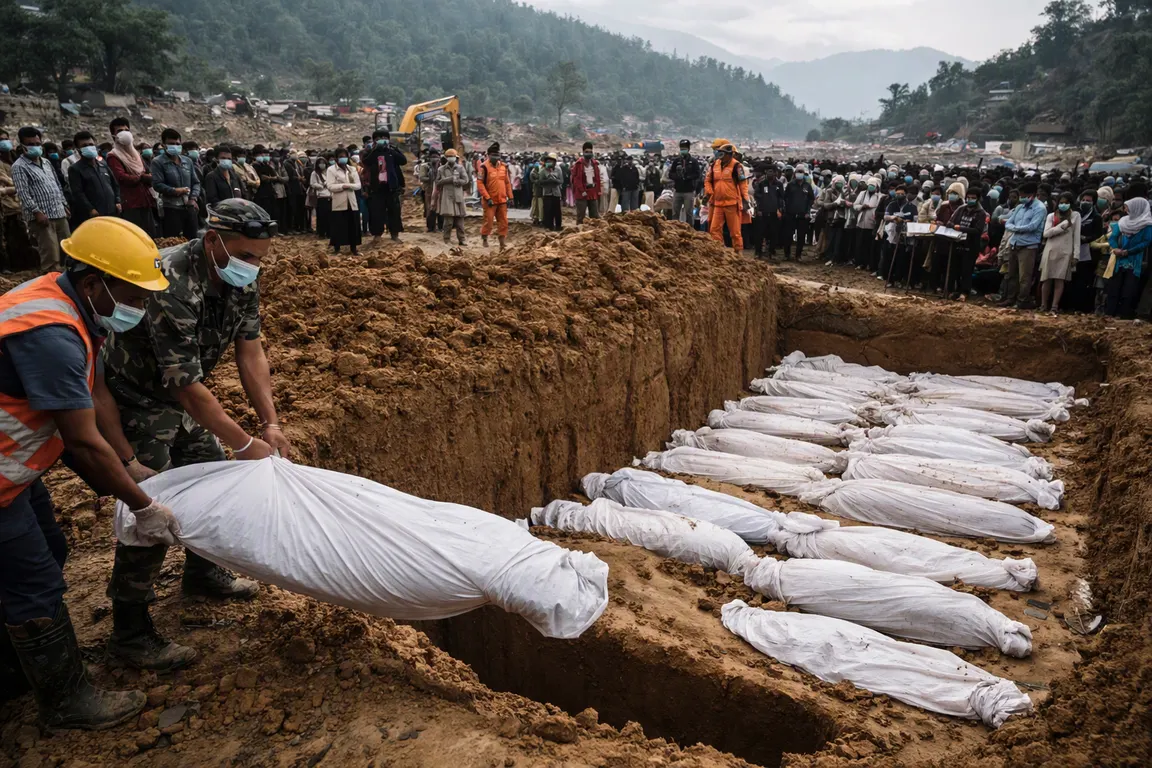
More than a week after Nepal flash floods swept through the central and eastern river valleys, the confirmed death toll has risen above 1,000. Authorities are interring bodies in mass graves, while DNA samples and photographs are being collected to identify the dead. Rescue teams continue searching for thousands of missing people, including roughly 600 workers trapped in flooded hydropower stations.
The floods began in early June, inundating low‑lying communities, sweeping away homes, roads and bridges. In the hardest‑hit districts, water rose to chest height within hours, carrying residents downstream and overwhelming local shelters. The prime minister’s office reports that more than 11,000 people have been rescued, but the exact number of missing remains unclear. Both NBC News and The Guardian note that “thousands” are still unaccounted for.
With traditional cemeteries full, the government has designated several sites for mass burials. Families are being asked to submit DNA samples and photographs to a central identification task force, a step described by The Guardian as essential for closure and official death registration. The army and aid groups have erected temporary bridges, reconnecting isolated villages and allowing relief supplies and medical teams to reach areas cut off for days.
Humanitarian agencies warn that women and girls face heightened risks. UN News highlights limited access to reproductive health services, increased vulnerability to gender‑based violence, and disrupted sanitation that could spur disease outbreaks. Aid groups are prioritising clean water, sanitary kits and gender‑sensitive psychosocial support, but logistical bottlenecks persist as power and communications are only partially restored.
The flooding also threatens Nepal’s energy outlook. Hydropower supplies roughly 90 % of the country’s electricity, and the inundated plants represent a significant loss of capacity. Engineers are assessing damage to turbines, transmission lines and spillways, while the government weighs repair costs against the need for more resilient infrastructure. Prolonged outages could ripple through regional markets that depend on Nepal’s power exports.
The disaster has revived calls for a review of disaster‑risk budgeting and infrastructure standards. Experts suggest that stronger early‑warning systems, flood‑plain zoning and reinforced river‑bank protections could reduce future loss of life. For now, the priority remains locating survivors, confirming identities and providing basic services to the displaced.
As Nepal grapples with its deadliest flood in recent memory, the speed of identification efforts, the effectiveness of temporary shelters, and the ability of authorities to rebuild bridges and power lines will shape the next phase. The crisis underscores the need for lasting policy reforms that protect vulnerable populations and safeguard critical infrastructure from similar events in the future.