

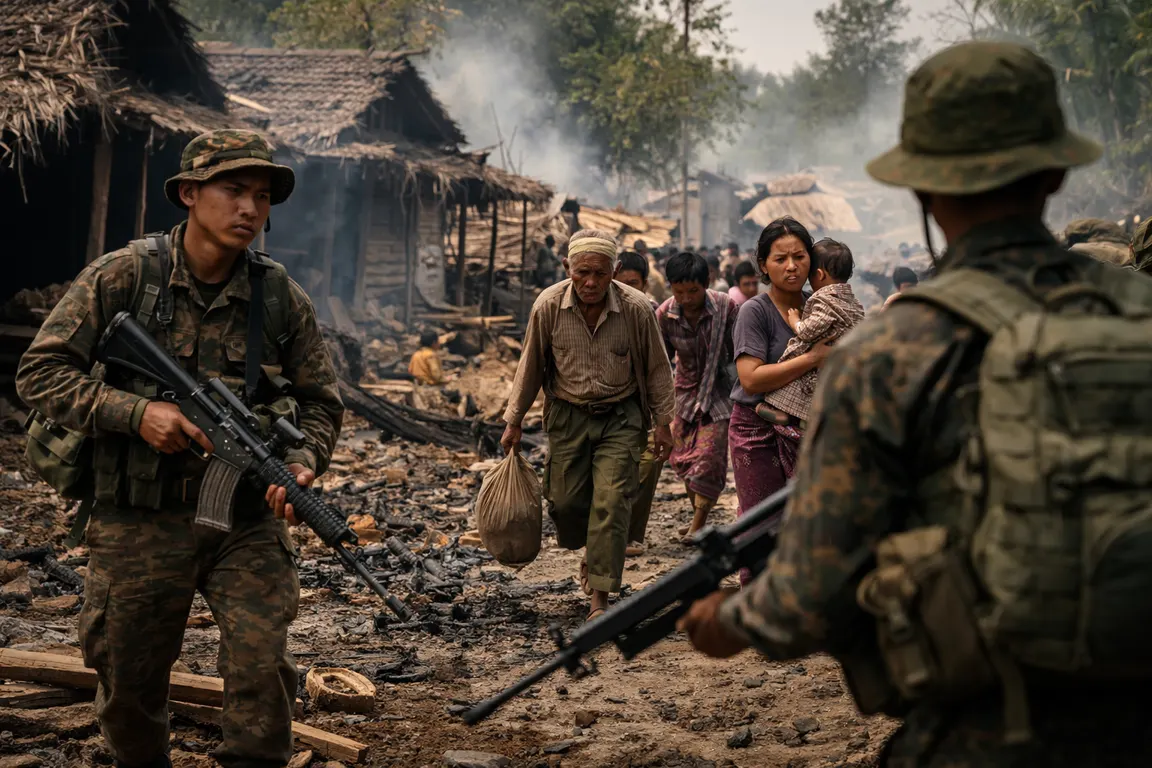
Myanmar's civil war has reached a crisis point, with the highest monthly civilian death toll since the conflict began in 2021. The fighting is taking place in Myanmar's isolated heartland, where rebel fighters are outgunned and undermanned. According to reports, the conflict has resulted in a significant increase in civilian deaths.
The conflict started in 2021, and since then, it has escalated, with the recent month experiencing the highest civilian death toll. The international community's attention has been diverted from the Myanmar conflict due to other global conflicts, such as those in Ukraine, Gaza, and Lebanon. As a result, the situation in Myanmar has received relatively little attention, despite the growing humanitarian crisis.
Civilians in Myanmar are bearing the brunt of the conflict, with a significant increase in death tolls. The conflict is likely to have long-term effects on the country's economy and stability. Reports from the New York Times, including those from correspondent Hannah Beech, have provided a glimpse into the chaotic war situation. Beech has reported from the center of the armed resistance movement in Myanmar, highlighting the severity of the crisis.
The Southeast Asian nation is experiencing a chaotic war situation, with civilians severely affected by the conflict. The recent surge in violence has led to a significant increase in civilian casualties, with many more displaced or affected by the fighting. The question remains: what will be the international community's response to the crisis in Myanmar, and how will it impact the country's future?
The crisis in Myanmar is a complex issue, with deep-rooted causes and far-reaching consequences. The international community's response will be crucial in determining the outcome of the conflict and the future of the country. The people of Myanmar are in dire need of assistance, and it is the responsibility of the international community to provide it.