

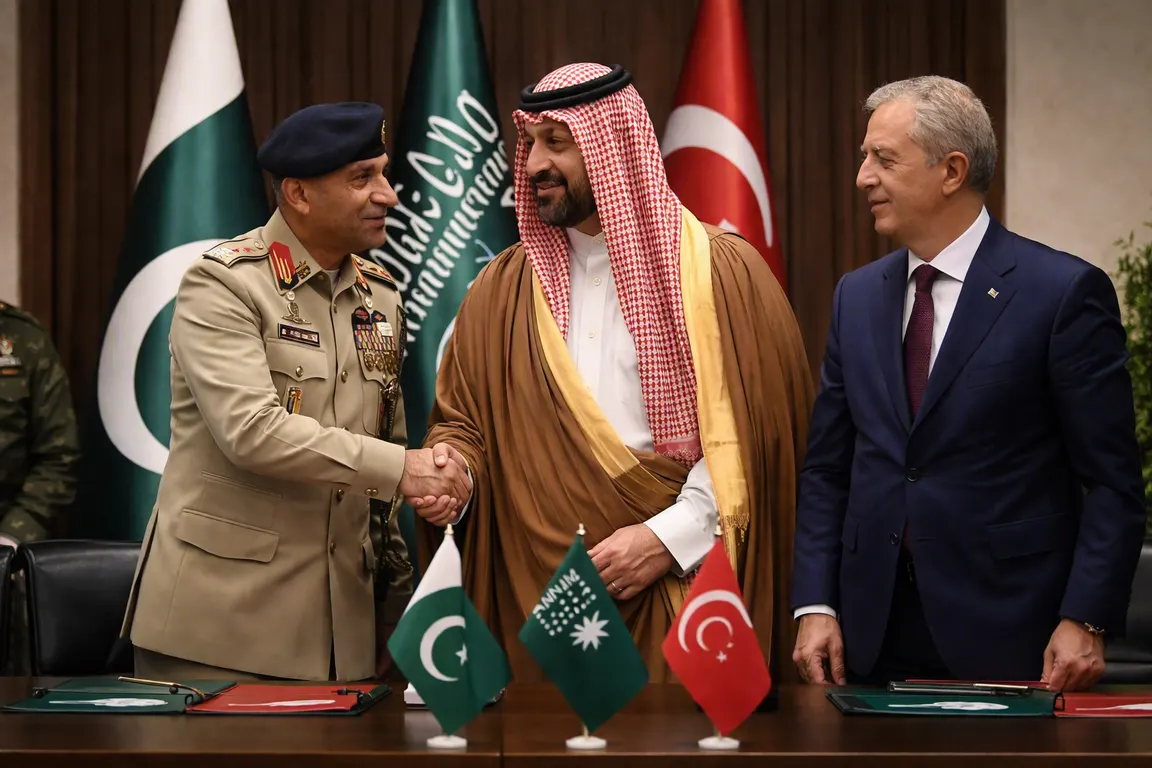
A new defence pact between Pakistan, Saudi Arabia, and Turkiye has sparked questions about its potential impact on US strategy in the Middle East. The agreement, which does not specify an adversary, is widely seen as a response to regional security concerns, including Iran's influence. As the Middle East's geopolitical landscape continues to shift, this new defence agreement raises important questions about the future of regional alliances and US influence.
The pact's details and implications are still being debated among analysts, with some suggesting it could precipitate a larger strategic shift in the region. Others argue it reinforces US goals in the Middle East, particularly in containing Iran's influence. Saudi Arabia's pursuit of defence ties with Pakistan and Turkiye may also signal a desire to reduce its reliance on the US.
The potential consequences of this pact are far-reaching, with regional countries, including Iran, and the US likely to be affected. As the situation unfolds, one key question is how the US will respond to this new alliance. The US may need to reassess its alliances and strategies in the Middle East, particularly in light of Saudi Arabia's growing defence ties with Pakistan and Turkiye.
Analysts are divided on the pact's implications, with some arguing it will change US strategy and others believing it will have little impact. The uncertainty surrounding the pact's details and implications makes it difficult to predict its exact consequences. Regional security concerns continue to escalate, and the Pakistan-Saudi-Turkiye defence pact has significant implications for the future of the Middle East.
As the US considers its next steps in the region, it will need to carefully weigh its options. The pact's impact on US goals in the Middle East, including containing Iran's influence, will be closely watched. With the pact's details and implications still emerging, one thing is clear: the US will need to navigate this new development carefully to maintain its influence in the region.