

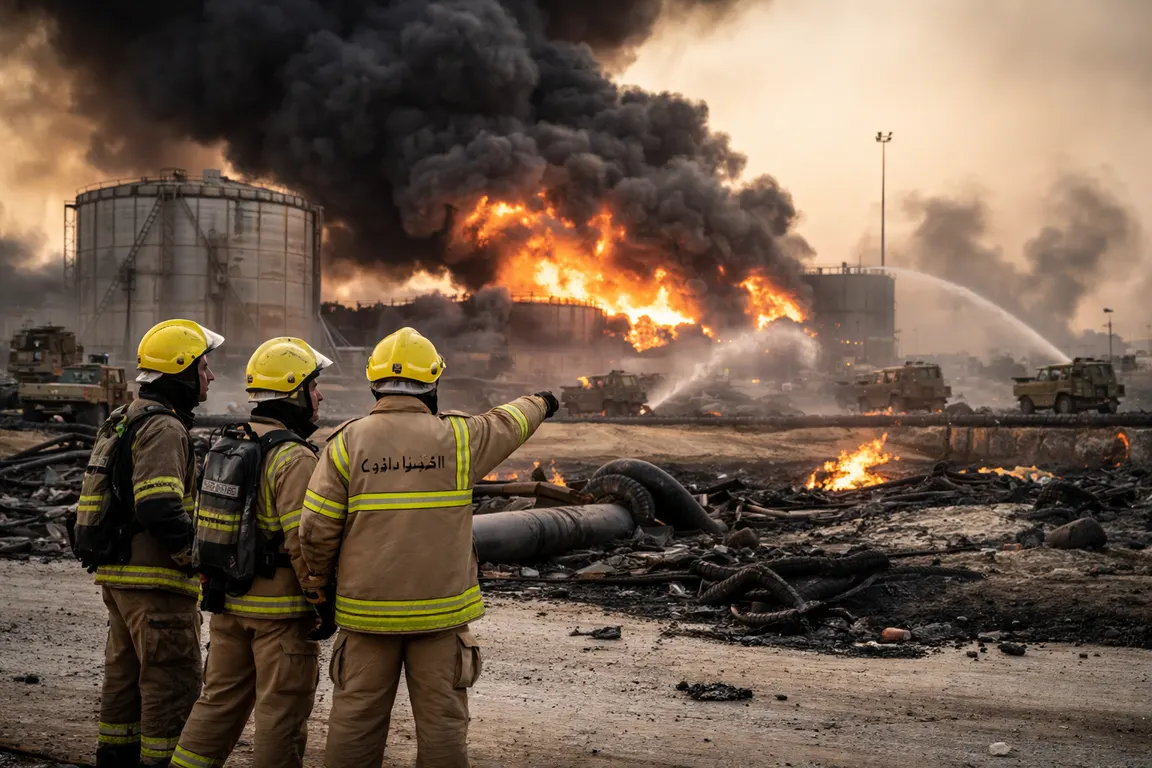
The recent attacks on Saudi energy sites and US bases in the Middle East have raised fears of a wider Middle East conflict, prompting a surge in oil prices. The conflict escalated after the US and Saudi Arabia conducted joint strikes on Iran-backed militants in Iraq, following which Iran launched missiles at a US base in Jordan, which were intercepted.
The attacks have disrupted oil supplies, with the Strait of Hormuz effectively closed, and Brent crude oil prices have risen by over 4% due to the escalating conflict. This development has significant implications for the global economy, as the Gulf monarchies are racing to secure funding for infrastructure projects that can help them weather the storm. A record $112 billion in bonds has been issued so far this year to support these efforts.
The United Arab Emirates has sold $30.3 billion in dollar- or euro-denominated bonds this year, a record pace, as the country seeks to future-proof its economy against a potential Hormuz shutdown. The US has intercepted Iranian ballistic missiles aimed at American forces in Jordan, while Iran has denied any link to projectiles fired from other countries at targets in Saudi Arabia.
The conflict is affecting global oil prices, with potential implications for the economy and people's livelihoods, particularly in the Middle East. Other countries, such as China and the US, are responding to the conflict, with their interests in the region hanging in the balance. As the situation unfolds, the next step will be to watch how the Gulf monarchies' infrastructure projects progress, and whether they can mitigate the risks of the Strait of Hormuz closure.
The potential long-term implications of the conflict for the global energy market and regional stability remain uncertain. The closure of the Strait of Hormuz has significant consequences for global oil supplies, and the ability of the Gulf monarchies to adapt to this new reality will be crucial in determining the outcome of the conflict.