

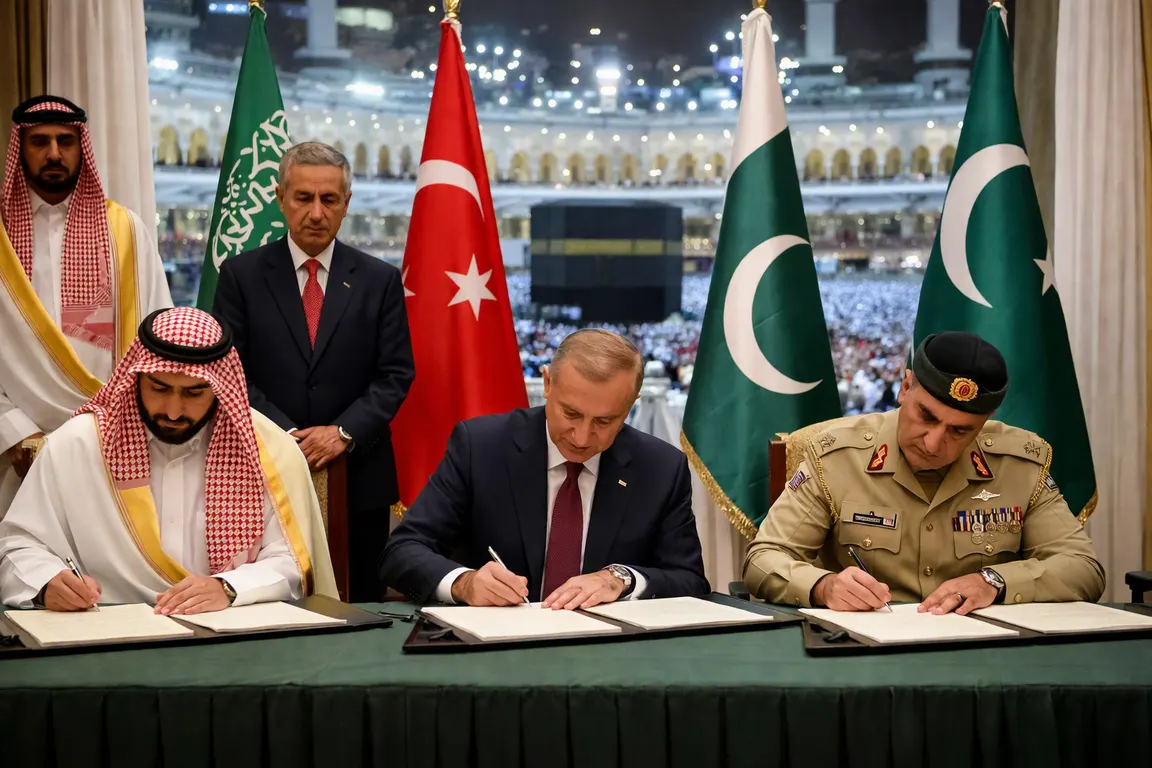
A new joint defence agreement between Saudi Arabia, Turkey, and Pakistan has been signed in Mecca, aiming to supplement regional security. This development could significantly impact the balance of power in the Middle East, affecting regional security and the US's influence in the area.
The Mecca Defence Pact brings together countries located between Iran and Israel, in a move that analysts believe is driven by regional partners seeking alternatives to enhance their security. The signing of the pact is a recent development, with a potential Hormuz deal also being discussed.
The exact terms and objectives of the pact are not fully clear, but it is understood that the agreement aims to create a new regional order. However, the pact's effectiveness in achieving this goal is uncertain. The potential implications of the pact for regional security and stability are significant, and it could affect the security and stability of the region, potentially impacting the people living in the Middle East, as well as the global economy, particularly in terms of oil trade and prices.
As the Middle East navigates a complex web of alliances and rivalries, this new joint defence agreement is poised to reshape the regional security landscape. The key question now is how the pact will be implemented and what specific details of the agreement will be. A potential Hormuz deal is also being discussed, which could further impact the regional security dynamics.
The US role in the Middle East is also likely to be impacted by this development, with analysts speculating about the potential implications for US influence in the region. The relationship between the signatory countries and other regional players, such as Iran and Israel, will also be crucial in determining the pact's effectiveness.