

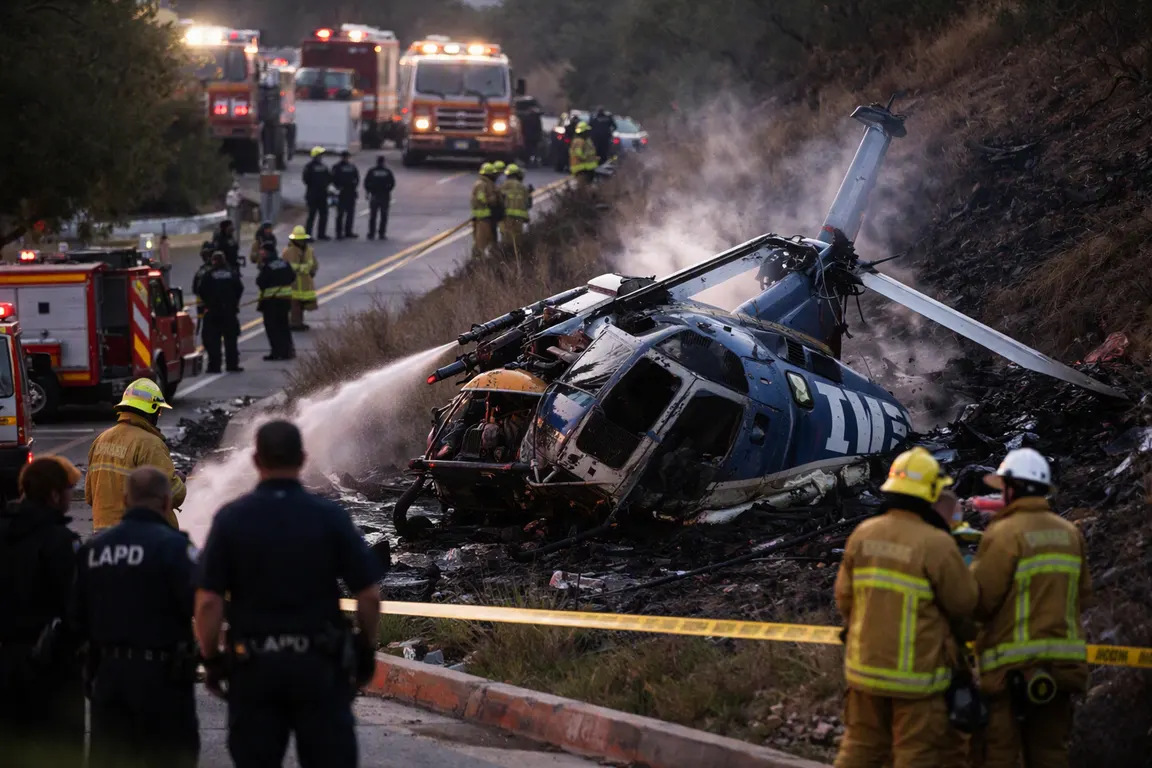
A Los Angeles news helicopter crash occurred Tuesday evening as the aircraft was dispatched to film a deadly bus collision in the Chatsworth neighborhood. The crash killed the pilot, a camera operator and a reporter, all employees of the station that owned the aircraft.
The bus collision in the early hours left several occupants dead and caused major traffic disruptions. Within minutes, a local broadcaster sent the helicopter to capture aerial footage of the wreckage and surrounding streets. While maneuvering near the scene, the aircraft lost contact with its crew and later slammed into a nearby parking lot, igniting a fireball that firefighters had to extinguish before recovering the three crew members.
Los Angeles fire officials said the crash forced them to divert units from the bus‑scene response, stretching already‑taxed resources. The loss of the helicopter also eliminated a live‑feed source that could have provided real‑time updates on road closures, traffic conditions and rescue efforts.
The three victims have been identified as the pilot, a camera operator and a reporter. Their families, colleagues and the broader journalism community expressed shock and grief. The incident highlights the occupational hazards faced by news crews that operate low‑altitude helicopters in congested, often unpredictable environments.
The cause of the crash remains under investigation. Early reports differ on whether the aircraft was struck by debris from the bus collision, suffered a mechanical failure, or experienced pilot error. No official determination has been released.
Industry observers say the accident could prompt a review of aviation safety standards for news organizations. Some broadcasters have already begun upgrading to newer, more reliable helicopters and expanding crew training for disaster‑zone operations. Insurance premiums for news helicopters have risen after past accidents, and this tragedy may force stations to reassess the cost‑benefit balance of deploying aircraft in high‑risk situations.
Authorities have opened a formal investigation, and the National Transportation Safety Board will work with local agencies to determine the exact cause. In the meantime, families of the three crew members await answers, and news outlets covering the bus crash must rely on ground footage and police briefings.
The dual emergencies underscore how a single disaster can cascade, demanding rapid coordination among police, fire and medical teams. They also serve as a stark reminder that the pursuit of immediate, on‑scene reporting can itself become a perilous endeavor, potentially reshaping how media organizations approach safety protocols for future emergency coverage.