

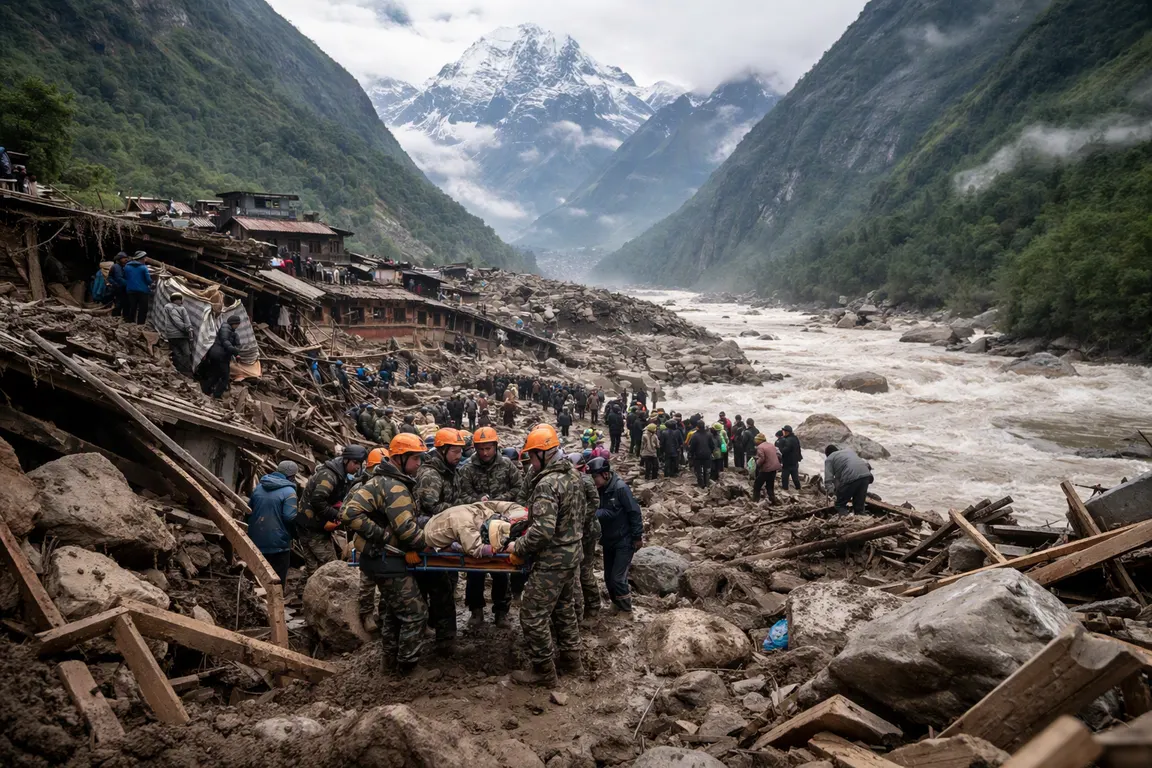
A Lirung Peak avalanche on the southern slope of the mountain fractured on Wednesday, triggering an ice‑rock flow that turned into a flash flood. The surge raced more than 20 km down the Nepal‑China border, sweeping villages, flooding the strategic Gyirong Port and inundating the Trishuli‑3A hydro‑electric plant. Officials confirmed at least 750 deaths and 3,044 people missing on both sides of the border.
The avalanche’s debris buried Gyirong Port, a key trade conduit between Nepal and China, and created a new lake behind a landslide near the Tibet border. Chinese authorities ordered the port’s evacuation and closed the crossing, disrupting supply chains that depend on the route.
Rescue teams from the Nepali army, Chinese emergency units and civilian volunteers have been combing the flood‑hit valleys for bodies and survivors. At the Trishuli‑3A site, workers drilled a 30‑centimetre pipe into the water‑filled tunnel and began pumping compressed air to create a breathable pocket and listen for signs of life. The operation aims to locate the 933 hydro‑power workers believed trapped inside, but no survivors have been confirmed.
Among the missing are 589 foreign trekkers and pilgrims, including 80 members of a group organized by the Isha Foundation. Their disappearance could prompt travel advisories and affect Nepal’s trekking sector, which generates millions of dollars annually.
The disaster also threatens Nepal’s energy security. Trishuli‑3A supplies roughly 30 % of the nation’s electricity, and the loss of nearly a thousand workers leaves the plant’s future output uncertain, raising concerns about power shortages during the upcoming monsoon season.
Families of the victims have gathered at makeshift relief centres, coping with loss of life, homes and livelihoods. Diplomatic channels between Kathmandu and Beijing are coordinating rescue efforts and the cross‑border flow of aid, while Indian officials monitor downstream areas for possible casualties.
UN climate chief Simon Stiell called the event a “devastating reminder of how fragile these mountain environments can be.” Although climate change was not cited as a direct cause, the rapid disintegration of the glacier underscores the growing vulnerability of Himalayan infrastructure to extreme weather and geological events.
Rescue crews plan to widen the tunnel access point and deploy sonar later this week, hoping to confirm whether any workers survived the inundation. The full impact on regional trade, energy supply and tourism will unfold in the coming weeks, prompting a reassessment of disaster‑risk planning across the Himalayas.