

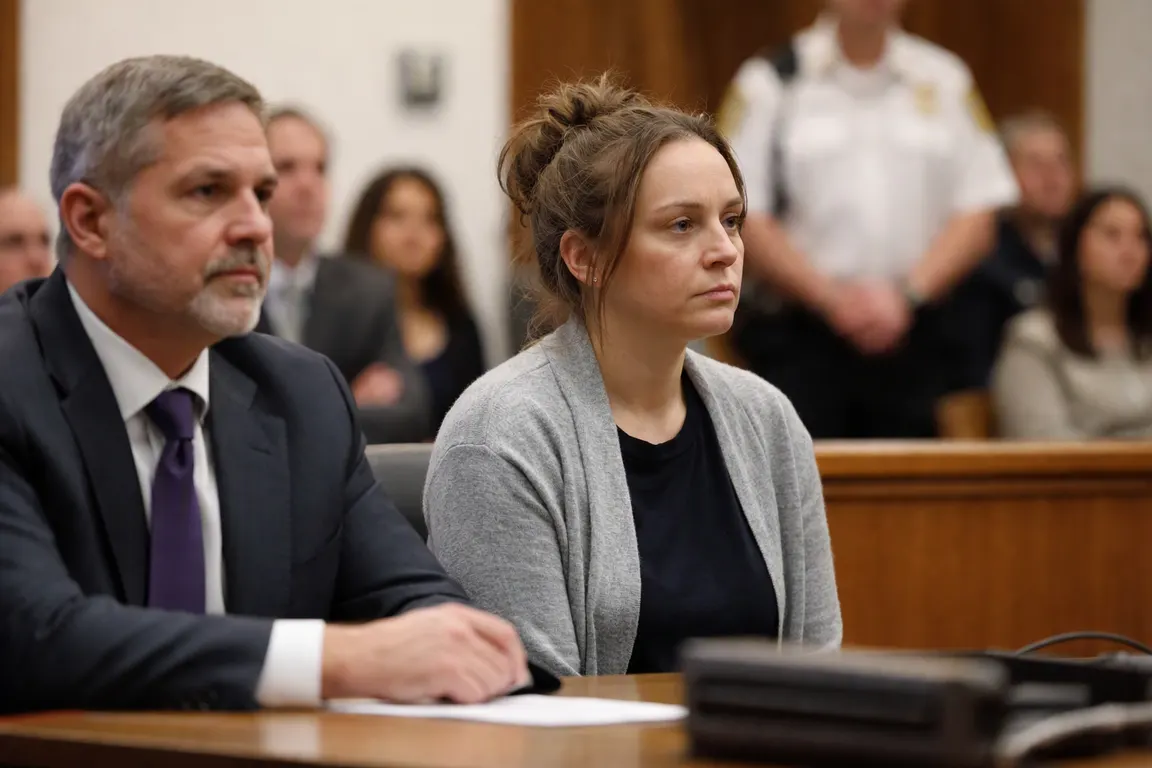
A Massachusetts judge has allowed the jury in the Lindsay Clancy manslaughter trial to consider a voluntary manslaughter charge, giving jurors a middle‑ground option as the five‑week trial moves toward a verdict.
Clancy, 36, is accused of killing her three children in Bellingham. The trial, now in its fifth week, has featured roughly 80 witnesses and the defendant has not testified. Closing arguments began Wednesday after the judge granted the defense’s request to add a manslaughter count alongside the original first‑degree murder charge.
Prosecutors have presented evidence they say shows intent, including details of how the children were killed and the sequence of events leading up to the deaths. Their narrative emphasizes purposeful action rather than a momentary lapse.
The defense has focused on Clancy’s “sharp mental‑health decline” after she began treatment with psychiatrist Dr. Jennifer Tufts. According to the defense, multiple psychiatric medications were prescribed, and the rapid deterioration undermined her ability to form the specific intent required for a murder conviction.
Under Massachusetts law, a voluntary manslaughter conviction carries a maximum sentence of life imprisonment, but it is generally viewed as less severe than first‑degree murder, which can also result in life without parole. The distinction hinges on whether the defendant acted with “malice aforethought” or under “extreme emotional disturbance.”
Legal analysts note that adding a manslaughter charge in a multi‑victim homicide, especially involving a parent, is unusual. The move could shape how courts handle defenses that rely heavily on psychiatric evidence. Defense attorneys may cite this case when arguing for reduced charges in future trials, while prosecutors may adjust strategies to pre‑empt mental‑health arguments.
The community around the trial has expressed concern for public safety and confidence in the criminal‑justice system. Families who have experienced similar tragedies are watching closely, hoping the outcome will inform policy discussions about psychiatric‑care oversight in Massachusetts. State legislators have begun informal talks about stricter monitoring of high‑risk medication regimens, though no bills have been introduced.
With closing arguments completed, the jury is expected to begin deliberations in the coming days. Massachusetts law does not set a fixed timetable for a verdict, but standard procedure suggests a decision could be rendered within a few weeks. The court has not announced a specific date for the announcement.
The case remains unresolved, leaving the question of how the legal system will balance accountability with severe mental‑health decline. As the jury weighs murder against manslaughter, the outcome will likely influence future criminal proceedings and may prompt legislative scrutiny of psychiatric treatment protocols in the state.