

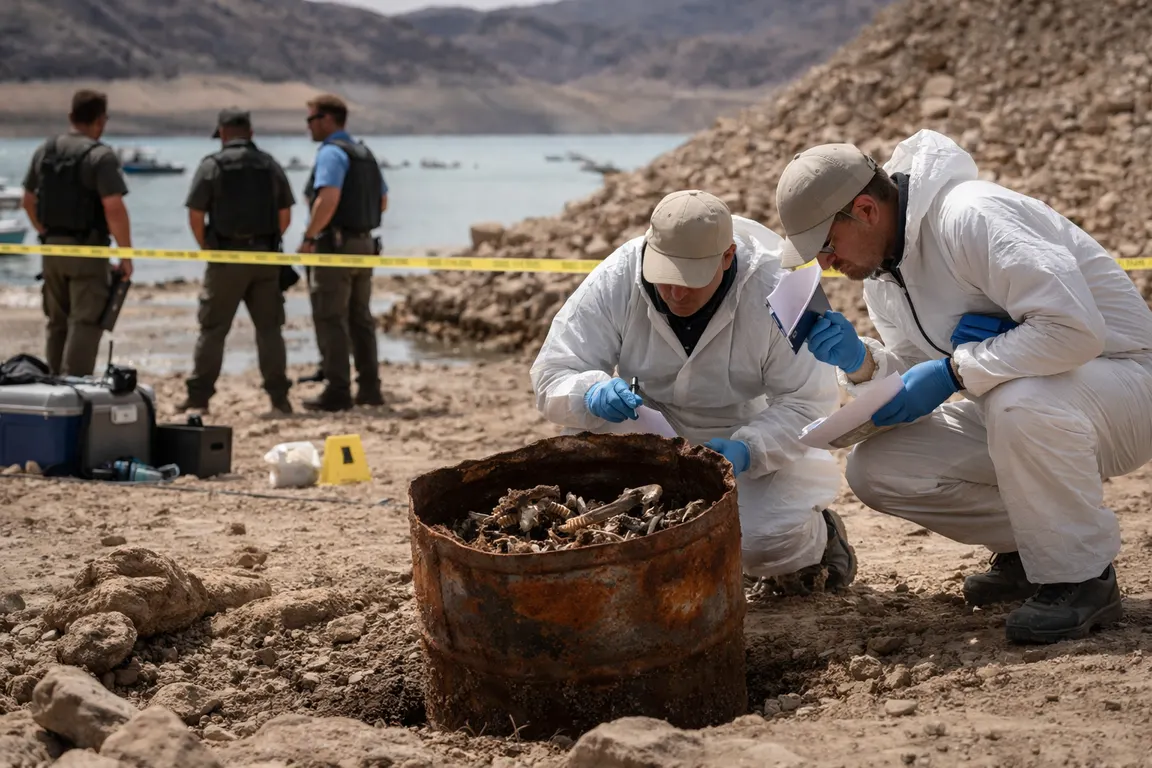
Investigators said Tuesday that skeletal remains recovered from a rusted barrel in Lake Mead in 2022 belong to Edward Lelburian Jackson, a man who was murdered in the 1980s. Clark County Coroner Melanie Rouse announced the identification, ending a four‑year mystery and highlighting how a shrinking reservoir can turn a forgotten crime scene into a forensic breakthrough.
The discovery came as the Lake Mead drought caused water levels to fall dramatically. When receding waters exposed a cluster of debris near the lake’s southern shoreline in early 2022, officers found a metal drum containing a partial skeleton, clothing fragments and other debris. An initial autopsy confirmed the remains were decades old and consistent with homicide.
Forensic analysts extracted DNA from the bone fragments and entered the profile into national databases. After two years of comparison work, the DNA matched Jackson, who disappeared in the 1980s after his family reported him missing. Rouse confirmed the match at a press conference in April 2024, noting that the death is still ruled a homicide and no suspect has been identified.
Law‑enforcement officials say the investigation remains open. Las Vegas detectives are reviewing cold‑case files and re‑interviewing witnesses who might recall Jackson’s movements in the 1980s, but no arrests have been made.
Lake Mead’s receding shoreline has already yielded other artifacts, including vintage automobiles, illegal dumping sites and additional human remains. The Nevada Department of Public Safety has launched a systematic sweep of exposed areas, deploying portable DNA labs and ground‑penetrating radar. Officials say the drought‑driven exposure of evidence could reshape how agencies allocate resources, shifting some focus from traditional crime scenes to environmental monitoring.
The case underscores a broader trend. As climate change drives water levels down in reservoirs across the West, similar “time‑capsule” discoveries may become more common. Advocates argue that federal and state funding should be directed to expand forensic capacity so newly uncovered evidence can be processed before it deteriorates.
For Jackson’s family, the identification provides long‑awaited closure, but the murder remains unsolved. Authorities plan to catalog and test any additional material that surfaces as Lake Mead continues to recede, hoping to resolve other cold cases hidden beneath the water. The next steps will depend on whether forensic leads generated by this discovery can point to the individual responsible for Jackson’s murder.