

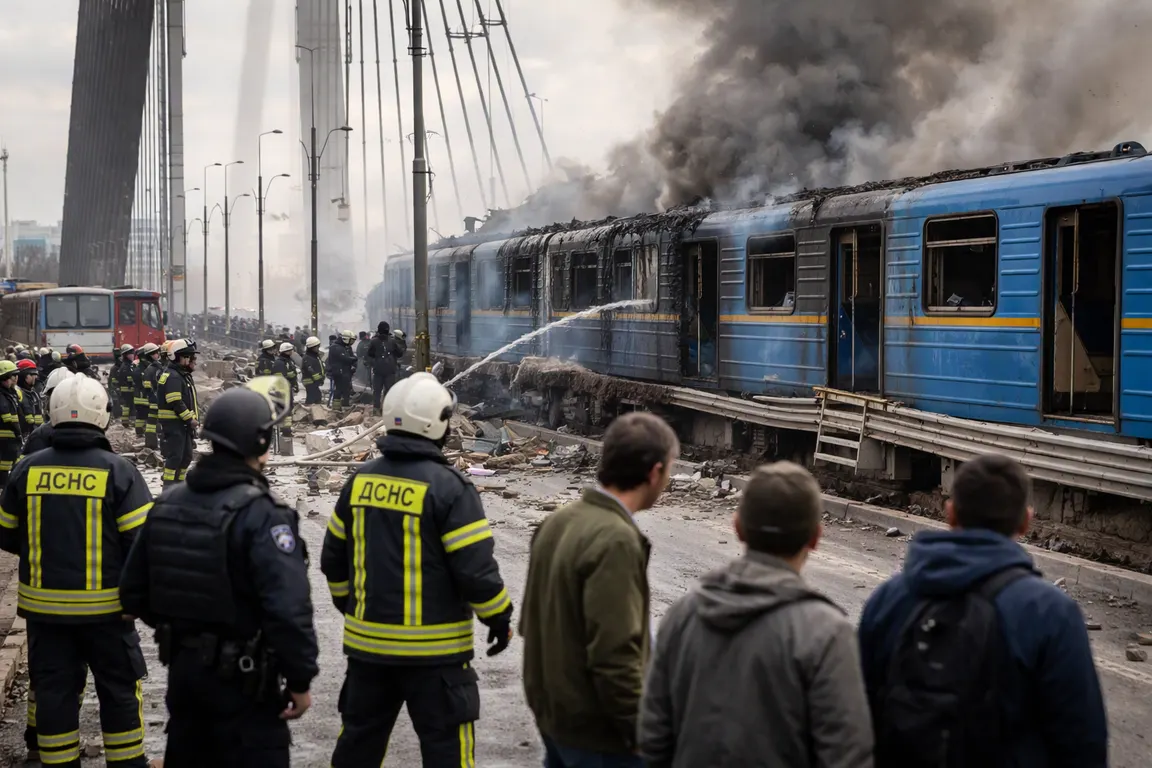
A Russian loitering munition hit Kyiv's Pivdennyi bridge on the afternoon of Sept. 30 while a metro train was crossing, turning a routine commute into a battlefield. Minutes later a second drone struck a city school. Both attacks were confirmed by multiple news outlets and mark the first known strike on any of Kyiv’s major bridges.
The bridge attack forced an immediate shutdown of the east‑west rail and road link that carries thousands of commuters and freight daily. Traffic was rerouted onto secondary crossings, adding up to 30 minutes to peak‑hour trips and delaying deliveries for local businesses. The school was damaged but officials said no injuries were reported.
Ukrainian defence officials identified the weapons as Shahed‑type loitering munitions. While air‑defence units shot down several drones that day, a few evaded interception, allowing the two strikes to succeed. The incidents broaden Russia’s target set from purely military sites to critical civilian infrastructure, raising concerns about the safety of public buildings and the resilience of the capital’s transport network.
Kyiv’s municipal authorities issued safety alerts, deployed emergency responders to the bridge and school, and began damage assessments. Engineers are evaluating temporary reinforcement measures to allow limited traffic on the bridge while permanent repairs are planned. The city’s budget will need to absorb additional costs for bridge and school repairs and for the continued operation of air‑defence systems.
The attacks underscore the vulnerability of Kyiv’s infrastructure. With the bridge closed, commuters faced longer, congested detours, and businesses reported reduced foot traffic. Parents and school administrators were forced to assess structural safety before classes could resume, diverting resources already stretched thin by the war.
Ukrainian officials have not disclosed how many drones were launched or the exact number intercepted, leaving the effectiveness of the city’s air‑defence shield partially opaque. Analysts note that targeting the Pivdennyi bridge—a civilian conduit—suggests a shift in Russian targeting priorities, but caution that more data is needed before drawing firm conclusions.
The next steps for Kyiv will likely include bolstering air‑defence coverage around key infrastructure and revising emergency‑response protocols. How Ukraine adapts its defensive posture to protect civilians and maintain essential services will shape daily life for thousands of residents in the weeks ahead.