

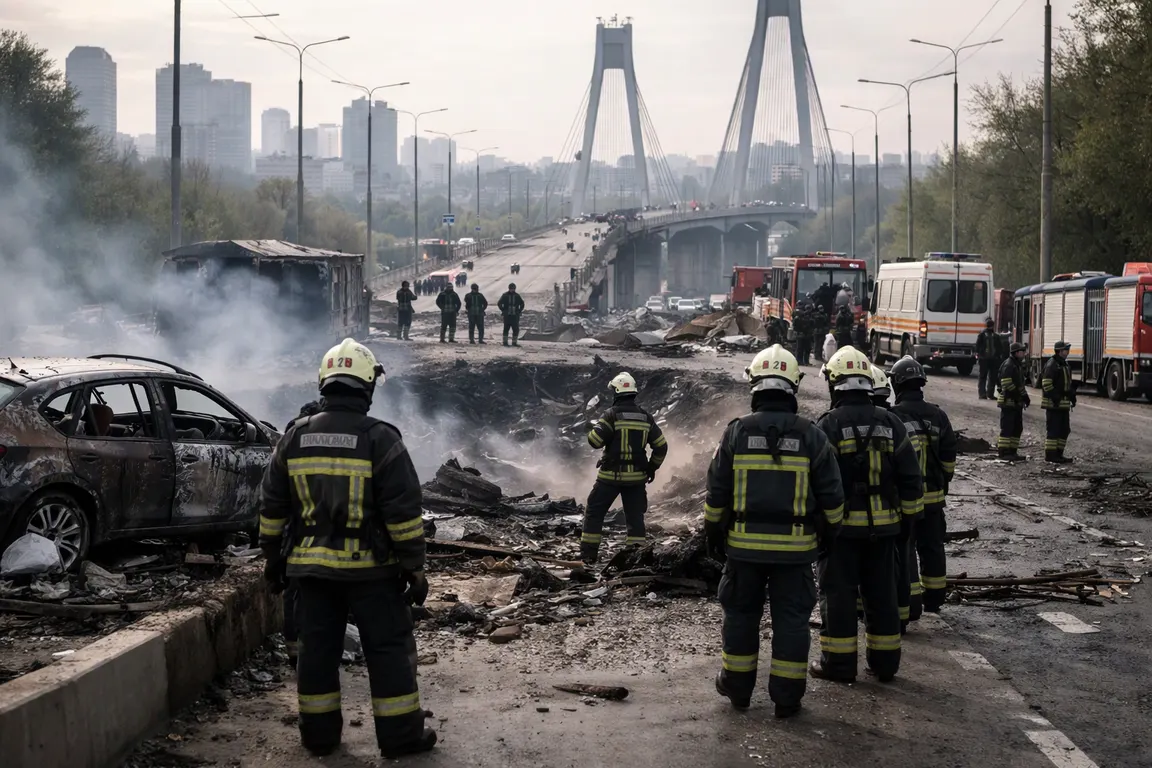
Russian attacks on two of Kyiv’s major river crossings on Saturday killed five people and forced a complete shutdown of the Northern Bridge, officials said. The strikes, which hit a second bridge within 48 hours, mark an escalation in Moscow’s effort to disrupt civilian movement and logistics as the war enters its fifth year.
The latest attacks suggest a strategic shift. By disabling both a northern and a southern crossing, Russia appears intent on curbing everyday mobility, straining the Ukrainian economy and pressuring Kyiv ahead of winter when alternative routes become less viable. The assaults used low‑cost Banderol loitering munitions and drones that have been employed across Ukraine and, more recently, in neighboring Moldova.
On Saturday, a Russian strike destroyed the road surface and trolleybus overhead cables on the Northern Bridge, which serves commuters on the left‑bank side of the Dnipro River. Al Jazeera reported five fatalities; the Manila Times confirmed the same death toll and noted that the damage forced an immediate suspension of all traffic. Kyiv Mayor Vitalii Klitschko confirmed the bridge’s destruction and said the city would halt vehicle flow pending repairs. A separate strike the day before hit an unnamed bridge on the city’s southern flank, damaging the structure and disrupting traffic but causing no reported casualties.
Russia’s Defense Ministry justified the attacks by claiming the bridges facilitate Ukrainian troop movements and military logistics. Independent verification of that claim is lacking; the bridges are critical arteries for civilian commuters, freight trucks and public transport, linking eight major spans that connect Kyiv’s left‑ and right‑bank districts. The loss of two key crossings has already forced commuters onto longer routes, inflating travel times, fuel consumption and operating costs for delivery firms. Early indications suggest a rise in consumer‑goods prices in the capital as supply chains adjust to reduced capacity.
The human impact is immediate. Residents who rely on the Northern Bridge for work, school and medical appointments now face prolonged delays and uncertainty. Psychological stress is rising among communities near the targeted structures, who report heightened safety concerns after repeated attacks. City emergency services have been redirected to assess structural integrity and coordinate temporary traffic management, but no public timeline for bridge restoration has been announced.
Ukrainian authorities are reinforcing other crossing points and exploring rapid‑repair techniques for the damaged spans. The Ministry of Infrastructure has urged citizens to use alternative routes and warned that further attacks could target additional bridges, given Kyiv’s eight‑bridge network. International observers are monitoring the situation as a gauge of Ukraine’s infrastructural resilience; investors have cited the attacks as a factor in assessing risk for future funding.
As the front line remains deadlocked along a 1,250‑kilometre front, the bridge assaults add a new pressure point to the conflict. Whether the targeting of Kyiv’s bridge network will influence diplomatic negotiations or prompt a broader shift in Russian tactics remains uncertain. For now, the city’s residents and businesses must navigate a landscape where a single crossing can be rendered inoperable overnight, highlighting the fragile balance between civilian infrastructure and wartime strategy.