

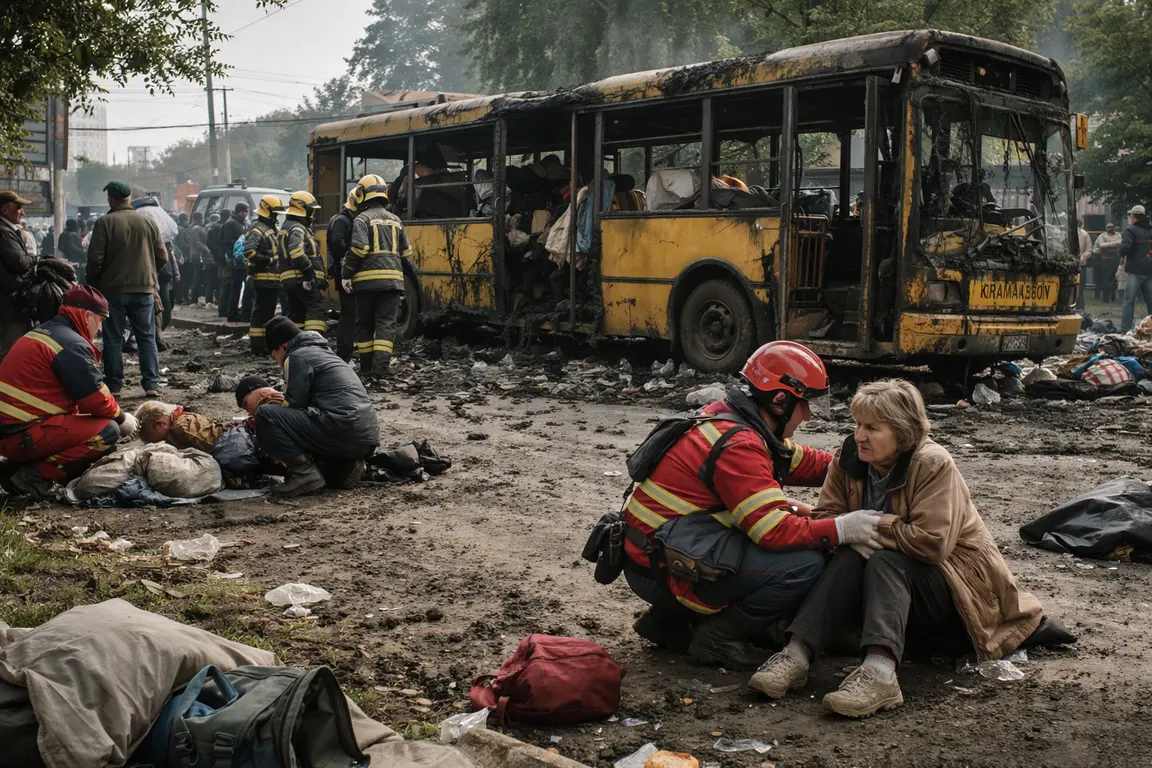
A Russian‑made guided bomb struck a public‑transport bus at a stop in Kramatorsk, eastern Ukraine, at about 10 a.m. Thursday, killing at least 30 people and wounding 18, the Donetsk regional prosecutor’s office said.
The explosion occurred as a crowded bus pulled into the stop. Witnesses described a loud blast and a cloud of dust that trapped many passengers inside the vehicle. Emergency crews arrived within minutes, but the scale of the blast overwhelmed local hospitals. The regional health ministry confirmed that the injured were taken to nearby facilities, where surgeons began triage and surgery under strained conditions.
Kramatorsk’s municipal government ordered an immediate suspension of all bus, trolley and tram services, citing safety concerns and the need to assess damage to the transport network. The shutdown affects thousands of commuters who rely on public transport to reach schools, workplaces and hospitals. Kyiv’s emergency ministry deployed additional medical teams to the city and urged residents to use private vehicles or ride‑sharing services, warning that traffic congestion could impede humanitarian aid deliveries.
President Volodymyr Zelenskyy condemned the attack, saying the Kremlin deliberately targeted an “ordinary public‑transport stop.” While officials have linked the strike to a broader pattern of attacks on Ukraine’s logistics infrastructure, no independent verification of intent has been offered.
Analysts note that the weapon used differs from earlier missile strikes in its precision and low‑altitude delivery, allowing it to hit a specific, moving target with minimal warning. Media outlets have described the munition as a guided bomb or glide‑bomb; the terminology reflects minor technical distinctions rather than disagreement over its origin.
The human toll extends beyond the immediate victims. Families of the dead face sudden loss and trauma, while the injured contend with long‑term medical needs. The transport shutdown hampers the movement of food, medicine and construction materials, potentially inflating logistics costs and delaying reconstruction projects in the Donetsk region. For businesses and schools, the loss of reliable commuting options creates economic strain and disrupts education.
International reactions have been swift. European media reported the incident within hours, and humanitarian agencies are assessing the impact on aid delivery. The strike adds pressure on diplomatic channels to address the systematic targeting of civilian infrastructure, a point repeatedly raised by Western governments.
Ukrainian officials have pledged to restore limited bus routes within days, pending safety inspections. Investigators will examine the bomb’s trajectory and consider measures to reinforce transport hubs against similar attacks. The Kramatorsk strike underscores the vulnerability of Ukraine’s civilian mobility network and raises questions about how the international community will translate condemnation into concrete action.