

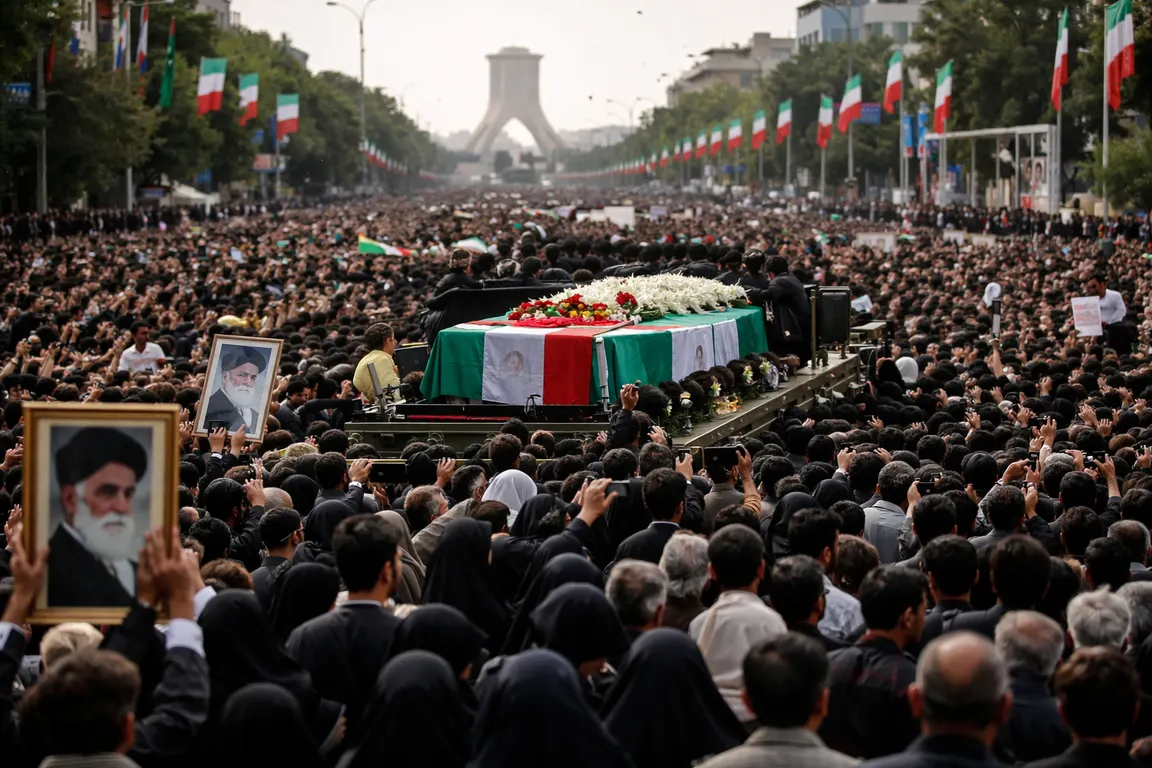
The funeral procession for Iran's late Supreme Leader Ali Khamenei has begun in Tehran, with massive crowds of mourners gathering to pay their respects to Khamenei. The procession is a significant event that highlights Iran's resilience after five weeks of war with the US and Israel, while also raising questions about the country's future leadership and the potential for further conflict.
The funeral procession has brought together massive crowds of mourners, with many calling for revenge against the US and Israel. The absence of Mojtaba Khamenei, the new supreme leader, has sparked uncertainty about the reason for his absence. Some sources report that Mojtaba Khamenei was injured in the attack, while others deny this.
The Middle East war is currently on hold following a ceasefire and an initial accord struck with the US. Iranian officials have warned that they are ready to resume military action if necessary. The funeral procession will be followed by similar events in Qom, Najaf, Karbala, and Mashhad.
Three of Ali Khamenei's sons made a rare public appearance at the funeral. The event has highlighted the potential for further conflict in the region. The absence of Mojtaba Khamenei has raised questions about the country's future leadership and stability.
As the funeral procession makes its way through Tehran, the city is filled with a mix of mourning and defiance. The Iranian government is using the funeral procession to project resilience and unity. The funeral procession will conclude with Ali Khamenei's burial in Mashhad on Thursday, leaving many to wonder what the future holds for Iran and the region.
The funeral procession is a significant event that will be closely watched by the international community. The potential risks and challenges associated with the current situation are unclear, and the future of the region remains uncertain. The Iranian government's actions and decisions in the coming days and weeks will be crucial in determining the course of events.