

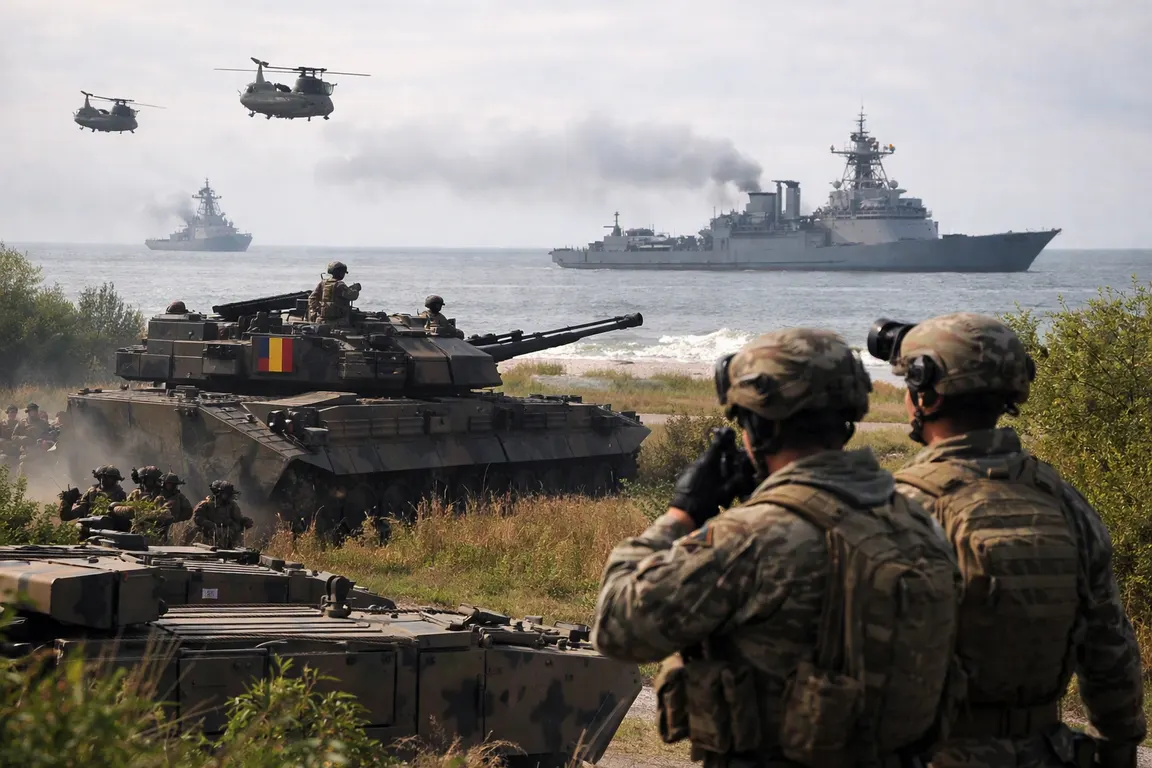
Moscow warned on Aug. 22 that Russia would employ every weapon in its arsenal, including nuclear arms, to defend the Kaliningrad enclave if Kaliningrad NATO drills are deemed a threat. The statement followed a large‑scale NATO exercise over northern Poland and the Baltic Sea on Aug. 18 that featured U.S. EA‑37B Compass Call electronic‑attack aircraft.
The juxtaposition of Russia’s explicit threat and NATO’s drills has heightened concerns about miscalculation in the Baltic. President Vladimir Putin, speaking at the Valdai Club forum and in a Moscow address, said any attack on Kaliningrad would be met with "all weapons," a phrase that signals a willingness to expand the response beyond conventional forces.
NATO issued a written rebuttal, denouncing the nuclear rhetoric and reaffirming its defensive posture. Alliance officials stressed that the exercises, part of Operation Baltic Sentry, are intended to protect undersea communication cables and energy pipelines, not to target the Russian exclave.
Kaliningrad holds outsized strategic value for Russia. It hosts the Baltic Fleet’s main base and mobile Iskander missile systems capable of carrying nuclear warheads. Its isolation—sandwiched between Poland and Lithuania—makes it a focal point for both Russian deterrence and NATO’s forward presence.
The immediate security implications are threefold. First, high‑stakes statements paired with live‑fire drills near contested airspace raise the risk of misinterpretation. Second, the prospect of nuclear escalation, however remote, forces NATO planners to consider contingency scenarios that could strain command‑and‑control mechanisms. Third, commercial shipping through the Baltic Sea, vital for European energy supplies, could face disruptions if naval posturing intensifies.
Diplomatic channels remain active but under pressure. NATO has formally condemned the Russian threat and urged restraint. Back‑channel talks involving the United States, European capitals and Moscow are reportedly ongoing, though details are scarce.
The next week will see a continuation of NATO’s Baltic Sea exercises, while Russian officials say they will monitor the drills closely. The situation underscores a fragile balance: NATO seeks to demonstrate resolve without provoking a direct confrontation, and Russia leverages Kaliningrad’s strategic importance to extract political leverage. Whether diplomatic engagement can outpace the momentum of military signaling remains the key question as both sides maintain heightened readiness.