

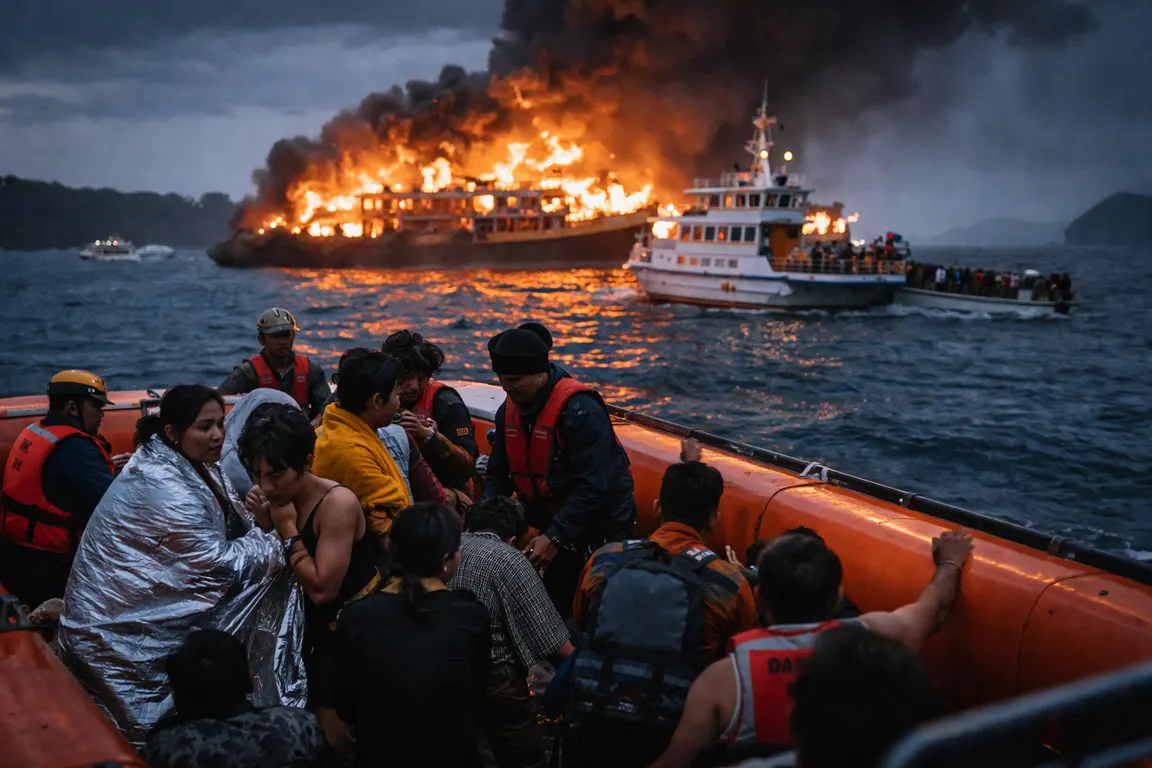
A June Aster ferry fire off Coron, Palawan, killed five people and left more than 80 passengers unaccounted for on Wednesday night. The MV June Aster, carrying 134 passengers and crew on a short trip between Coron and a nearby island, was engulfed in flames before sinking, prompting a large‑scale rescue effort by the Philippine Coast Guard.
The Coast Guard reported that 43 survivors were pulled from the water and five bodies have been recovered. More than 80 people remain missing as the search continues. Video released by the guard shows the vessel ablaze, the fire spreading rapidly across the deck before the hull slipped beneath the surface.
The incident revives long‑standing concerns about maritime safety in the Philippines, a nation that relies on ferries to connect its thousands of islands. Critics point to gaps in vessel inspection, crew training and emergency‑response coordination that have been highlighted after previous ferry disasters. The June Aster fire underscores how those weaknesses can turn a routine island‑hop into a night‑time inferno.
According to the Coast Guard, the crew sounded the alarm within minutes of the blaze and launched lifeboats, but the fire quickly overwhelmed the vessel’s fire‑suppression systems. Rescue boats, helicopters and a nearby patrol vessel converged on the scene, pulling survivors from the water and transporting them to medical facilities in Puerto Princesa.
Families of the dead and missing are now confronting trauma and uncertainty. Many of the passengers were tourists and local workers who depend on the ferry for daily income. Their loss reverberates through the community, threatening livelihoods in a region that depends heavily on tourism. Hotels, restaurants and tour operators in Coron have reported a dip in bookings as news of the fire spreads, raising fears that the disaster could slow the economic recovery that followed the pandemic.
The tragedy also puts the Philippines’ regulatory framework under scrutiny. The Maritime Industry Authority (Marina) sets standards for vessel construction, safety equipment and crew certification, while the Coast Guard is tasked with enforcement and rescue. Observers note that enforcement has been uneven, with some operators allegedly bypassing inspections to keep vessels in service. The cause of the June Aster fire has not yet been determined, highlighting the need for more rigorous oversight and clearer accountability.
In response, the government pledged to intensify inspections of passenger ferries and to review existing safety protocols. The Coast Guard said it will deploy additional assets to continue the search and to assist families in filing missing‑person reports. Officials also announced plans to convene a task force to examine gaps in emergency response, including communication between vessels, coast‑guard units and local authorities.
The incident comes as the Philippines seeks to expand its maritime transport network to support economic growth. The June Aster fire illustrates how fragile that network remains without systematic upgrades to safety infrastructure. As search teams comb the waters for bodies and survivors, policymakers face pressure to translate the tragedy into concrete reforms that can prevent a repeat.
The next steps include a formal investigation into the fire’s origin, a review of the vessel’s compliance records and an audit of rescue‑coordination procedures. Until those findings are released, the missing passengers’ families and the broader travel community await answers that could shape the future of Philippine ferry safety.