

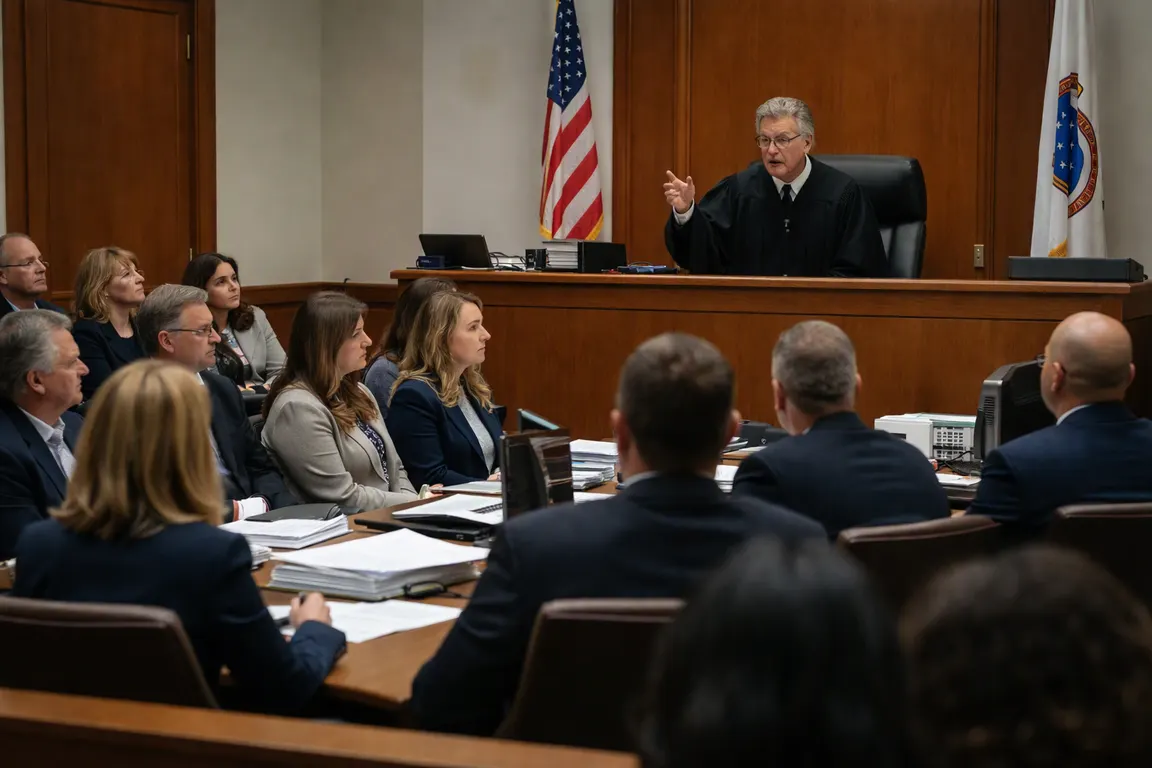
A Massachusetts judge dismissed the 12‑member jury in the Lindsay Clancy murder trial Wednesday after nearly 30 hours of deliberation over five days failed to produce a verdict, and issued a rare Tuey‑Rodriguez instruction that compels a deadlocked jury to keep deliberating or triggers an automatic mistrial. The same day, police arrested 56‑year‑old Dawn Light outside the Plymouth courthouse on an aggravated intimidation charge after she attempted to film jurors in a restricted area.
The instruction comes at a pivotal moment in a case that has drawn national attention. Clancy, 36, faces three counts of first‑degree murder for the January 24 2023 deaths of her children—Cora, 5; Dawson, 3; and infant Callan—in Duxbury, Massachusetts. Prosecutors acknowledge her documented mental‑illness history but argue she acted with criminal responsibility. The defense says postpartum psychosis and bipolar disorder negate culpability.
Under the Tuey‑Rodriguez instruction, jurors must continue deliberating until they reach a unanimous verdict on each count, or the court declares a mistrial. The measure is used only a handful of times in the state because it places intense pressure on jurors to break a deadlock and signals the court’s intent to exhaust all options before ending the trial. Legal analysts note that a mistrial would allow prosecutors to retry Clancy, exposing her to the same charges and the possibility of life imprisonment without parole.
Light’s arrest adds a parallel layer of tension. Police observed her attempting to record jurors in a prohibited zone outside the courthouse. She pleaded not guilty, was released on personal recognizance and ordered to stay away from the courthouse. While the charge carries no mandatory sentence, it underscores the risk of outside interference in high‑profile cases and may prompt tighter security for jurors and other participants.
Jurors in the Clancy case have already faced intense scrutiny. They can return verdicts ranging from first‑degree murder to manslaughter, not guilty, or not guilty by reason of lack of criminal responsibility for each child. The trial has featured more than 80 witnesses and over 300 exhibits, and jurors have reported stress from graphic evidence and the public spotlight.
Postpartum psychosis, cited by the defense, is not a blanket excuse under Massachusetts law. The state requires a clear link between the mental disorder and the defendant’s ability to understand the nature of the act or to conform conduct to the law. Courts have applied this standard inconsistently, and the outcome of Clancy’s trial could shape future prosecutions that invoke maternal mental‑health defenses.
The next step is for the jury to reconvene Thursday under the Tuey‑Rodriguez instruction and continue deliberations. If the deadlock persists, the judge is likely to declare a mistrial, opening the door to a retrial that could extend the legal process for months. The court is also expected to review security protocols in light of Light’s alleged intimidation, potentially instituting stricter barriers and monitoring to protect juror anonymity.
Both the judicial maneuver and the intimidation incident highlight how the intersection of law, mental‑health considerations, and public interest can strain the judicial system. The resolution of the Clancy case will determine the fate of a mother accused of killing her children and may set precedents for juror protection and mental‑illness defenses in future high‑profile prosecutions.