

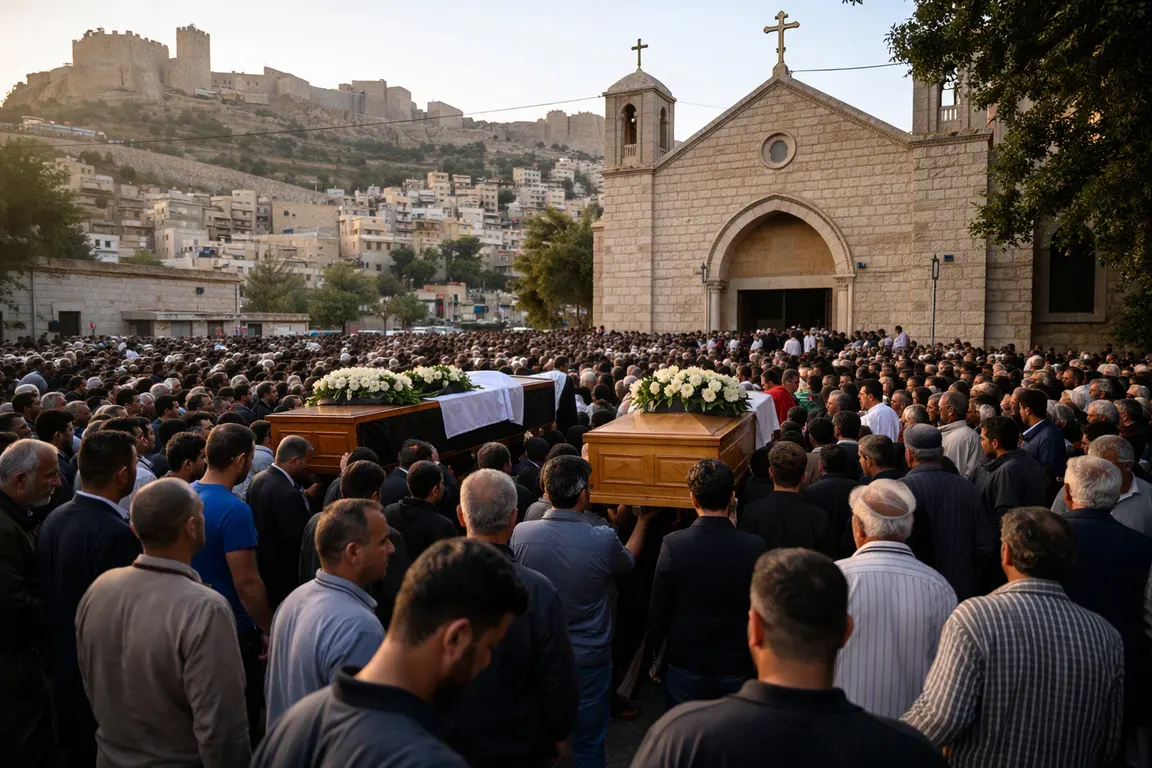
Masked gunmen opened fire on a funeral procession for a Christian community member in Karak, southern Jordan, in what officials describe as a "Jordan funeral shooting." Six people were killed and 28 wounded, making it one of the few mass shootings in the kingdom’s recent history.
Mourners were escorting the body through Karak’s streets when two men in masks stepped out of the crowd and began firing, survivors said. Emergency responders arrived within minutes and rushed the injured to hospitals in Karak and Amman. Reports differ on the death toll: the BBC and The Independent cited six fatalities, while Al Jazeera mentioned at least seven. The Jordanian Interior Ministry has not released an official figure.
Jordanian security forces launched a coordinated search for the shooters, deploying additional units to the Karak governorate and reviewing surveillance footage. No group has claimed responsibility, and officials have offered no motive. A ministry spokesperson said such attacks are “extremely rare” in Jordan, a country known for relative stability and religious coexistence.
Christians comprise roughly 2‑3 percent of Jordan’s population. Community leaders have called for reassurance and protection, noting that the constitution guarantees freedom of religion but the lack of a clear motive leaves the community uncertain whether the violence was sectarian or driven by other factors.
Security analysts say the incident tests Jordan’s ability to prevent and respond to sectarian‑related violence. Resources diverted to the manhunt could strain routine policing, especially in a region already monitoring cross‑border tensions. The shooting comes as neighboring states grapple with rising extremist activity, prompting questions about possible spill‑over.
International reactions have been measured, with foreign ministries offering condolences and urging a swift investigation. No policy changes have been announced, and the government has not indicated any shift in its counter‑terrorism strategy. However, the attack may prompt a review of security protocols for public gatherings, particularly religious ceremonies that draw large crowds.
For the victims’ families, the aftermath is already painful. Many of the injured face weeks of medical treatment, while the bereaved confront the loss of loved ones under shocking circumstances. The broader public is also confronting a new sense of vulnerability in a nation that has largely avoided such violent episodes.
Key questions remain unanswered: the exact number of fatalities, the identity and motives of the shooters, and whether the incident signals a broader security threat. Jordanian authorities have pledged to keep the public informed, but the lack of concrete details sustains uncertainty. The next steps will likely involve forensic analysis of the crime scene, intensified intelligence gathering, and possibly new security measures for religious events, all aimed at restoring confidence in the kingdom’s safety and its long‑standing tradition of religious harmony.