

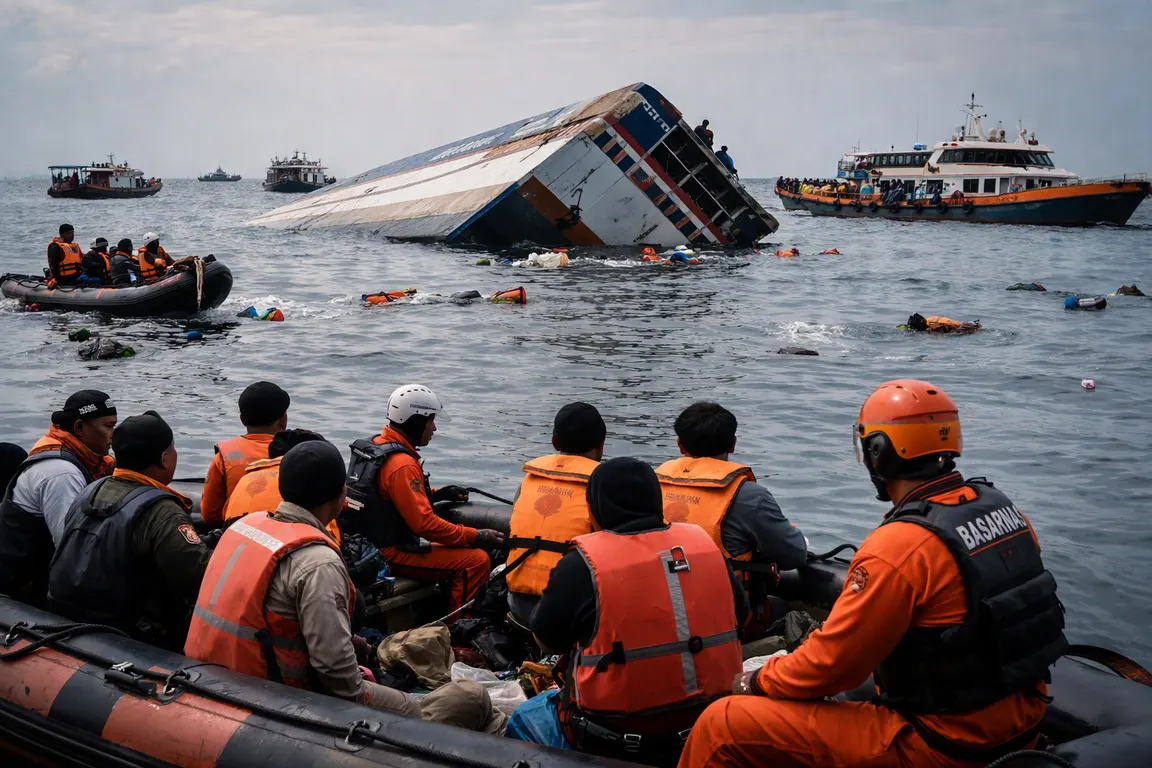
A Japanese‑built passenger ferry capsized in the Java Sea on Sunday, leaving 102 rescued, one body recovered and about 140 people still missing. The incident, known as the Java Sea ferry capsizing, highlights ongoing safety concerns for regional maritime transport.
The vessel, Virgo Transport 8, left Surabaya, East Java, at 10:33 a.m. on Saturday bound for Banjarmasin, South Kalimantan. The manifest listed 213 passengers and 30 crew members. Rough seas with three‑metre waves struck the ferry, and around 2 a.m. Sunday the captain reported a severe list before contact was lost. A distress signal was received shortly after, prompting Indonesian authorities to dispatch a rescue ship and several tugboats.
By Sunday afternoon, rescue teams had pulled 102 survivors from the water and recovered a single body, according to local reports. All sources agree that roughly 140 people remain unaccounted for, underscoring the scale of the ongoing search.
The capsizing occurred about 148 km (92 mi) from Banjarmasin pier, an area that has seen several maritime incidents in recent weeks, including a capsizing off the Philippines and another ferry sinking in Indonesia’s eastern islands. The string of accidents has heightened scrutiny of regional safety standards.
Indonesia’s maritime safety record is hampered by under‑reporting of passenger numbers, aging vessels and limited enforcement of regulations. While officials have not identified a definitive cause beyond the weather, the incident revives debate over whether current oversight adequately addresses the risks of operating large ferries in unpredictable seas.
The National Search and Rescue Agency (Basarnas) says the search will continue for at least 48 hours, weather permitting. Additional helicopters and patrol boats have been deployed, and families of the missing have been directed to a hotline for updates and counseling. Transport unions are calling for a review of ferry certification procedures and stricter load monitoring.
The route between Java and Borneo is a vital passenger and cargo link. Disruption of the service could affect regional commerce and tourism, as traders and travelers may reconsider ferry travel.
Authorities have pledged a formal inquiry after the search ends. Transportation Minister Budi Karya Sumadi said the government will examine vessel operation, crew training and weather forecasting to determine whether regulatory gaps contributed to the tragedy. The findings could shape future policy on ferry licensing and emergency response.
As the search persists, families await answers and the public watches to see whether the disaster will spur concrete reforms in Indonesia’s maritime safety regime.