

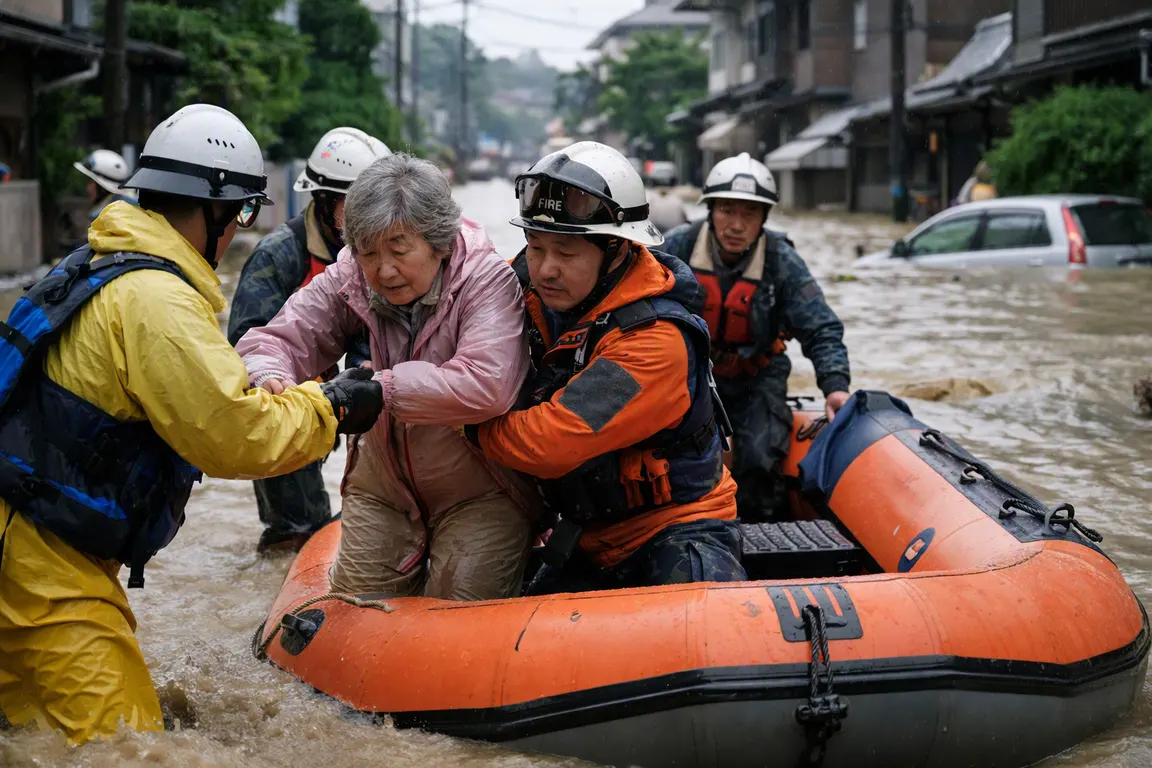
At least 8 people have died and over 10,000 were left stranded after record-breaking rain caused widespread Japan Floods, highlighting the need for effective disaster response and infrastructure resilience.
Record-breaking rainfall of 1.5 cm in one hour was reported in Chiba City, while 9.7 cm of rain fell in one hour in the city of Sakura. The flooding has affected thousands of people, with many left stranded, injured, or displaced, and has caused significant damage to homes, infrastructure, and the local economy.
More than 30 people were injured, including 5 seriously, and 170 homes were flooded in the prefecture. The Japan Meteorological Agency downgraded its heavy-rain warning on Friday, and train service partially resumed later that morning. As the people of Japan struggle to cope with the aftermath of the record-breaking rain, concerns are being raised about the country's infrastructure and disaster response capabilities.
The authorities have responded to the disaster, but the long-term implications of this event for Japan's infrastructure and disaster preparedness remain uncertain. The flooding has raised questions about the effectiveness of the country's disaster response and the need for improved infrastructure resilience.
The Japanese government will need to assess the damage and develop a plan to prevent similar disasters in the future. This may involve investing in infrastructure upgrades, improving disaster response protocols, and enhancing public awareness campaigns. For now, the priority is on providing aid to those affected and restoring normalcy to the affected areas.