

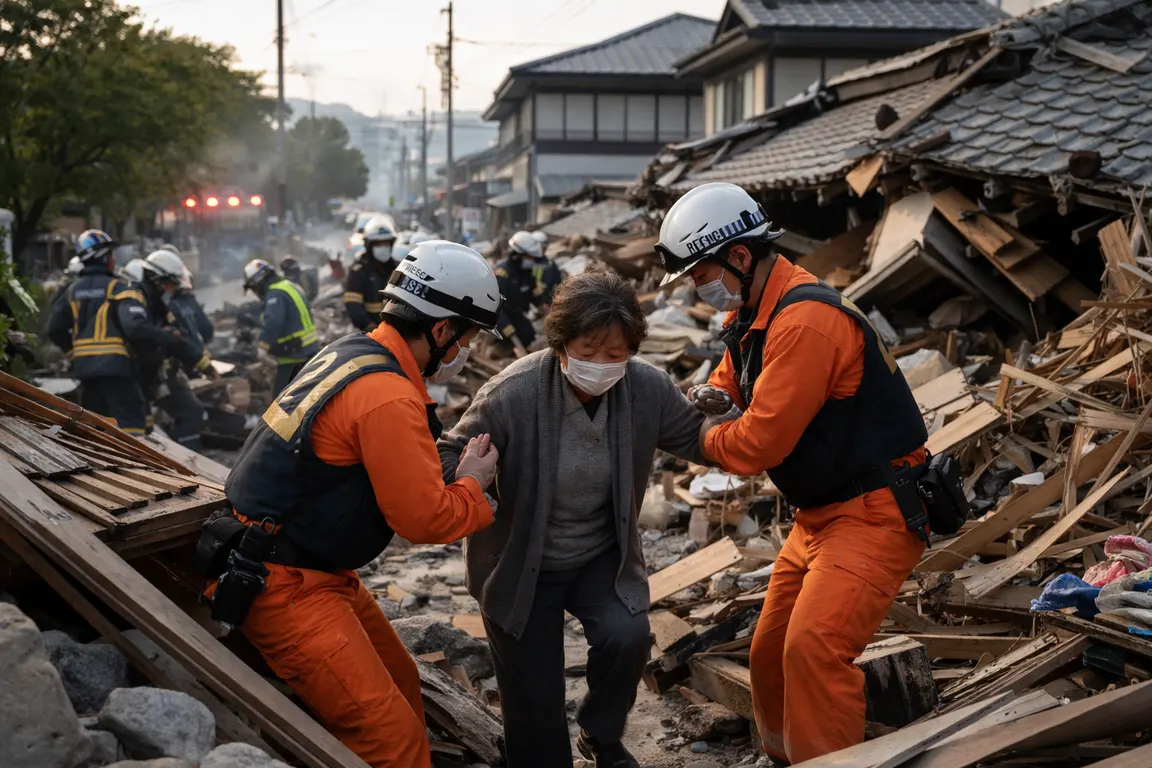
A 7.1-magnitude earthquake struck Kumamoto on Japan's southern island of Kyushu at 4:27 p.m. on Tuesday, prompting tsunami warnings and raising concerns about public safety and infrastructure. The earthquake, which was measured at the highest possible level 7 on Japan's Shindo scale of shaking, has sparked tsunami warnings and disrupted transportation, highlighting the need for disaster preparedness and response in one of the world's most seismically active countries.
The Japan Meteorological Agency issued a tsunami alert, warning of a potential tsunami measuring up to 1 meter, and dozens of people were injured in the quake, with a train also derailed. Japan is located on the Pacific 'Ring of Fire' and experiences hundreds of earthquakes every year, but the frequency and severity of these events have significant implications for the country's infrastructure and economy.
The earthquake had a depth of 10 kilometers and was felt widely across the region, with the tsunami warning issued shortly after the quake. As the people of southern Japan assess the damage from the latest earthquake, concerns are growing about the region's ability to withstand the frequent seismic activity. The immediate focus is on search and rescue efforts, as well as ensuring public safety, but the long-term implications of the earthquake will depend on the extent of the damage and the effectiveness of the response.
Authorities are working to restore transportation and provide aid to those affected, but the risk of further earthquakes and tsunamis remains a significant concern. The impact of the earthquake on Japan's economy and infrastructure will be closely watched in the coming days and weeks, as the country seeks to recover from the latest disaster. The Japanese government's response to the earthquake will be crucial in mitigating the effects of the disaster and ensuring the country's resilience in the face of natural disasters.