

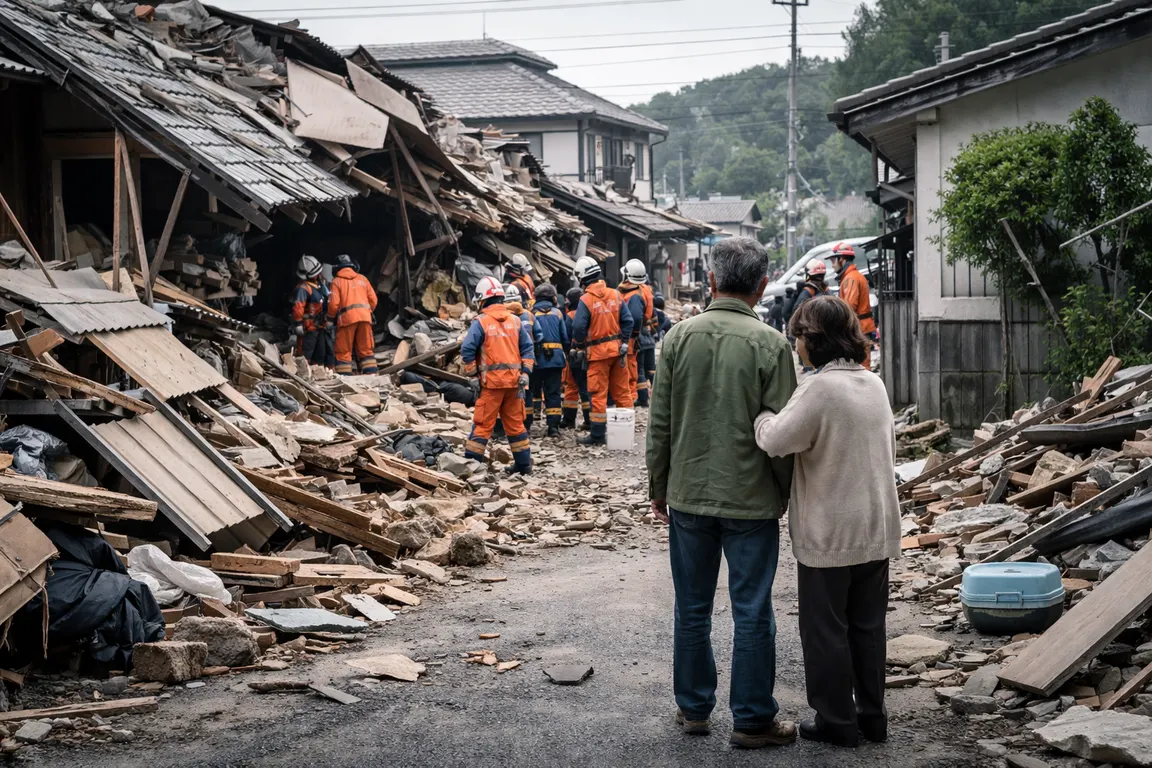
A 7.1-magnitude Japan earthquake struck southwestern Japan on Tuesday, killing at least 18 people and injuring 62, with six of those injuries considered serious. The quake caused widespread destruction, leaving over 34,900 homes without electricity and 15,000 homes without running water. More than 8,800 people have been evacuated to shelters.
The search and rescue operations are ongoing, with Japan's Self Defense Forces and hundreds of professionals, including firefighters from Taiwan, involved in the efforts. The full extent of the destruction is becoming clear, with many lives lost and many more at risk. Rescuers are combing through the rubble of a badly damaged shopping mall, where an explosion occurred 80 minutes after the earthquake. The cause of the explosion is still being investigated.
The earthquake's impact is a significant concern due to the large number of affected people, infrastructure damage, and the potential for more aftershocks. Thousands of people are affected, with many more at risk due to the potential for aftershocks and the existing damage to infrastructure, including homes, roads, and essential services. The support being provided to those affected by the earthquake, including food, shelter, and medical care, is crucial, with long-term plans for recovery still being determined.
The next step for rescuers is to continue searching for survivors, while also providing support to those affected by the earthquake, and working to restore essential services to the affected areas. The current status of the search and rescue operations is a top priority, with many still missing and the chances of finding them alive uncertain. The earthquake has had a significant impact on the community, with the potential for aftershocks and the existing damage to infrastructure posing a significant risk to public safety and emergency response.