

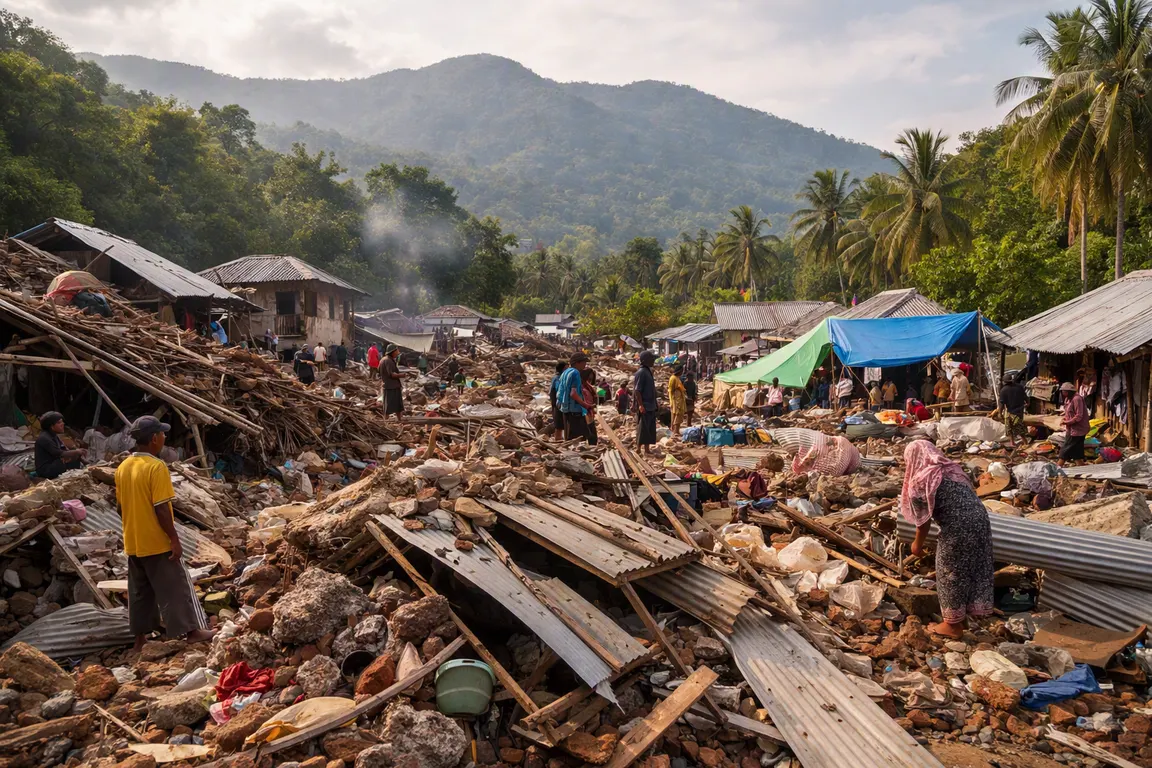
A magnitude-7.7 Indonesia Earthquake struck eastern Indonesia, killing at least 51 people and displacing thousands. The earthquake, which had its epicenter in the Flores region, has left many without access to basic necessities like food, water, and shelter.
The disaster has highlighted the country's vulnerability to natural disasters, with over 5,000 people displaced and more than 1,300 homes damaged. According to the US Geological Survey, the earthquake occurred at a depth of 10 kilometers, causing widespread destruction and landslides.
Rescue teams are facing significant challenges as they dig through rubble and landslides to reach affected areas. The local economy is also likely to be impacted, particularly in the tourism sector, as the disaster has occurred near a popular tourist destination, Komodo National Park.
The current situation on the ground is dire, with many people in need of urgent assistance. The Indonesian government and aid agencies are working to provide support to those affected, but the scale of the disaster is significant, and it may take some time to reach all those in need.
As the rescue efforts continue, questions are being raised about the longer-term implications for the region and how it can be better prepared to respond to natural disasters in the future. The earthquake has affected thousands of people, and it will likely take a significant amount of time and resources to rebuild and recover.