

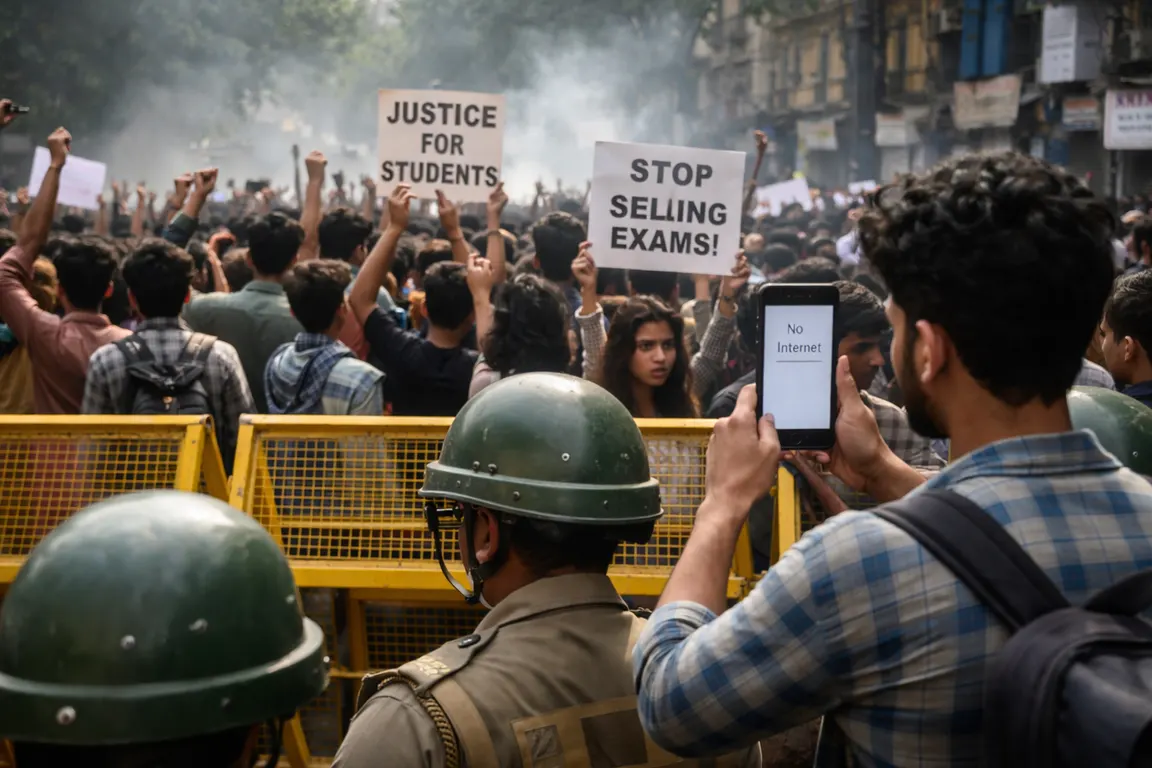
The Indian government has ordered telecom companies to disable mobile data services in central parts of Delhi, as youth-led protests over exam paper leaks, known as India protests, continue to escalate. The protests, which have affected over 2 million students, have become a major challenge to the government, with widespread disruptions and calls for reform.
The decision to block mobile internet services is the latest attempt by the government to quell the protests, which have spread to other cities, including Ranchi, Pune, Thiruvananthapuram, and Kolkata. At least 178 people, including security personnel, were injured in clashes between protesters and police on Monday.
The protests began last month, when youth protesters started camping in central Delhi, demanding the resignation of Education Minister Dharmendra Pradhan. The exam paper leaks, which sparked the protests, have had a significant impact on the students involved, with many expressing frustration and disappointment. The Indian government has promised to set up fast-track courts to punish those involved in the exam leaks, but the move has done little to calm the protesters.
The protests have also affected local businesses, commuters, and the broader community, with concerns about public safety and the impact on the economy. The shutdown of 16 metro rail stations in and around central Delhi has further disrupted life in the city, with many people struggling to get to work or school.
As the situation continues, the government is under pressure to find a solution to the crisis, which has raised questions about the country's education system and its ability to address the concerns of its young people. The protests are set to continue, with calls for nationwide demonstrations on Friday, and it remains to be seen how the government will respond to the growing unrest.