

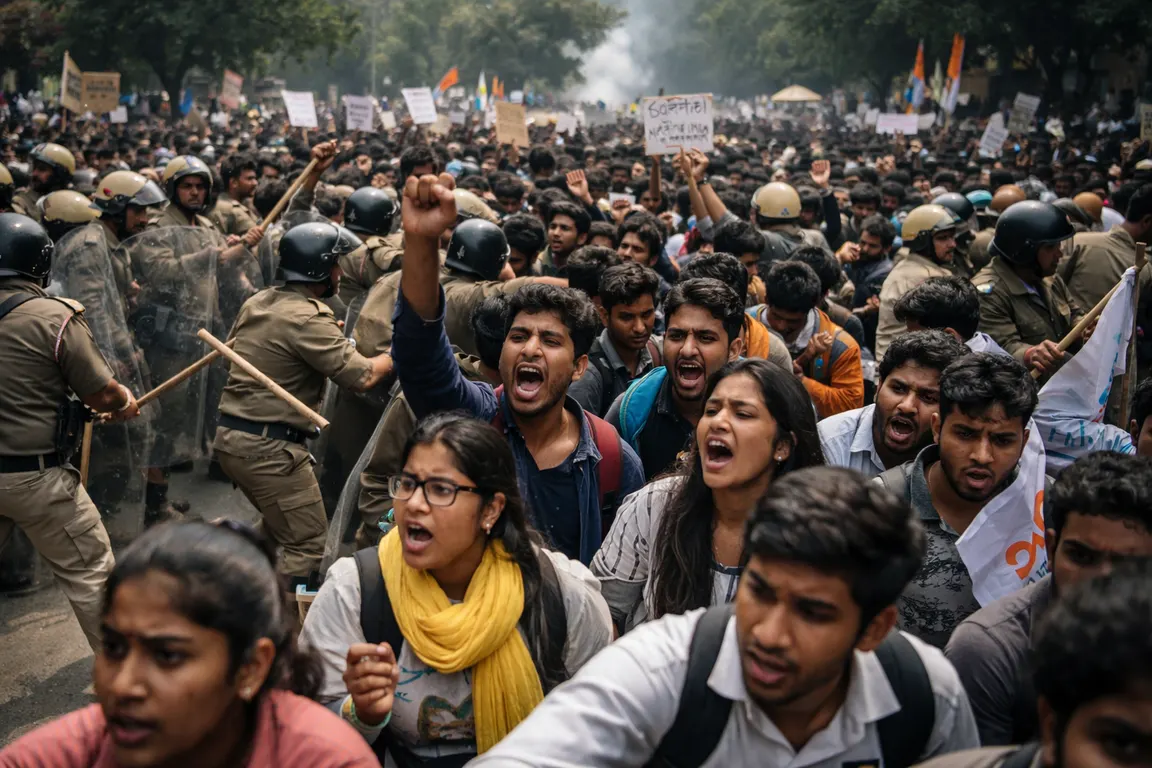
Thousands of protesters gathered in New Delhi on Monday and Tuesday, leading to clashes with security officials that left at least 178 people injured. The protests, led by a student-led movement, are a significant challenge to the government, with thousands of people demanding education reforms and the resignation of the education minister after repeated examination scandals in India's education system.
The protests follow a series of examination scandals that have shaken confidence in the country's testing system, including a recent incident where 2.2 million aspiring medical students sat for a re-examination under tight security after the previous test was scrapped. This movement is affecting thousands of students, parents, and citizens who are demanding education reforms and a more transparent testing system.
The government's response to the protests has been a subject of uncertainty, with disagreement between police and protest organizers over the number of injured protesters. The protests have the potential to impact India's economy and job market if the education system is not reformed. As the movement gains momentum, India's government is facing a critical test of its ability to respond to the demands of its citizens and reform a flawed education system.
The main demands of the protesters include education reforms and the resignation of the education minister. The government's next step will be crucial in determining the outcome of the protests and the future of India's education system. The protests have highlighted the need for urgent reforms in the education sector, and the government's response will be closely watched by the public and international community.
The education system in India has been plagued by scandals and controversies in recent years, eroding public trust and confidence. The current protests are a manifestation of the deep-seated frustration and anger among students, parents, and citizens. The government must take concrete steps to address the grievances of the protesters and initiate meaningful reforms to restore public trust in the education system.
The impact of the protests on India's economy and job market cannot be overstated. A flawed education system can have far-reaching consequences, including a lack of skilled workforce, brain drain, and decreased economic competitiveness. The government must prioritize education reforms and work towards creating a more transparent and accountable system that meets the needs of its citizens.
In conclusion, the protests in India over the education system are a wake-up call for the government to take urgent action and initiate meaningful reforms. The government's response to the protests will determine the outcome of the movement and the future of India's education system. With thousands of students, parents, and citizens demanding change, the government must prioritize education reforms and work towards creating a better future for its citizens.