

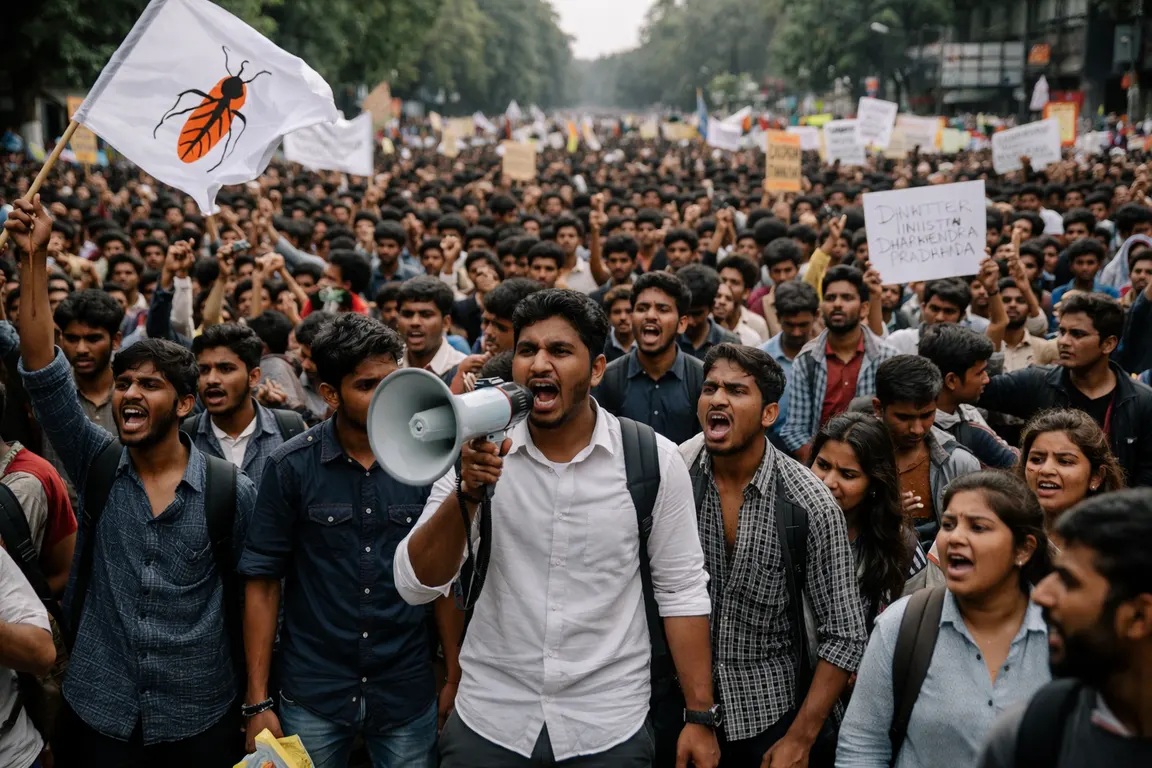
Protests led by the Cockroach Janta Party have spread across India, with demonstrators demanding Education Minister Dharmendra Pradhan's removal over exam leaks and job scarcity in India's education system. The protests reflect deep-seated concerns about the education system and economic opportunities, potentially impacting the country's youth and its future.
An activist recently ended a 26-day hunger strike that helped galvanize the protests, drawing attention to the issues of exam cheating and a lack of jobs. The Indian government faces a significant challenge from the protests, with sources indicating a lack of information on specific plans to address the protesters' demands.
The protests affect Indian students and the broader community, relating to issues of education, job opportunities, and government accountability. The core demands of the protesters include addressing exam leaks and job scarcity, with the Indian government's response so far being scrutinized. The government has been challenged to address these issues, but sources do not provide a clear timeline for when or if the government will meet these demands.
As the situation unfolds, the question remains whether the government can effectively address the deep-seated concerns of its youth about education and economic opportunities. The potential long-term implications of these protests for India's education system, economy, and political landscape are significant, with many waiting to see how the government will respond to the protesters' demands.
The protests have brought attention to the need for reform in India's education system and the need for the government to provide more job opportunities for its youth. The government's response to the protests will be closely watched, as it will have a significant impact on the country's future. With the protests showing no signs of slowing down, the Indian government is under pressure to address the concerns of its youth and provide a clear plan for the future.