

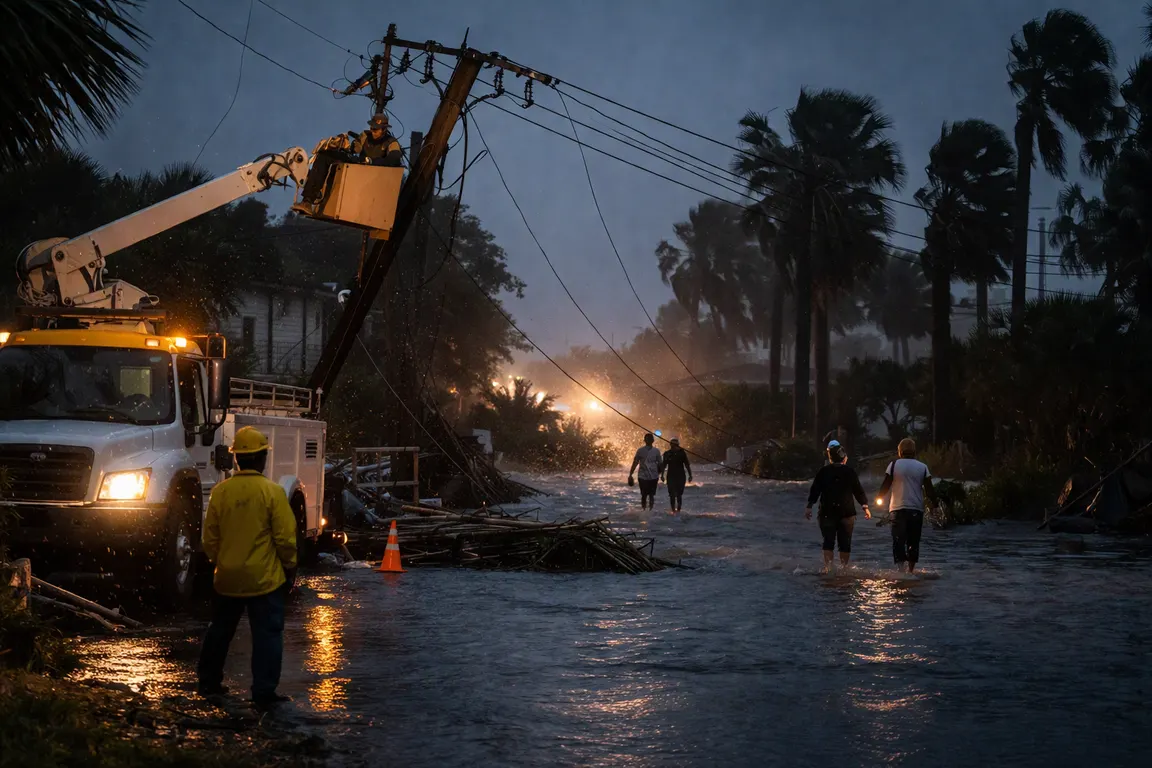
Hurricane Isaias power outages began as the storm made landfall near Destin, Florida, at about 8:30 p.m. Friday as a Category 2 system with sustained winds of 105 mph. Mandatory evacuations were ordered, and a regional blackout affected more than 400,000 customers, prompting a state‑level emergency response.
High winds ripped through the coastal corridor while a 6‑9‑foot storm surge slammed Pensacola Beach and the Gulf Islands National Seashore. Within minutes, power crews reported outages across five Florida counties and three Alabama counties, leaving hundreds of thousands without electricity. The Florida Department of Emergency Management activated roughly 5,000 National Guard personnel, and Governor Ron DeSantis declared flash‑flooding hazards and warned of possible gasoline shortages.
Mobile, Alabama, imposed a curfew and ordered a citywide shelter‑in‑place. Several Waffle House locations closed, a traditional barometer of severe weather. State officials said the power loss reflects both the storm’s intensity and the age of the regional grid. Utility companies estimate restoring service in the hardest‑hit areas could take 48‑72 hours, though crews are working around the clock.
Residents like Gloria Centanni, who evacuated with a newborn while her husband recovers from surgery, illustrate the personal stakes. Emergency Management Deputy Director Laura Goudreau noted that pre‑storm staging of generators, sandbags and mobile shelters helped avoid a larger humanitarian crisis.
Rain bands are expected to deliver 4‑8 inches of precipitation across southern Alabama to southwestern Georgia. Hydrologists warn low‑lying neighborhoods near the Escambia and Blackwater rivers face heightened flood risk. Local authorities have issued boil‑water notices in several counties, and the Destin‑Fort Walton Beach Airport suspended all flights for the night, limiting evacuation options.
The economic ripple extends to tourism, seafood processing and fuel distribution. Hotels along the Gulf Coast reported cancellations, and the temporary shutdown of several fuel stations has already prompted price spikes at nearby pumps. While some analysts say the storm will miss major oil hubs, power loss and road closures could delay deliveries to refineries, tightening regional gasoline supplies.
Coordinating the response has required a patchwork of federal, state and local agencies. FEMA pre‑positioned supplies in Pensacola, and the Alabama Emergency Management Agency deployed mobile generators to critical shelters. Joint information centers have been set up to disseminate real‑time updates on power restoration, road conditions and shelter availability.
As Isaias weakens to tropical‑storm strength Saturday afternoon, the focus shifts from wind damage to lingering flood threats and long‑term grid recovery. Residents are urged to conserve water, monitor local alerts and avoid non‑essential travel until road crews clear debris. The next critical step will be assessing structural damage to homes and public facilities, a process that will influence insurance claims and future building codes.
The storm’s path underscores how quickly a region can move from preparedness to crisis, testing the capacity of utilities, emergency services and ordinary families to keep lights on and roofs intact.