

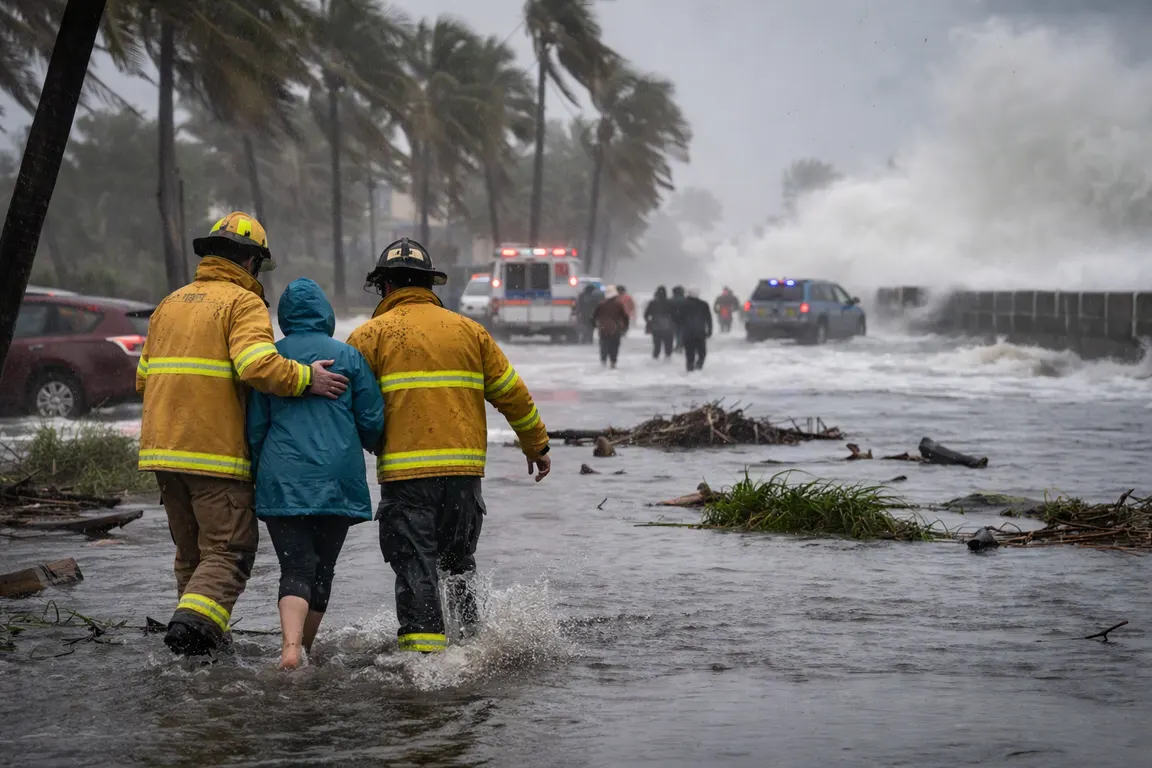
The National Hurricane Center upgraded Hurricane Isaias Gulf Coast to Category 2 on Thursday, reporting sustained winds of 105 mph and warning that the storm could reach Category 3 before making landfall along the Florida‑Alabama‑Mississippi corridor.
State officials responded immediately. Florida governors issued mandatory evacuation orders for coastal areas of four counties, while Alabama, Florida and Georgia declared states of emergency. The warning envelope stretches from Ocean Springs, Mississippi, to the Gulf County line in Florida, and a storm‑surge warning runs from the mouth of the Mississippi River to the Suwannee River. Homeland Security Secretary Mark Mullin said federal, state and local agencies are coordinating resources and information to protect lives and critical infrastructure.
Energy production in the Gulf is already feeling the impact. The Marine Minerals Administration estimates that roughly 63 % of Gulf oil output—about 1.3 million barrels per day—and 57 % of natural‑gas production have been temporarily shut down as offshore platforms were evacuated. The loss adds pressure to national fuel supplies and is expected to tighten gasoline and diesel prices in the coming weeks.
Air travel in north‑western Florida has been disrupted, with two regional airports suspending operations. Thousands of passengers are stranded, and the suspension limits the movement of emergency personnel and supplies. Local shelters in the affected counties are filling quickly, though officials have not released an exact count of evacuees, complicating planning for shelter capacity and resource distribution.
Meteorologists attribute Isaias’s rapid late‑season intensification to a strong El Niño pattern that has reduced vertical wind shear over the Atlantic, a condition that can favor hurricane development. While the NHC has not formally linked the storm’s strength to El Niño, the correlation appears in several forecasts. The projected landfall window runs from Friday night to early Saturday, with possible touchdowns in Florida, Alabama or Mississippi depending on the storm’s forward speed and steering currents.
Emergency response plans focus on protecting critical infrastructure. State emergency management agencies have pre‑positioned utility crews and equipment for power‑grid restoration. FEMA is staging response teams near the anticipated impact zone, and pipeline operators are inspecting and securing shut‑in points to prevent leaks if offshore facilities are damaged. Hospitals in the region have activated emergency operations centers and are coordinating with the Department of Health to maintain continuity of care.
As Isaias approaches, the Gulf Coast faces a dual threat: immediate wind, rain and storm‑surge hazards, and longer‑term economic strain from halted energy production. Residents in evacuation zones are urged to follow local orders, secure property and stay informed through official channels. Federal and state partners will continue to monitor the storm’s intensity and trajectory, with the next advisory expected late Friday. The ultimate impact on fuel prices, shelter needs and infrastructure resilience will depend on where Isaias makes landfall and how quickly emergency crews can respond after the storm passes.