

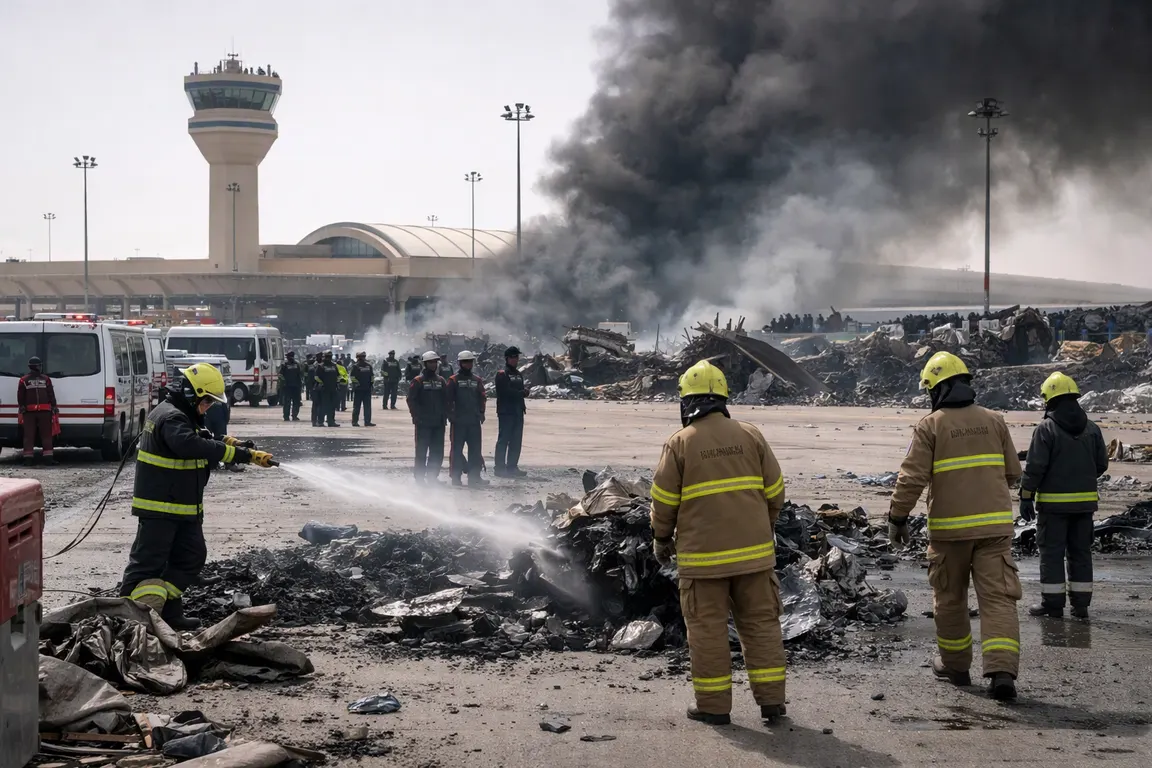
A ballistic missile and a drone struck Saudi Arabia’s King Khalid International Airport in Riyadh on Oct. 7, marking the first large‑scale Houthi missile attacks Saudi airports. Flights were immediately suspended and air‑defence systems scrambled. A second missile hit the runway area at Abha International Airport in the south.
Three civilians – an Egyptian, an Algerian and a Sudanese national – were killed and dozens injured, according to the Manila Times and the Saudi civil aviation authority. Saudi air‑defence units intercepted at least one missile north of Riyadh and said they destroyed the launch platform that fired it.
In a follow‑up operation, Saudi‑led forces reported striking 82 "legitimate military targets" linked to the Houthi movement. The Houthis, known as Ansar Allah, claimed responsibility through spokesman Brig. Gen. Yahya Saree, saying the strikes were retaliation for Saudi actions in Yemen.
King Khalid International Airport suffered a brief shutdown; officials have not confirmed damage to terminals or runways, and the missile was reportedly intercepted before impact. At Abha, authorities confirmed a missile strike that damaged the apron and forced the diversion of several flights. Saudi civil aviation officials also reported damage at King Abdullah bin Abdulaziz International Airport in Jazan and at Najran International Airport, though the extent remains unclear.
Reports of injuries vary, with some sources citing 36 wounded and others three, reflecting the fluidity of information in the aftermath. The strikes came days after Saudi Arabia, Turkey and Pakistan signed the Mecca Defense Pact, a security arrangement aimed at countering Iranian influence.
Airlines responded by canceling or rerouting flights to and from Riyadh and Abha, affecting thousands of passengers. Insurers are reassessing risk premiums for the region, and while the immediate impact on global oil markets appears limited, prolonged disruption to Saudi air traffic could complicate logistics for energy companies that rely on timely personnel and equipment movements.
The coalition’s retaliation and the reported destruction of dozens of Houthi sites suggest a willingness to expand the conflict beyond Yemen’s borders. Saudi officials have not indicated whether additional security measures will be imposed on civilian airports, leaving travelers and airlines uncertain about future operations.
A joint investigation by Saudi civil aviation authorities and international observers is expected to verify the extent of damage at King Khalid and to assess whether air‑defence protocols need tightening.
As Saudi Arabia deals with the humanitarian fallout and the strategic implications of attacks on its civilian infrastructure, the region watches for signs of further escalation or diplomatic de‑escalation, a balance that will shape air‑travel safety and energy market stability in the weeks ahead.