

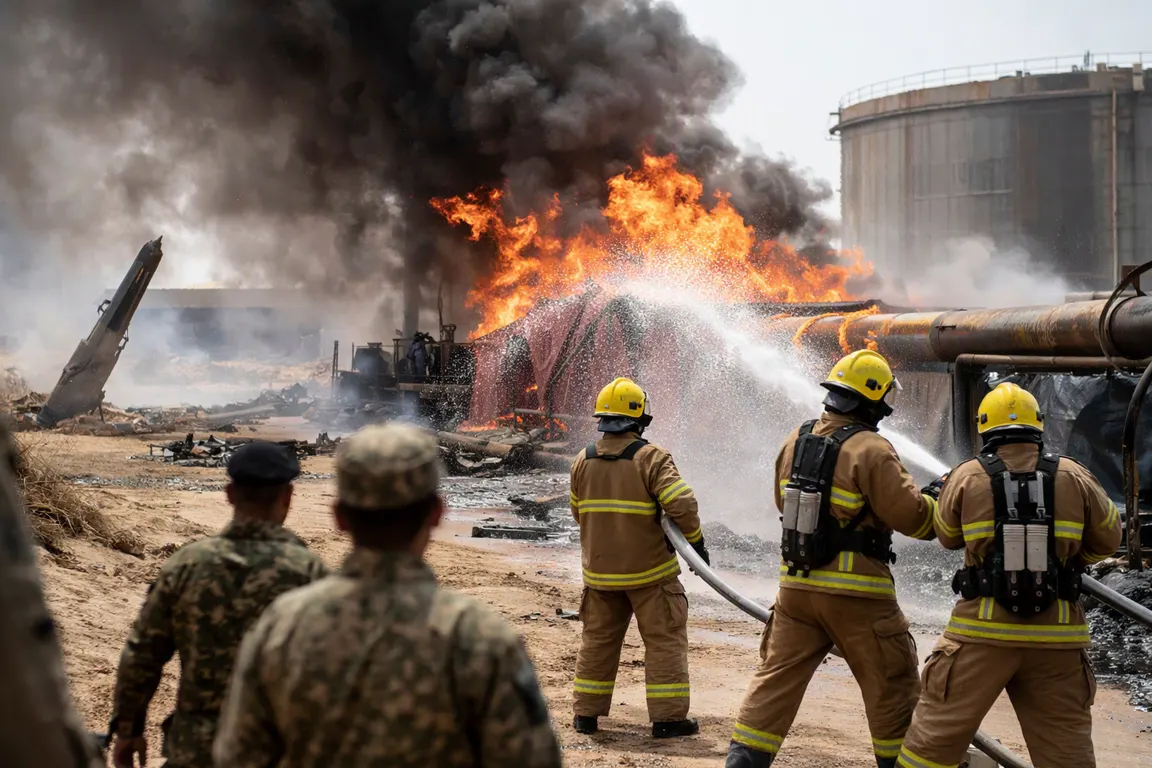
Houthi forces launched a coordinated missile and drone assault on Saudi Arabia’s King Khalid Air Base in Khamis Mushait on Sept. 13‑14, while also striking the nation’s east‑west oil pipeline and seizing the Red Sea islands of Perim and the Greater and Lesser Hanish. The attacks followed a drone strike that disabled a pumping station on the pipeline, forcing the line that moves up to 7 million barrels a day to shut.
The base is a primary hub for Saudi air operations along the southern frontier. Damage to hangars, radars, runways and ammunition depots could limit sorties against Houthi positions and curb the kingdom’s ability to project air power in Yemen.
The captured islands sit 20‑32 km from the U.S. military base in Djibouti, giving the Houthis a foothold near the Bab el‑Mandeb choke point. Their presence raises concerns about the security of the narrow waterway that funnels most global oil shipments.
The pipeline shutdown eliminates a route that bypasses the Strait of Hormuz, cutting an estimated 4 % of global oil supply. Brent crude rose above $108 a barrel and U.S. WTI passed $103 in the wake of the disruption.
Houthis claimed “major damage” at King Khalid, but open‑source analysts have not independently verified the extent of the damage. Saudi officials described the pipeline shutdown as “precautionary.” Reuters and industry sources estimate three to six weeks of repairs, and satellite imagery shows extensive damage to the pumping station. U.S. Energy Secretary Chris Wright told Bloomberg the line would be back “very soon,” a statement that conflicts with the observed repair needs and adds uncertainty for markets.
With the pipeline offline, Saudi crude stocks at the Yanbu terminal are projected to last only five to seven days. Alternative export points such as Ain Sukhna and Sidi Kerir lack the capacity to absorb the shortfall. Shipping companies have begun rerouting vessels around the Cape of Good Hope, adding roughly 20 days to voyages and inflating freight costs. Insurance premiums for Red Sea passages have surged as the risk of further Houthi attacks near Bab el‑Mandeb rises, prompting some carriers to delay shipments.
Humanitarian conditions in Yemen have deteriorated alongside the military escalation. United Nations estimates put more than 80,000 people displaced in the past two weeks, and the death toll from fighting since Sept. 3 exceeds 150 civilians. The island seizures tighten Houthi control over maritime routes that already carry humanitarian aid, complicating delivery efforts and threatening food and medical supplies destined for besieged populations.
Diplomatic activity has intensified but yielded few concrete outcomes. Talks aimed at de‑escalating the Red Sea security threat were postponed after the latest attacks, and regional powers have called for a UN‑led mediation without specifying enforcement mechanisms. The proximity of the newly held islands to the U.S. base in Djibouti has prompted private security firms to advise heightened vigilance, though no additional U.S. forces have been announced.
Repair crews are mobilized, but the range of estimates—three to six weeks—means the market will remain volatile and price spikes are likely to persist. Equally important is whether Saudi air operations can be restored quickly enough to deter further Houthi strikes and protect the newly captured islands.
The coordinated Houthi offensive underscores how a regional conflict can ripple through global energy security, humanitarian relief and maritime commerce. Until the pipeline is repaired and the security of the Red Sea corridor is clarified, oil prices, shipping costs and civilian suffering are poised to stay elevated.