

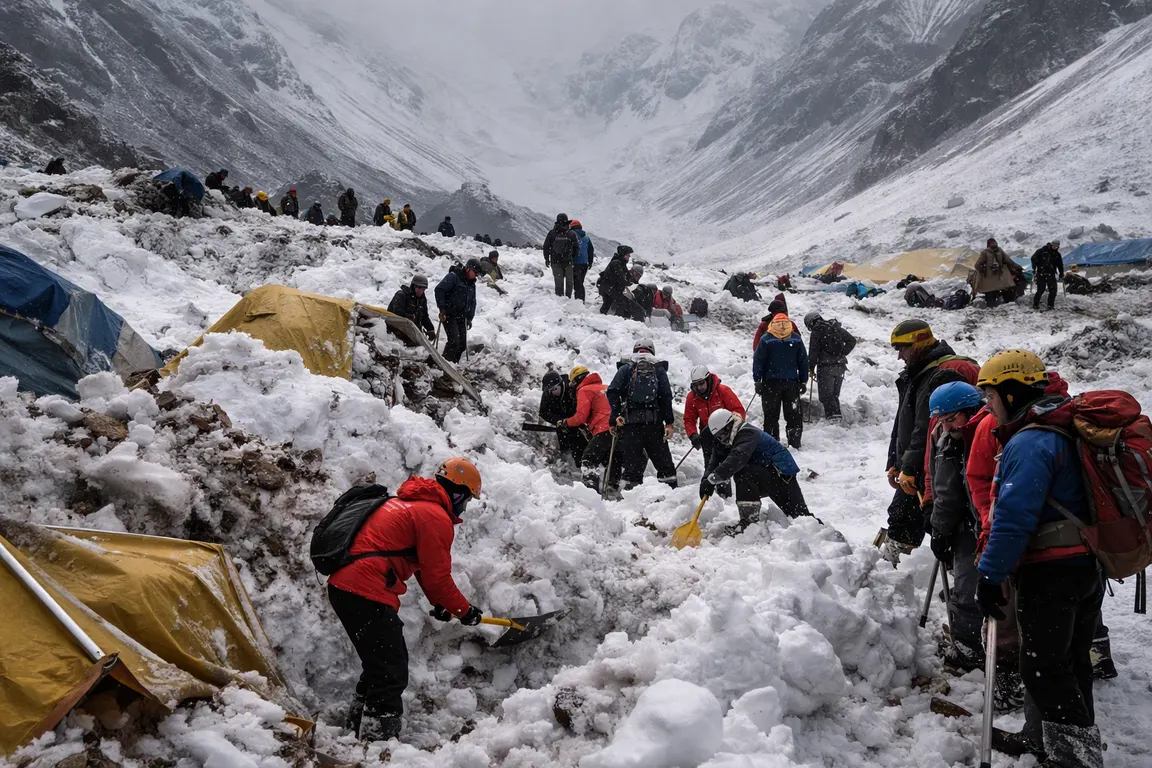
Two mountain guides were found dead and as many as 14 expedition staff remain missing after an early‑morning Himlung Himal avalanche swept the base camp of the 7,126‑metre peak on Sunday, September 26. The Nepal National Mountain Guide Association reported the disaster, reviving concerns about Nepal’s ability to protect the workers and tourists who sustain its multi‑billion‑dollar mountaineering industry.
The slide hit the peak near the China‑Nepal border while the region was still recovering from an August 26 glacial flood that killed more than 1,400 people and a series of rain‑triggered landslides that have claimed at least 21 lives. Heavy snowfall and low visibility delayed rescue teams, which finally reached the site that evening and recovered the two guides’ bodies. A second team led by veteran climber Mingma G. Sherpa resumed the search on Monday, but worsening weather has stalled further progress. Reports differ on the number of missing workers – Al Jazeera cites 12, while the Manila Times puts the figure at 14 – reflecting the fluid nature of information from remote disaster zones.
The incident comes at a critical moment for Nepal’s tourism sector. Trekking and mountaineering generate a sizable share of the country’s GDP and foreign‑exchange earnings, supporting thousands of guides, porters, lodge owners and ancillary businesses in remote villages. Yet climate‑related hazards are intensifying, exposing three interlocking challenges: limited rescue capacity at high altitude, insufficient safety oversight for expedition operators, and a disaster‑response system stretched thin by recent floods.
Rescue efforts are hampered by the same weather that triggered the slide. Fresh snowfall has buried access routes, and the thin air at 7,000 metres limits the use of heavy equipment. The eight‑person guide team that arrived on Sunday relied on rope teams and portable oxygen to navigate the avalanche field. No official statement has detailed additional assets such as helicopters or specialized high‑altitude medical units, leaving observers to question whether Nepal’s emergency infrastructure can keep pace with the growing frequency of mountain incidents.
For the families of the two deceased guides and the missing workers, the toll is immediate. Guides are often the most experienced locals, and their loss leaves dependents without a primary source of income. Many of the missing are seasonal staff who lack comprehensive insurance or safety nets, underscoring a broader vulnerability among low‑paid expedition workers. Their disappearance also threatens the livelihoods of nearby villages that depend on a steady flow of trekkers and climbers.
Industry analysts warn that repeated high‑profile accidents could erode confidence among international trekkers, potentially curbing inbound tourism during the peak season. A decline in visitor numbers would ripple through the economy, reducing earnings for hotels, tea houses and transport providers that operate on thin margins. The disparity in reported missing counts also highlights a gap in coordinated communication between expedition operators, guide associations and government agencies.
As the search continues, the next steps hinge on weather clearing enough to allow additional rescue teams and equipment to reach the site. Officials have not announced any policy revisions or new safety protocols, but the incident is likely to fuel calls for stricter oversight of high‑altitude expeditions and for bolstered emergency response capacity in remote mountain regions. Until then, the Himlung Himal avalanche remains a stark reminder that Nepal’s prized climbing season is increasingly a high‑risk gamble for the workers who keep it alive.