

The FAA issued a search‑and‑rescue alert at about 1:20 a.m. Saturday after a Gulfstream air ambulance disappearance was reported 13 nautical miles south of Nantucket. The Gulfstream G100, operated by Latitude Air Ambulance, lost radar contact while en route from Bermuda to Boston. The aircraft, tail‑number CGRJP, was carrying six people – a pilot, two medical crew members and three patients – when the crew declared an emergency and the plane vanished from all monitoring systems.
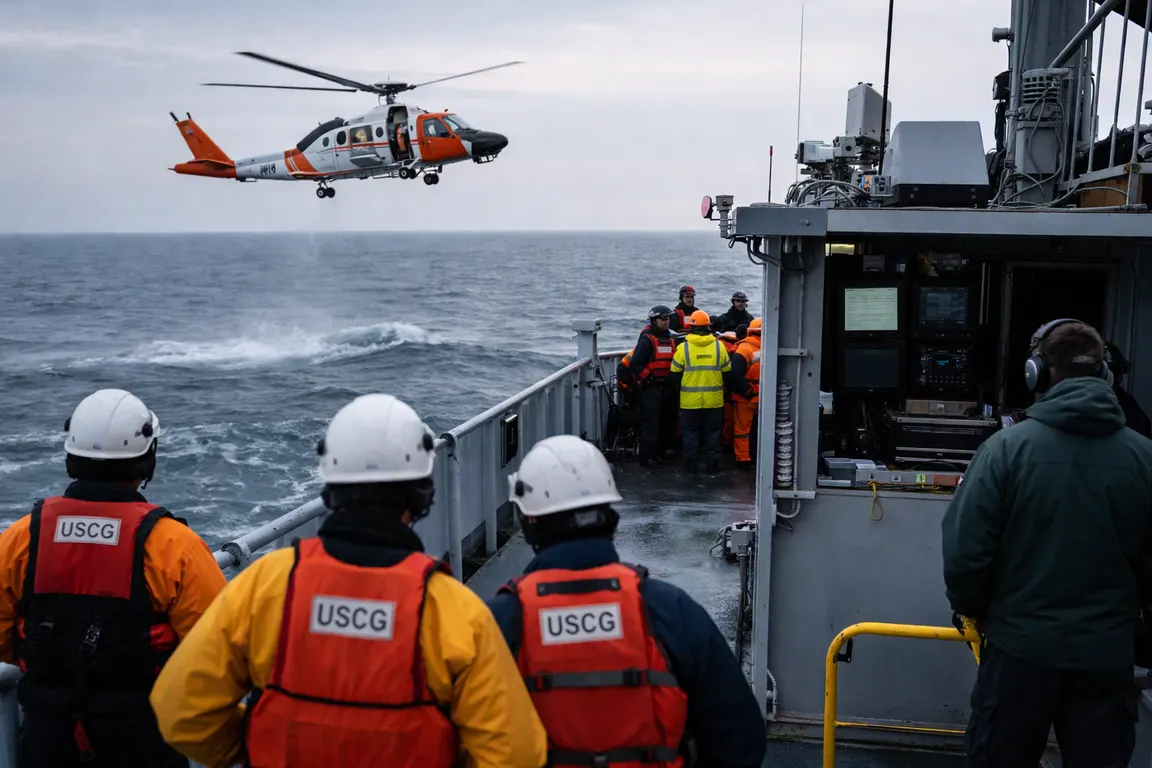
Coast Guard units were dispatched within minutes. An HC‑144 Ocean Sentry from Cape Cod began airborne sweeps, an HC‑130 Hercules from Elizabeth City provided long‑range radar coverage, and an MH‑60 Jayhawk helicopter launched from the same base. A 47‑foot motor lifeboat from Brant Point moved to the projected impact zone, and the cutter William Sparling (WPC‑1154) joined the effort, creating a coordinated net of air and sea assets covering a 13‑nautical‑mile radius.
Latitude Air Ambulance spokesman Clarence Togeretz confirmed the loss, and the FAA reiterated the SAR alert in a brief statement. A short audio recording released by the New York Post captured the pilot saying, “You’re coming in blind,” moments before contact was lost. The Guardian and ZeroHedge reported on the scale of the search, noting that the exact timing of the emergency declaration varies among sources. No wreckage or distress beacon has been found, and the FAA has not disclosed whether the aircraft’s transponder was functioning at the time of loss.
Regulatory experts say the incident highlights gaps in flight‑tracking requirements for air‑ambulance services. Current FAA rules for Part 135 operators require automatic dependent surveillance‑broadcast (ADS‑B) signals, but the disappearance suggests the signal was lost or not monitored in real time. Industry groups are calling for mandatory satellite‑based tracking that updates every few seconds, a capability already required for many commercial carriers but not uniformly applied to medical‑evacuation jets.
Families of the six aboard have been notified. Latitude Air Ambulance has pledged counseling and financial assistance for those directly affected. Insurers and state regulators are watching the case closely, aware that the investigation could prompt revisions to safety standards for medical‑evacuation flights.
The Coast Guard will continue its aerial and maritime sweep through the morning. Officials say the search will remain active until wreckage is recovered or the aircraft’s last known signal is resolved. The FAA’s accident investigation board is expected to issue an update later today, outlining investigative steps and any immediate safety recommendations.
The incident underscores how even life‑saving flights depend on robust, real‑time oversight and reliable tracking technology.