

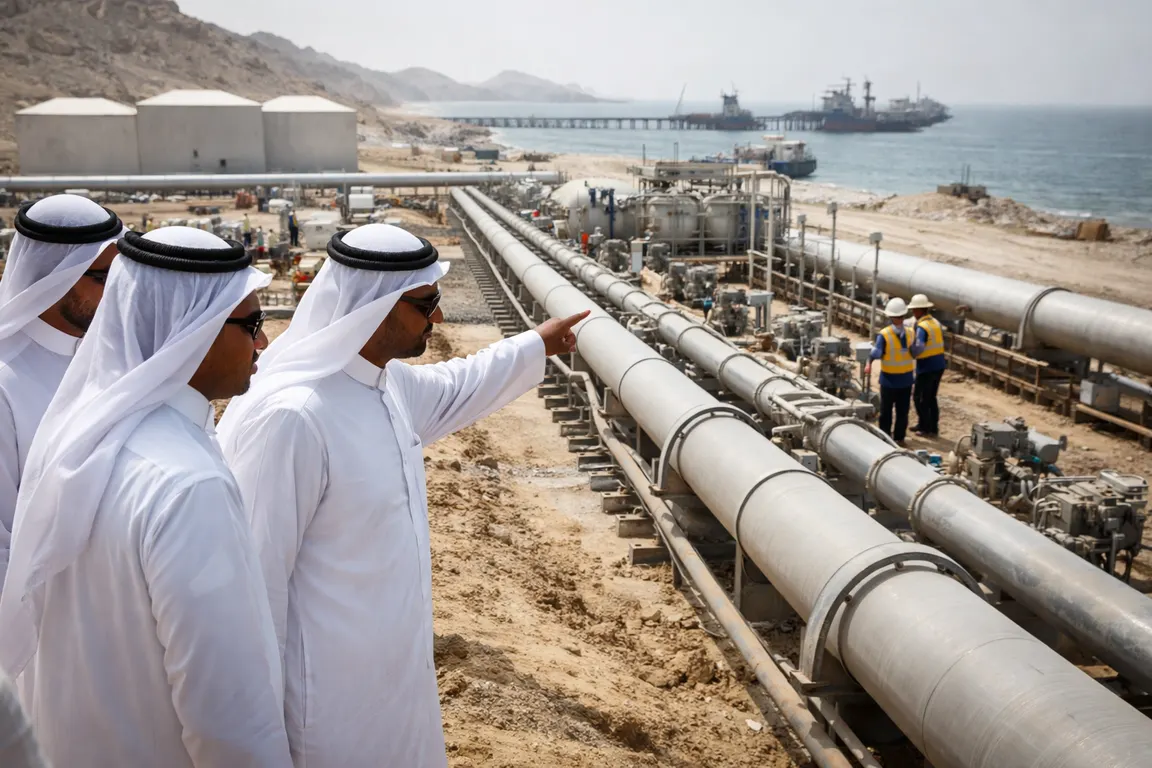
Gulf oil producers are investing billions in alternative routes to bypass the Strait of Hormuz, prompted by its partial shutdown. This move could carry an added 3.8 million barrels of oil a day by the end of next year, reducing dependence on the strategic waterway. The development comes as tensions between the US and Iran continue to escalate.
At least seven major pipeline projects are under construction, in the planning stage, or being discussed as possibilities. The UAE's state-owned oil company is accelerating construction of a $3 billion, 300-kilometer pipeline to Fujairah, aiming to increase oil supplied to Fujairah by more than 1.2 million barrels a day. Iraq is also planning to develop alternative export routes for southern oil fields around Basra.
The conflict has been escalating, with the US and Iran engaging in a war of words and the Houthis launching attacks on Saudi oil tankers. The Red Sea and Gulf of Oman have become vital alternatives to the Strait of Hormuz. Brent crude futures have risen over 30% since July 1 due to the escalating conflict, affecting global oil prices and potentially impacting the livelihoods of people in the region.
The completion of these pipeline projects could significantly reduce the region's dependence on the Strait of Hormuz and mitigate the impact of the conflict on global oil prices. The US has warned of potential military action if Iran does not comply with its terms, while Iran seeks to enforce its interests, leaving the outcome of the conflict uncertain. With the fate of the region's oil supply hanging in the balance, the next step will be to see how these pipeline projects progress.
The investment in alternative routes is a significant step towards reducing the region's reliance on the Strait of Hormuz. As the situation continues to unfold, the impact of these pipeline projects on the global oil market will be closely watched. The ability of Gulf oil producers to adapt to the changing circumstances and find new ways to export their oil will be crucial in maintaining stability in the region.