

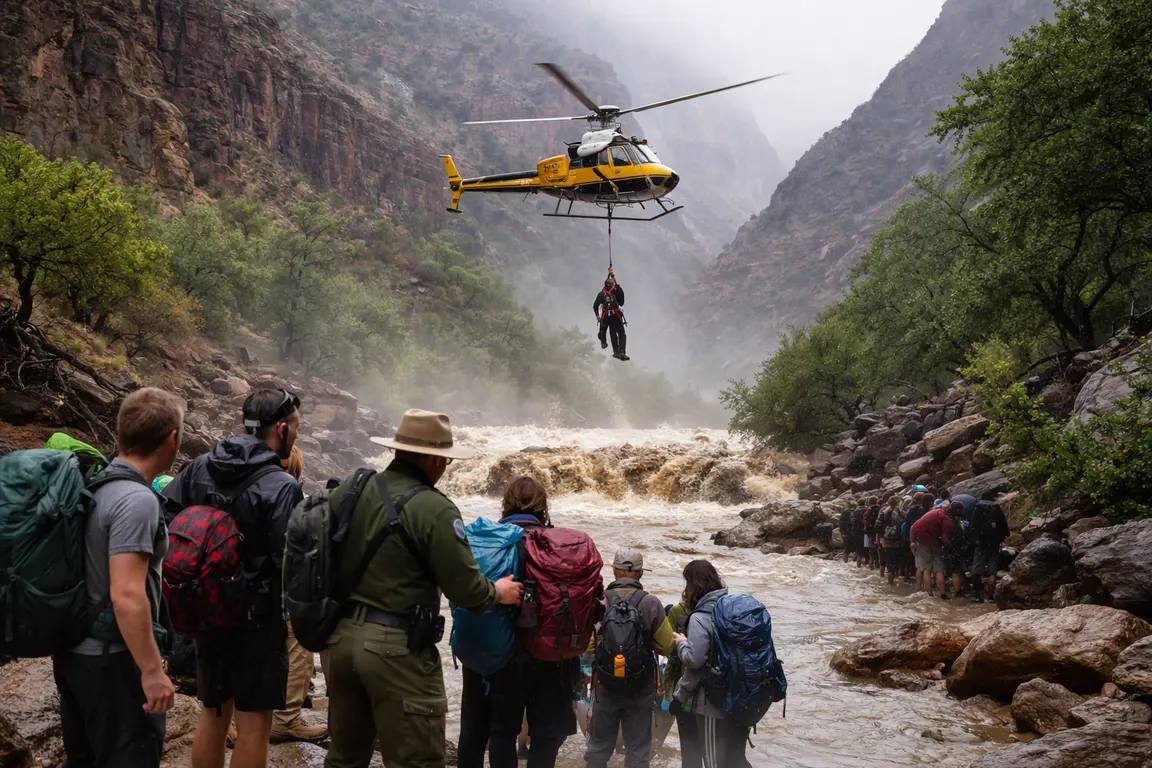
A sudden wall of water surged through Bright Angel Creek during a Grand Canyon flash flood on Saturday, killing two visitors and prompting the rescue of nearly 80 hikers. Helicopters lifted people from the canyon floor while ground crews searched for those still missing.
Intense rain fell across the South Rim, funneling runoff into Bright Angel Creek, the main waterway that runs through the park’s most heavily trafficked trail system. The flash flood swept hikers off the trail, overturned equipment and carried people downstream. National Park Service teams, aided by federal and state responders, airlifted roughly 80 hikers to safety. Two deaths were confirmed – one on Saturday and a second on Monday – while the number of missing persons remains unclear. The Guardian reported one missing individual; NBC cited more than a dozen.
Experts say a mix of climate‑related factors amplified the event. Prolonged drought has left soils less able to absorb heavy rain, accelerating runoff. Recent wildfires on the canyon rim stripped vegetation that would normally slow water flow, and unusually warm Pacific Ocean waters are believed to intensify storm systems that bring heavy precipitation. Together, these conditions created a “perfect storm” for flash flooding in an area already prone to sudden water surges.
Park officials have deployed search teams around the clock, combing the creek corridor and adjacent canyon walls for missing hikers. Helicopter crews continue to monitor the area, and ground teams are using drones and thermal imaging to locate individuals. The National Park Service has not announced specific changes to safety procedures, but senior rangers said the incident will trigger a review of warning signage, trail‑closure criteria and real‑time communication with visitors during severe weather.
Forecast models from the National Weather Service call for more heavy rain and thunderstorms across the region later this week. Officials warned that additional precipitation could trigger further debris flows, flash floods or rock falls, posing risks to visitors and downstream communities that could see elevated river levels.
The human toll extends beyond the confirmed fatalities. Families of the missing grapple with uncertainty, and many rescued hikers face trauma and possible medical issues. Local businesses that depend on canyon tourism – hotels, restaurants and guided‑tour operators – may see a short‑term dip in revenue as the park evaluates safety measures and possibly restricts access to popular trails.
As the search continues, the park is expected to conduct a formal assessment of its emergency‑response framework and coordinate with climate scientists to better anticipate extreme weather events. Clearer reporting mechanisms during fast‑moving disasters are also being considered. Visitors are urged to monitor official park alerts, heed weather warnings and avoid the canyon’s inner rim during periods of heavy rain.