

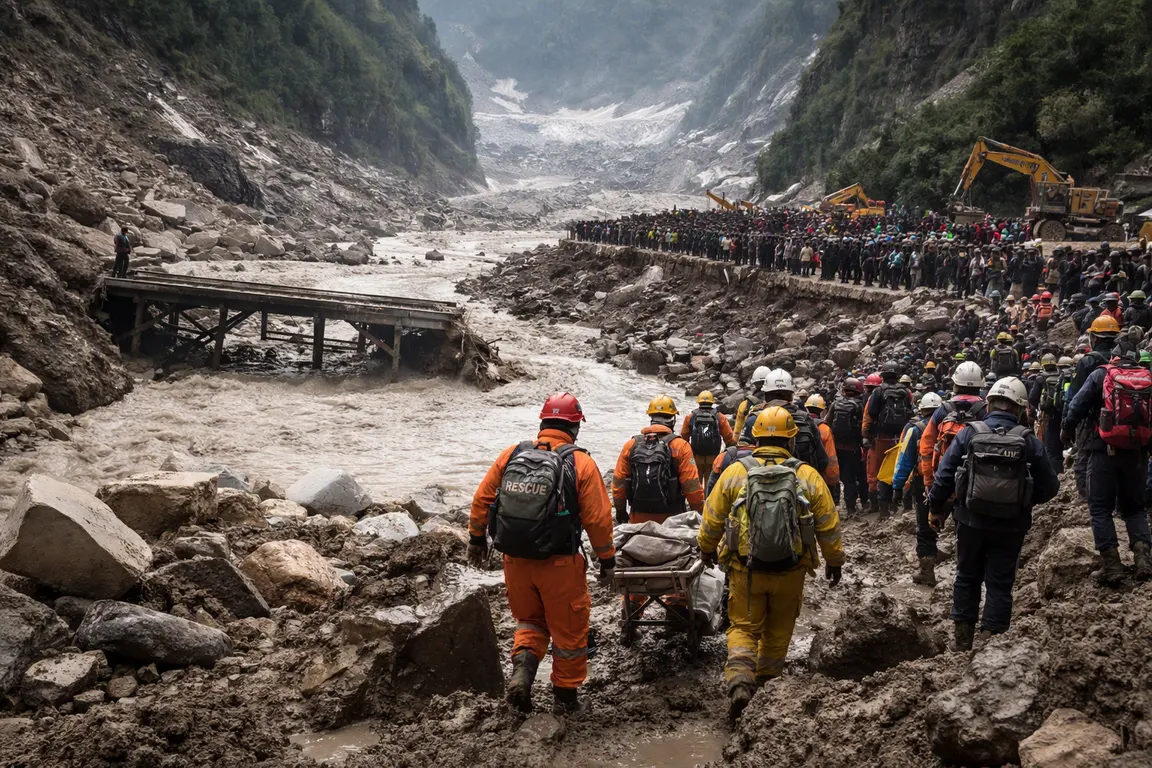
A glacier lake burst at Gyirong on Wednesday sent a wall of ice, rock and mud into the Nepal‑China border region, destroying the main crossing, burying tunnels of eleven hydropower projects and cutting off road access.
Rescue teams say more than 5,000 people remain missing on both sides of the border, including 33 Australians and dozens of Americans. Nepal’s death toll has risen to 903, while officials in Tibet reported 16 deaths.
The surge swept downstream of the collapsed lake, overrunning a valley near a sacred mountain. The immigration building, power lines and the road into Gyirong were flattened, and landslides have blocked all vehicle routes, leaving helicopters and foot patrols as the only means of reaching the hardest‑hit zones.
Three obstacles are slowing the response. First, the debris field around Gyirong is so deep that all‑terrain vehicles cannot penetrate, limiting the volume of supplies that can be air‑dropped. Second, the hydropower tunnels are buried under meters of mud and rock, preventing any assessment of conditions until specialized excavation equipment arrives. Third, the disaster straddles an international border, requiring coordination between Nepalese and Chinese authorities, a process hampered by differing protocols and the need to secure airspace for rescue flights.
The loss of hydropower capacity has immediate economic implications. The eleven projects together supply a sizable share of Nepal’s electricity. Their shutdown could force the country to import power or rely on diesel generators, raising costs for households and industry and threatening the energy security of the region that depends on the Gyirong corridor.
Experts link the event to a growing pattern of Himalayan melt‑water floods. Warmer temperatures increase the frequency of glacier‑lake outbursts, and rebuilding the damaged infrastructure will likely require climate‑adaptation measures.
International aid is being mobilized. Both Nepal and China have dispatched additional helicopters, though officials have not released concrete figures on how many people have been rescued. Aid agencies note that the flattened port creates a logistical bottleneck for moving supplies inland.
Authorities on both sides are urging families of the missing to register with their consulates. Nepal’s disaster management agency pledged more aerial assets and technical assistance for tunnel excavation, but no timeline has been given for clearing the hydropower sites.
The disaster underscores the need for a joint Nepal‑China emergency framework that can address the terrain’s challenges and the broader climate risk facing the Himalayas. Without coordinated action, the humanitarian crisis and the loss of power generation could have lasting repercussions for the region’s economy and its fragile ecosystems.