

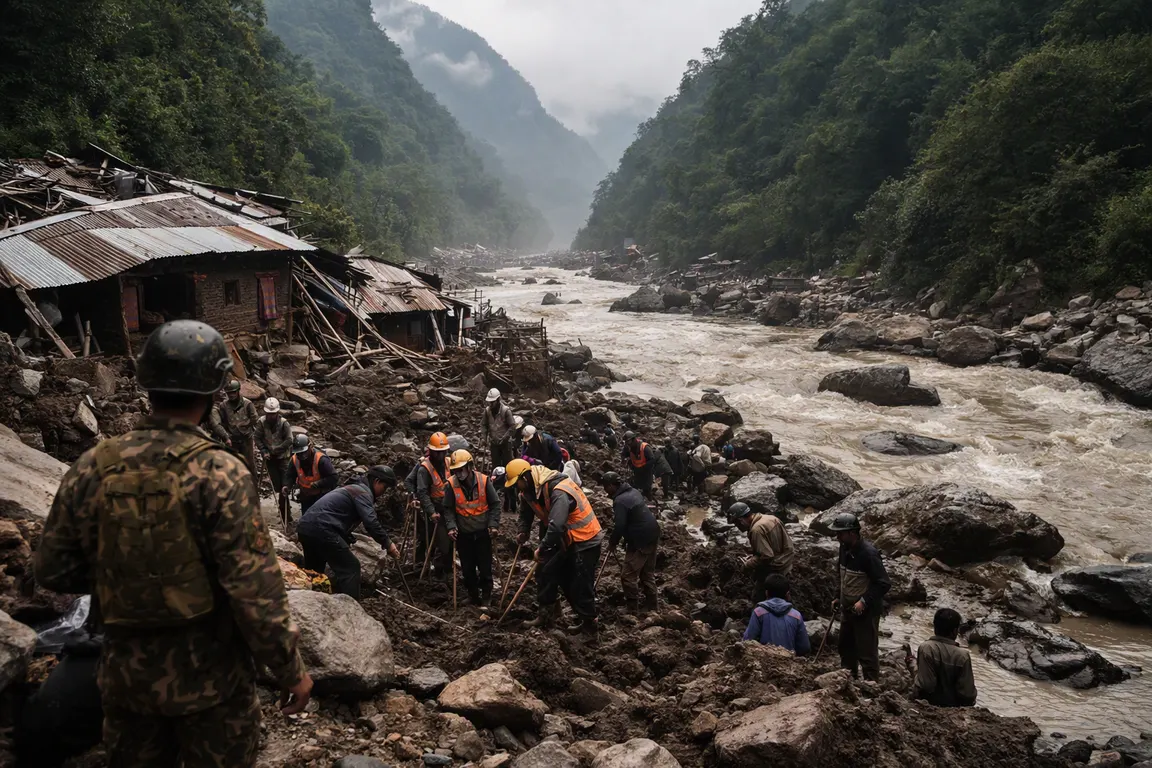
A glacier collapse on the Nepal‑Tibet border in early August 2024 unleashed a torrent that traveled more than 150 miles downstream, killing at least 180 people and leaving between 1,300 and 1,400 others missing, officials said.
The surge began when a mass of ice on the frontier gave way, dumping a wall of meltwater into river valleys that flow from Nepal into China’s Tibet Autonomous Region. The flood swept away roads, bridges and communication lines, cutting off remote villages and forcing rescue teams to trek on foot or use helicopters to reach isolated hamlets.
Rescue efforts on both sides are hampered by ongoing rains, steep gorges and landslides that block access routes. Nepalese police have deployed helicopter units and ground teams, while Chinese authorities in Tibet have mobilised local militia and disaster‑relief units. Language barriers and the absence of a shared early‑warning protocol have slowed the exchange of real‑time information.
The human toll extends beyond the confirmed deaths. Thousands of families have been displaced, their homes, livestock and crops destroyed. In Nepal’s Dolakha district, residents said they stood knee‑deep in water for days as roads turned to mud. In Tibet’s Ngari Prefecture, villagers reported power outages and loss of mobile service, making it difficult to contact relatives.
The flood also threatens the region’s fragile economies. Agriculture, already constrained by a short growing season, faces loss of arable land, and tourism—an important source of income for mountain communities—has been suspended as trekking routes remain unsafe.
The disaster highlights gaps in glacier monitoring and cross‑border coordination. Rapid melt across the Himalayas is well documented, but systematic observation stations are sparse, especially along political borders. Neither the Nepalese nor the Chinese governments have announced policy changes yet, but Kathmandu officials pledged to review disaster‑response mechanisms, and Chinese provincial leaders expressed willingness to share hydrological data.
International aid agencies are beginning to mobilise. The United Nations Office for the Coordination of Humanitarian Affairs (OCHA) has issued an appeal for emergency funding, and NGOs are dispatching supplies to makeshift camps on both sides of the border.
As waters recede, a joint assessment of damage will determine the next steps: a trans‑border early‑warning system and long‑term investment in glacier surveillance. Until those measures are in place, the remote valleys of the Himalayas remain vulnerable to another sudden melt event.