

Glacier Collapse Triggers Flash Flood on Nepal‑Tibet Border
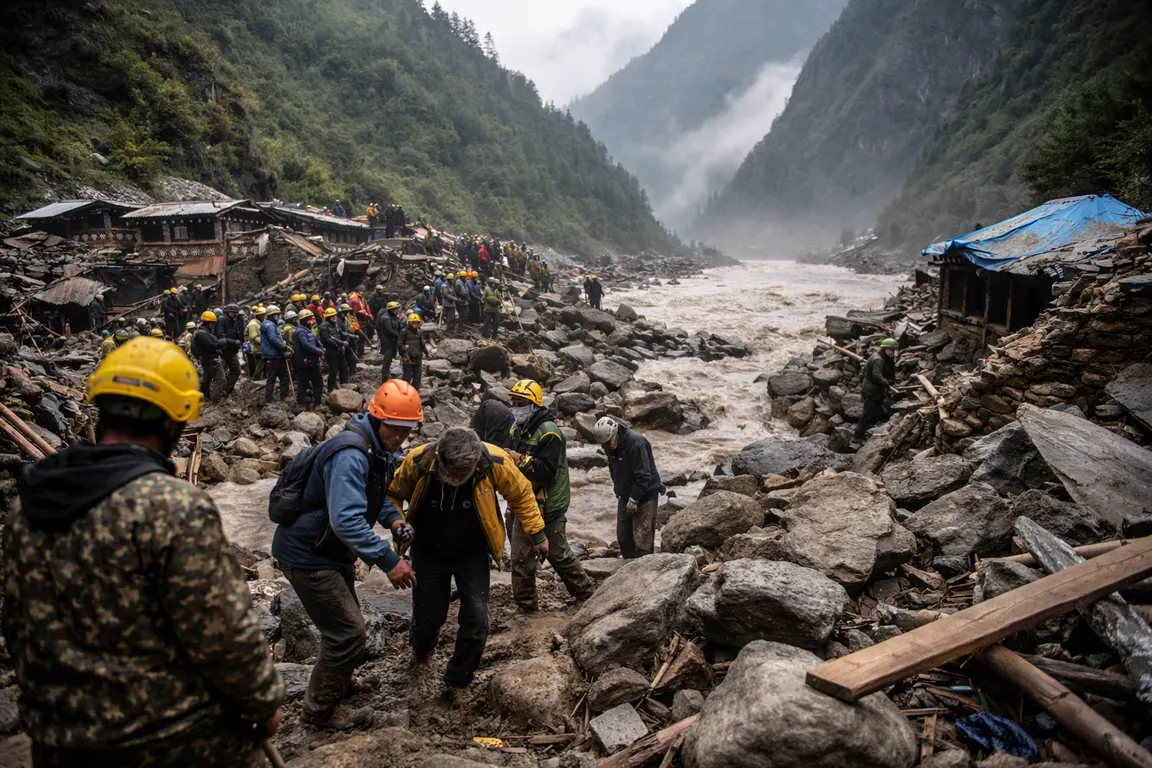
A glacier collapse in Nepal triggered a flash flood that swept through villages in the Langtang region on Wednesday, killing at least 353 people and leaving more than 1,300 missing, including over 600 tourists and 65 Americans.
The collapse, estimated at magnitude 5.2, sent a wall of water and debris down the Lhende Khola tributary. The material formed a temporary dam that held back water until it burst, sending a nine‑metre‑high surge through the Bhote Koshi valley in about half an hour. Homes, bridges and sections of the main road linking Kathmandu to the Langtang trekking corridor were washed away.
Local officials said the flood knocked roughly 10 percent of Nepal’s hydropower capacity offline, threatening an already fragile energy supply. The disaster also exposed gaps in Nepal’s early‑warning system and cross‑border coordination, as the surge crossed the Nepal‑China border before rescue teams could be mobilized.
In the immediate aftermath, the Nepalese army, UN aid teams and several NGOs launched search‑and‑rescue operations. Satellite imagery is being used to map damage and locate water‑logged zones. Survivors described entire hamlets flattened, with families fleeing on foot through mud‑filled valleys.
The human toll is stark. Consular officials from the United States have opened a joint assistance centre in Kathmandu to coordinate information for families of missing Americans. The loss of life and displacement will hit the tourism season hard, and the cost of rebuilding roads, bridges and power infrastructure will strain Nepal’s budget.
Scientists are analyzing seismic data and high‑resolution satellite photos to determine whether the event was a pure glacier collapse or a glacial‑lake outburst, a distinction that matters for future hazard modelling. While the direct link to climate change is still under investigation, researchers note that warming temperatures have accelerated glacier melt in the Himalayas, with an estimated loss of 267 gigatonnes of ice per year between 2000 and 2019. The consensus is that a warmer climate expands the window for rapid melt‑water releases, though the region’s complex geology also contributes to instability.
In response, Nepal’s disaster management agency announced plans to upgrade its glacier‑monitoring network, including automated sensors and a trans‑border early‑warning protocol with Chinese counterparts. International donors have pledged additional funding for emergency shelters, medical supplies and temporary power generation. The United Nations has called for a coordinated regional approach to address the “increasingly frequent” glacier‑related threats across the Himalaya.
As rescue crews continue to search for survivors, the scale of the destruction raises a pressing question: how quickly can Nepal and its neighbours implement robust monitoring and warning systems to prevent a repeat of this tragedy? The answer will shape the safety of the millions who live and travel in the high mountains and test the region’s capacity to adapt to a warming climate.