

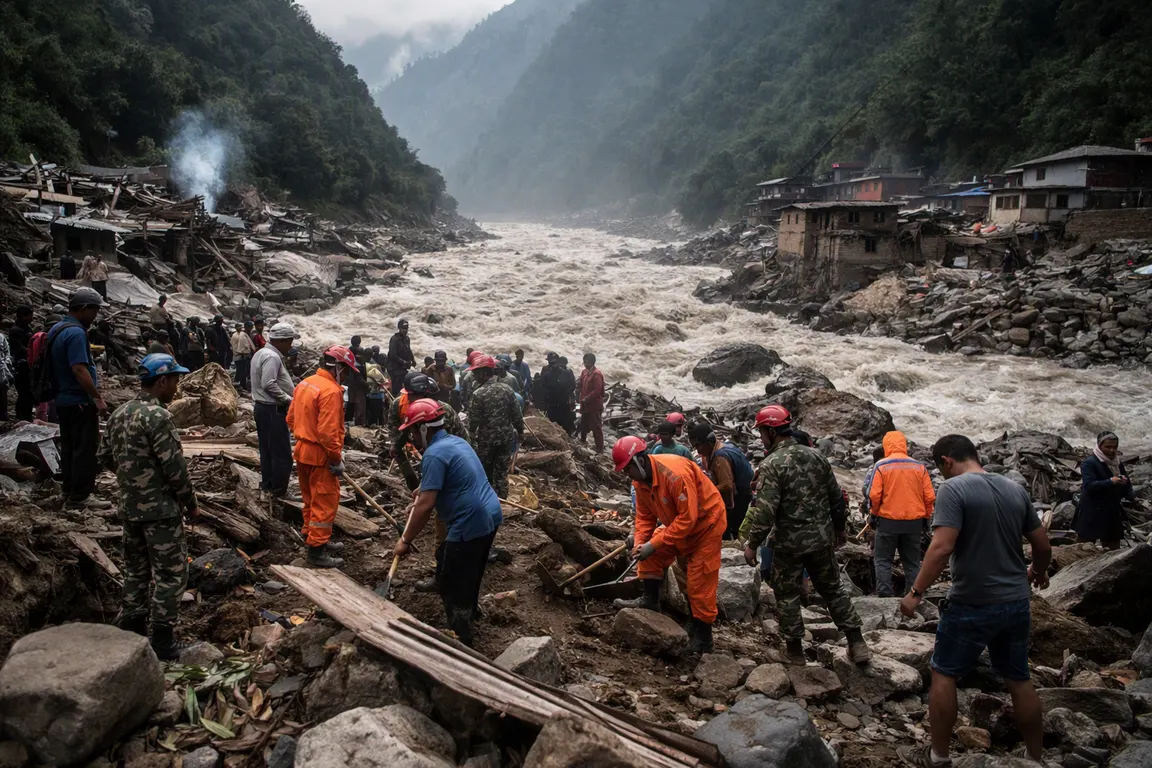
A massive chunk of ice broke away from a glacier on the Nepal‑China border on Aug. 26, triggering a flash flood that swept down the Lende River. The surge has killed at least 682 people—675 in Nepal and seven in Tibet—and left almost 3,000 others unaccounted for, including 90 Americans.
The disaster has stretched rescue capacity on both sides of the Himalayas. Landslides blocked the main highways, and deep mud slowed ground crews. Helicopters that could have reached isolated valleys were grounded by adverse weather on Aug. 27‑28, leaving many areas accessible only on foot.
Chinese engineering units have begun clearing the road to the Gyirong border port to create a corridor for supplies and medical evacuation. In Kathmandu, Nepalese authorities have set up missing‑person boards in hospitals to track relatives of the absent.
The United States responded on Aug. 29 with a $500,000 humanitarian grant, administered through Catholic Relief Services, to support search‑and‑rescue, medical care and shelter for displaced families. A Baltimore‑based tour operator, Himalayan Glacier Adventure and Travel Company, confirmed that all 47 members of its expedition are missing. Media reports have placed the number of missing Americans at 90, reflecting the difficulty of confirming nationalities amid the chaos.
Casualty figures remain fluid. Nepal’s disaster authority lists 675 deaths in Nepal and seven in Tibet, a total of 682. The Guardian has reported “over 600” deaths, aligning with the official tally. The missing count includes residents of the hardest‑hit districts—Tanahun, Nawalparasi East and Dhading—as well as tourists trekking remote trails. Communication lines are down and many villages remain isolated, complicating data collection.
Beyond the immediate humanitarian toll, the collapse threatens the region’s tourism sector. Adventure‑travel operators face cancellations and potential liability claims, while local economies that depend on pilgrim and trekker spending confront a sudden halt. The influx of international aid, including the U.S. contribution, may shape future cross‑border disaster response and prompt discussions on joint emergency protocols between Nepal and China.
Efforts to identify the deceased are underway. DNA labs in Kathmandu have begun processing recovered tissue, and temporary morgues have been set up to store bodies pending identification. Families of the missing are being urged to register with local authorities, a step that could speed future notifications and compensation.
Weather forecasts call for continued rain and the risk of additional landslides, meaning rescue operations are likely to be hampered for days. The next phase will depend on whether Chinese road‑clearing can establish a reliable supply line and whether additional funding can be mobilized. Until then, thousands of families remain in limbo, awaiting news that may never come.