

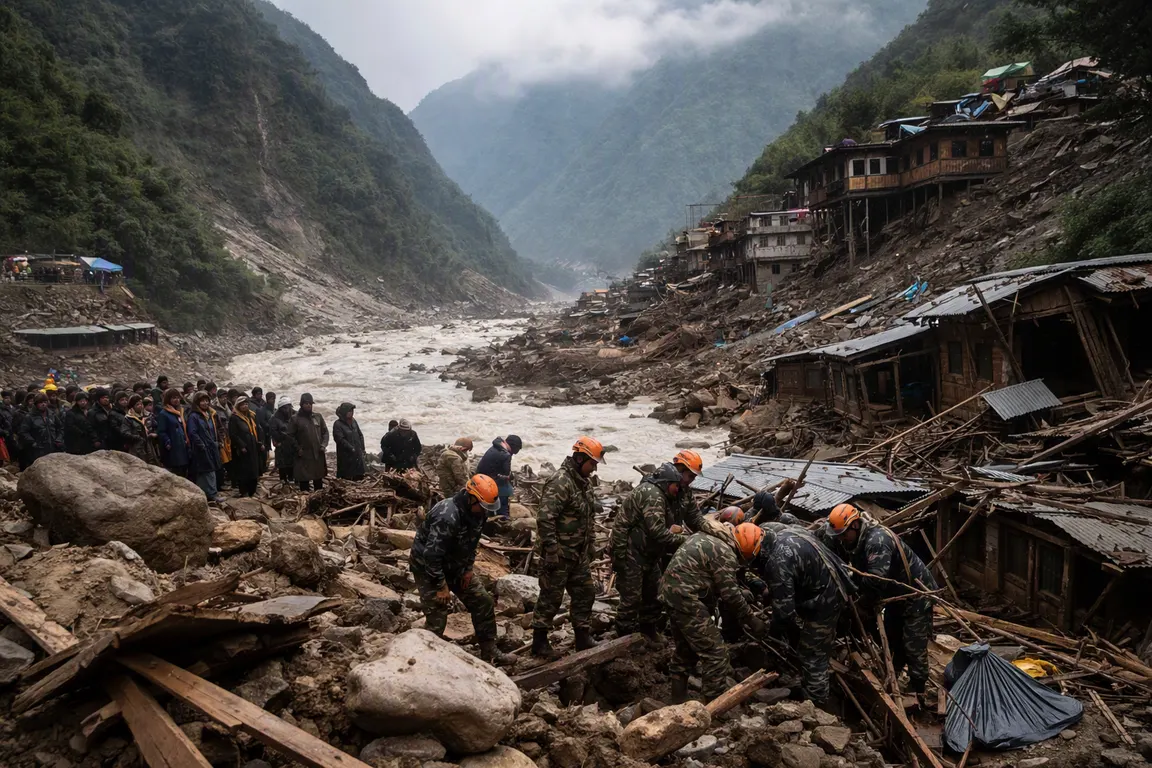
A glacier collapse near the Gyirong port on the Nepal‑China border on Wednesday unleashed a flash flood that swept villages, roads and the border crossing, killing at least 804 people and leaving more than 3,000 missing, officials said Sunday.
The surge of water and debris flooded the Himalayan valleys on both sides of the frontier, overwhelming local morgues and prompting an unprecedented joint rescue effort. Nepal’s army, police and volunteer groups, together with more than 2,100 Chinese rescue workers, have been operating from joint command centers at Gyirong, sharing equipment, maps and translators to coordinate search and recovery.
By Thursday, rescue teams had pulled survivors from the rubble, including a young girl found alive amid the debris. By Saturday, both governments reported confirmed fatalities between 804 and 810, and morgues in the region were at capacity. Officials began displaying slides of recovered bodies to speed identification.
The human toll extends beyond the confirmed deaths. Over 3,000 people are unaccounted for, including 261 foreign nationals; fifteen are British citizens, and a total of 48 Britons are missing across the two countries. Families in remote villages are sheltering in makeshift camps as their homes sit in mud‑filled basins that continue to trap bodies and debris.
Local health services are stretched thin, prompting emergency procurement of medical supplies and temporary mortuary facilities. The disaster has also stalled trade through Gyirong, a key trans‑Himalayan conduit for construction materials, agricultural products and other goods. Trucks awaiting clearance are delayed, adding an economic strain to an already dire humanitarian situation.
Scientists monitoring the Himalayas note that rising temperatures increase the risk of glacial lake outburst floods, but the precise cause of this glacier’s failure remains under investigation. Both governments are assessing whether current rescue capacity can locate the missing, while international aid agencies stand ready to assist. The United Kingdom’s foreign office is working to repatriate its citizens, but rugged terrain hampers logistics.
As floodwaters recede and the mud hardens, the focus will shift to systematic body recovery, identification and long‑term support for displaced families. Authorities have pledged to maintain joint operations until every missing person is accounted for, acknowledging that full recovery could take months. The disaster underscores the vulnerability of mountain communities to climate‑linked glacial failures and highlights the diplomatic and logistical challenges when a natural catastrophe crosses a national border.