

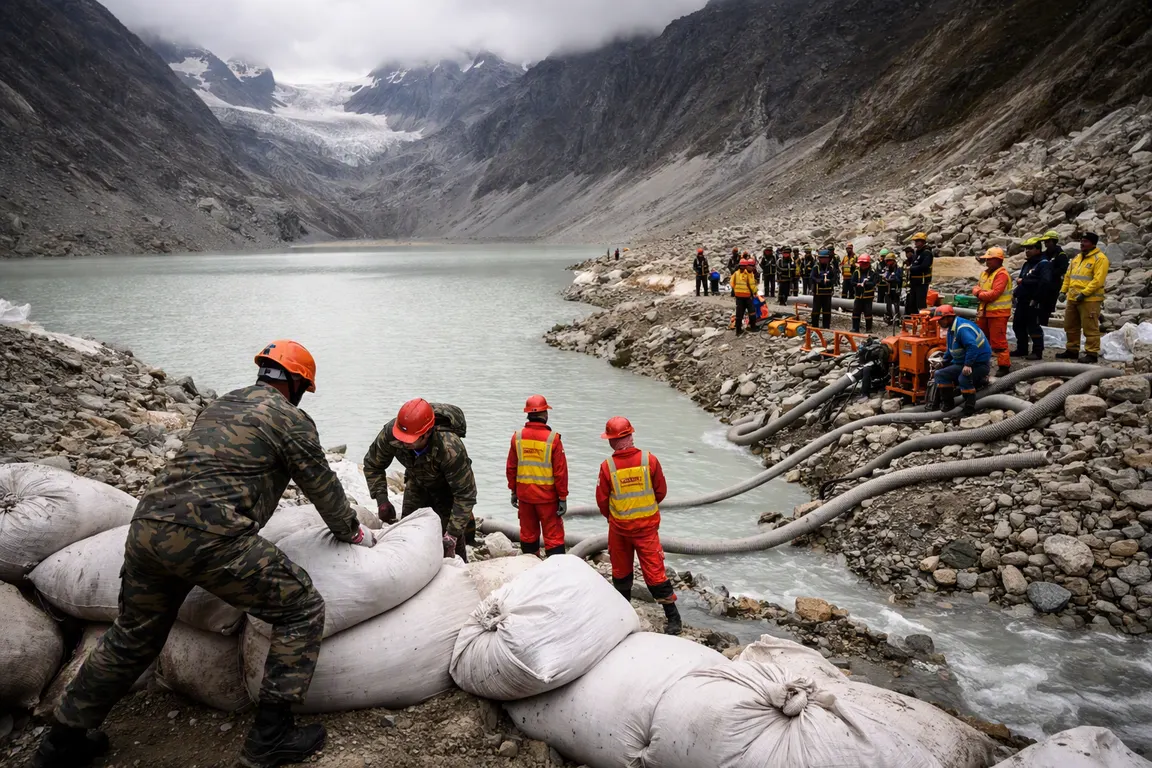
Rescue teams on the Nepal‑China border are racing to contain a newly formed glacial lake Nepal China that could burst, adding a fresh danger to a disaster that has already claimed nearly 600 lives. The lake, perched at about 2,950 m near Gyirong Port, fell roughly 10 m on Oct. 10 but remains unstable, prompting authorities to pause some rescue work while they monitor its level.
The flash flood began on Oct. 8 when a glacier collapse sent a torrent of meltwater across the border, killing 579 people in Nepal and seven in China, according to the Nepal Disaster Management Authority and Chinese state media. More than 3,700 survivors have been rescued, including 3,253 by helicopter, but about 2,500 people are still missing—1,924 in Nepal and 554 in China. Among the missing are roughly 90 Americans and 41 Australians, many on a pilgrimage to Mount Kailash.
The lake’s potential overflow is the immediate concern. An initial spill on Oct. 9 forced a temporary halt to rescue operations. Although water levels fell on Oct. 10‑11, engineers say the moraine dam that holds the lake is still vulnerable to a sudden breach. A breach could flood the Gyirong border crossing, a key trade route, and damage the Upper Trishuli‑1 hydropower tunnel, where more than 100 workers were trapped and 350 have been rescued by the Nepali army.
Cross‑border coordination has intensified. Nepal has lifted a ban on foreign rescue teams, allowing Australian rapid‑response units to join. Sri Lanka contributed a $1 million donation, and neighboring countries have pledged additional aid. Drones, inflatable rafts and extra helicopters are being deployed to search the debris‑strewn valleys. Chinese rescue units operate from the Gyirong side, while Nepalese forces focus on downstream villages and the tunnel.
Casualty figures remain fluid. Nepal’s disaster authority cites 579 deaths, but police later reported 553, reflecting the difficulty of accounting for victims amid mud‑covered roads and destroyed communications. Chinese reports of missing persons are limited, and the cause of a reported dam burst on the Tibetan side of the lake has not been independently verified.
For residents, the disaster has destroyed homes, cut off road access and halted local commerce. The loss of the Gyirong crossing threatens bilateral trade, and damage to the hydropower tunnel could curtail electricity generation for both nations. Tourism, a major revenue source, is expected to decline sharply as foreign pilgrims and trekkers are advised to avoid the area.
Authorities on both sides have issued guidance: stay clear of the lake’s perimeter, follow evacuation orders and await instructions from local disaster‑management offices. International consulates are compiling lists of missing nationals and coordinating with Nepali and Chinese officials to prioritize searches.
As the lake stabilizes enough for rescue crews to resume work, engineers plan to install remote‑sensing equipment within the week to monitor water levels and pressure. The data will determine whether controlled drainage or other preventive measures are needed to avert a secondary flood that could compound the already severe humanitarian crisis.