

Glacial Flood on Nepal‑Tibet Border Leaves Thousands Missing
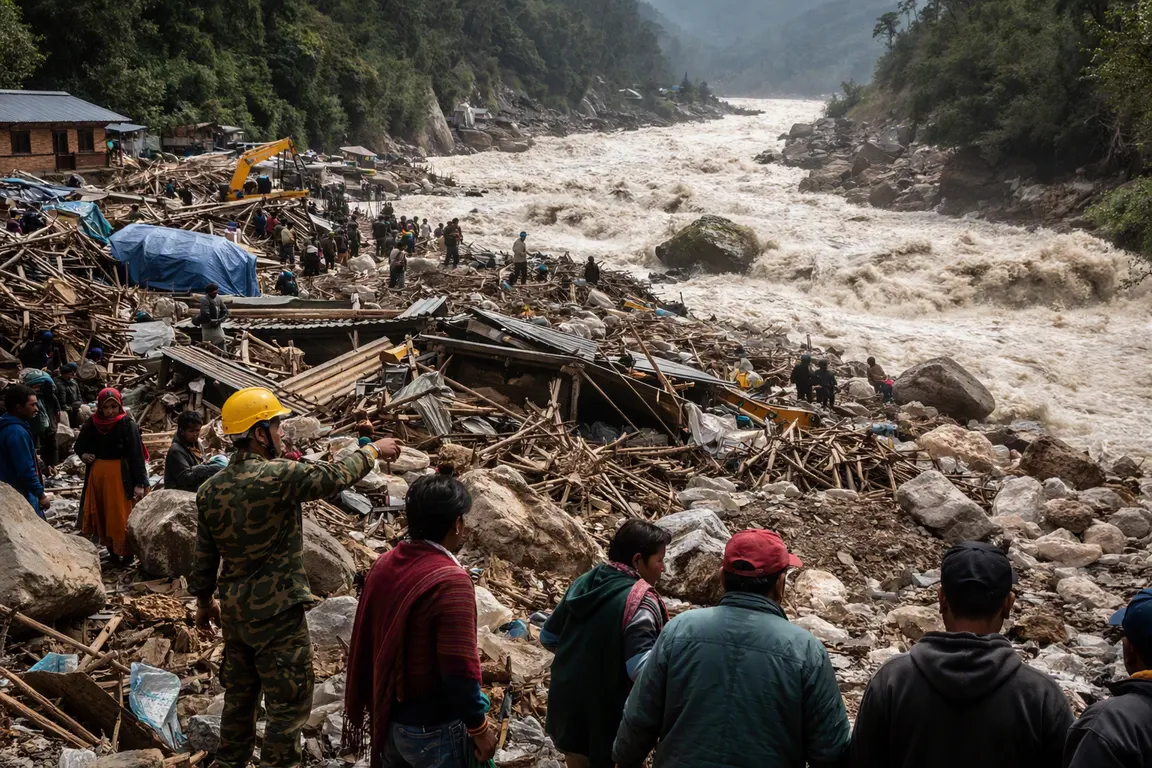
A sudden glacial flood on the Nepal‑Tibet border on Wednesday unleashed a torrent of meltwater that swept villages, hydropower sites and cross‑border roads, killing at least 682 people and leaving an estimated 2,980 still missing.
The surge originated when a glacier gave way and sent water down the Trishuli River basin. U.S. Geological Survey scientists said the exact trigger remains unclear, while UN climate chief Simon Stiell warned that accelerating glacier melt raises the risk of similar disasters.
Nepal’s disaster agency reported 682 deaths and 2,426 missing; Chinese authorities in Tibet listed seven deaths and 554 missing, bringing the combined missing count to about 2,980.
Rescue teams have focused on the Trishuli 3A hydroelectric tunnel, where more than 100 workers may still be trapped. Nepali army engineers have drilled a pipe to pump fresh air into the tunnel and are preparing to excavate the collapsed section. A parallel effort at the nearby Trishuli 3B tunnel targets a similar group of workers, raising the total number of potentially trapped personnel to over 200.
More than 2,100 rescuers, including 500 stationed near the Chinese border port of Gyirong, are engaged in search‑and‑rescue, DNA identification and debris clearance.
The human toll extends beyond the two countries. Nepal’s tourism board estimates 517 foreign nationals are missing, including 90 U.S. citizens, 41 Australians, 98 Indians and 61 Ukrainians. Chinese reports put the foreign‑national missing count at 260.
The United States initially pledged $500,000 on Friday and increased the commitment to $3.6 million on Saturday for emergency food, shelter and medical supplies. Australia, India and Ukraine have dispatched consular teams to assist families and coordinate with local authorities.
The disaster also threatens Nepal’s hydropower sector, a cornerstone of its energy strategy. Over 900 workers were employed at the Trishuli sites, and damage to the tunnels could delay power generation for months, affecting domestic supply and export contracts.
Officials say the event underscores the vulnerability of trans‑border infrastructure to climate‑induced hazards. Calls are growing for stronger glacier monitoring, early‑warning systems and joint emergency protocols between Nepal and China.
Uncertainties remain. Figures for the missing vary between Nepal’s disaster agency, the tourism board and Chinese state media, and access to on‑the‑ground information in Tibet is limited. While climate officials link the flood to broader warming trends, the precise mechanism of the glacier’s failure has not been confirmed.
The next phase will test the region’s capacity to locate survivors and manage the humanitarian fallout. Nepali authorities plan to expand air‑lifting operations into remote valleys and to use sonar equipment to locate bodies inside the tunnels. International donors are expected to convene a coordination meeting in Kathmandu within the week to align aid delivery and discuss long‑term risk mitigation.
As rescue crews continue to work in perilous conditions, the disaster raises a stark question: how will Himalayan nations adapt infrastructure and disaster‑response frameworks to a warming climate?