

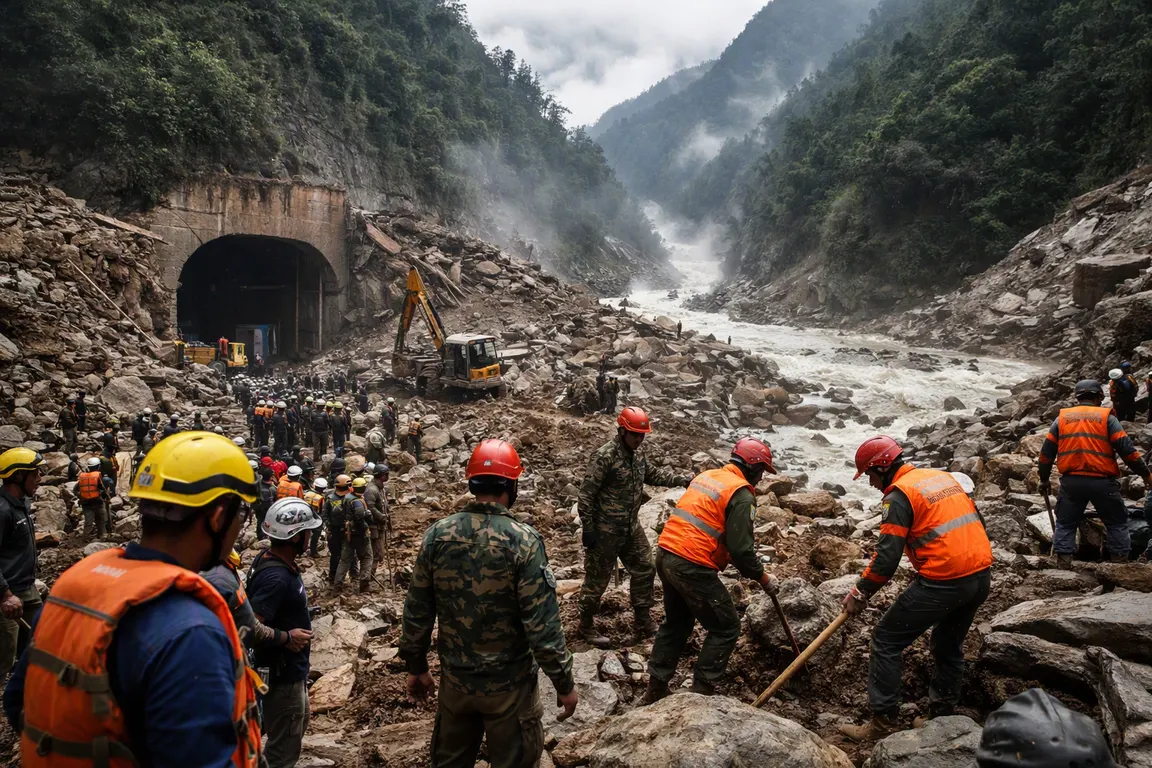
A glacial collapse in Nepal on Aug. 26 sent a torrent of water across the Nepal‑Tibet border, flooding valleys and destroying the Gyirong Port crossing. The surge ripped through several hydropower tunnels, trapping an estimated 900 workers. Rescue teams from Nepal, China and several other nations are still searching for the missing.
The disaster has claimed more than 1,000 lives and left nearly 4,500 people unaccounted for, including 583 foreign nationals in Nepal and 546 in China. Nepal’s disaster agency recorded 987 deaths; Chinese officials reported 16. Helicopters, army engineers and search dogs have rescued 11,814 people, but the hunt for the tunnel workers continues.
Twelve hydropower projects now list roughly 900 employees as missing. Officials estimate about 500 are buried in tunnels that collapsed under the flood’s force. Teams are drilling into the rubble, using ground‑penetrating radar and drones supplied by China to locate voids where workers may be trapped.
International aid has arrived in waves. China’s second shipment to Nepal, dispatched on Sep. 1, includes drones for aerial surveys, DNA‑testing kits to identify victims and portable water‑purification units. Australian authorities have confirmed five citizens safe and 38 still missing. A British national was among 119 people rescued on Tuesday, the rest Nepali.
The missing‑worker crisis threatens Nepal’s hydropower expansion, a sector slated to provide up to 60% of the country’s electricity by 2030. Prolonged tunnel collapses could delay commissioning, raise repair costs and deter investors wary of climate‑related risks.
Scientists link the flood to a glacial‑lake outburst, a phenomenon that is becoming more common as Himalayan glaciers melt faster. Experts warn that similar events could recur, urging a reassessment of site planning, early‑warning systems and emergency‑response capacity.
Coordinating the response has required close diplomatic cooperation. Nepali rescue units have worked side‑by‑side with Chinese military engineers, sharing satellite imagery and clearing debris from the border road network. Foreign embassies have dispatched liaison officers to assist their nationals, a task complicated by the remote, high‑altitude terrain.
The differing death‑toll figures—“more than 1,000” in some reports versus Nepal’s official 987—highlight the difficulty of real‑time data collection in a disaster zone. Families of the missing are receiving counseling and temporary shelter while the search enters its third week.
The next critical step is the arrival of additional rescue equipment from China and other partners, followed by a systematic effort to identify the dead and confirm the status of the remaining workers. The outcome will shape Nepal’s recovery and inform how Himalayan nations prepare for climate‑driven disasters.