

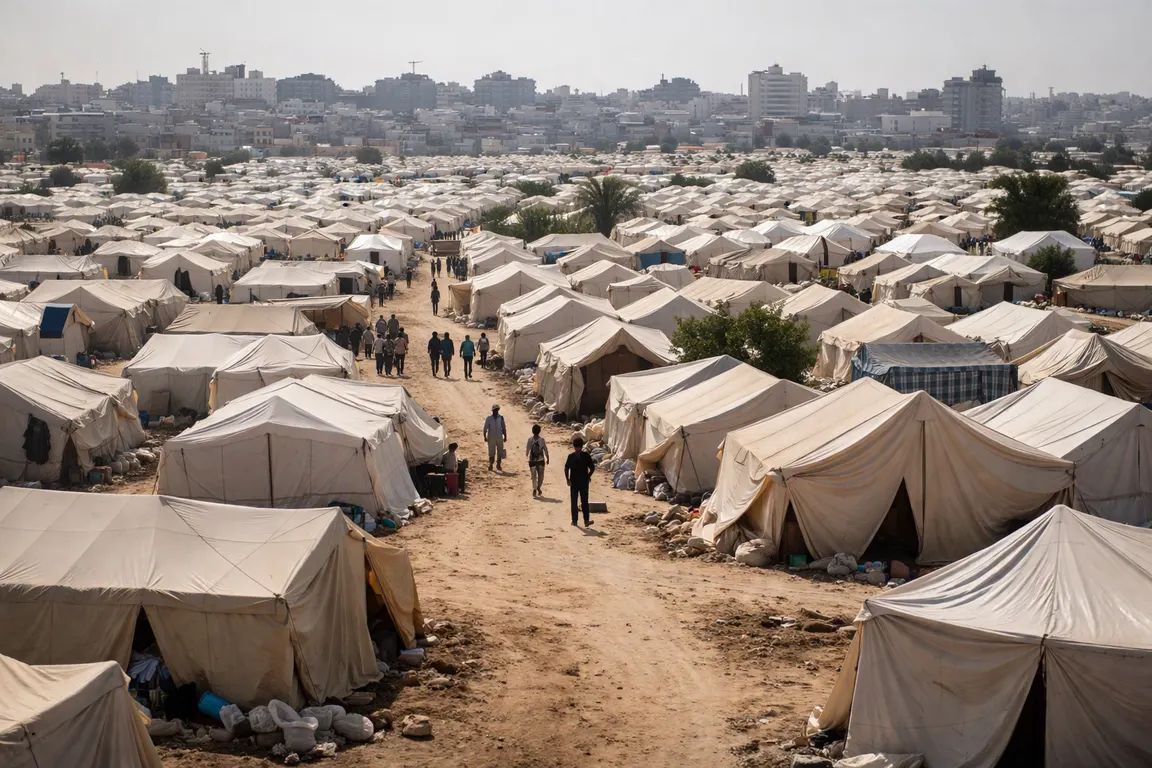
Three years after the October 7, 2023 escalation, Gaza tent cities dominate the skyline, replacing the concrete towers that once defined the enclave. The spread of these canvas shelters across the territory is the most visible sign of a three‑year humanitarian and infrastructural collapse.
Entire neighborhoods have been reduced to rubble, the historic Gaza City port lies in ruins, and core public services—electricity, water, health care and education—have largely ceased to function. Tens of thousands of civilians have been killed, according to Al Jazeera, while countless others remain injured or displaced. The loss of homes, schools and hospitals has forced families to seek refuge in makeshift settlements that now house an estimated 300,000 to 400,000 people, according to aid agencies.
The collapse of basic services has immediate public‑health consequences. Severed power lines leave residents dependent on limited generators and solar kits that cannot meet demand. Damaged water networks force families to rely on trucked supplies that are often insufficient and of uncertain quality. Health facilities, already strained by the volume of casualties, operate with intermittent electricity and medicine shortages, limiting their ability to treat both war‑related injuries and routine ailments. Schools remain closed or function in cramped, improvised spaces, jeopardizing the education of an entire generation.
Economically, Gaza’s traditional sectors have been crippled. The fishing fleet, once a vital source of food and income, cannot launch from the shattered port, and the few remaining boats face restricted access to offshore waters. Tourism has vanished as security concerns and infrastructure damage deter visitors. Trade through the Rafah crossing is sporadic, and most businesses have shut down permanently. The loss of these economic lifelines deepens unemployment and erodes household incomes, leaving families dependent on humanitarian assistance that arrives in irregular shipments.
Humanitarian actors report that aid reaches the tent cities but is hampered by security checks, damaged roads and limited storage capacity. Food parcels, medical kits and temporary shelters are distributed by UNRWA and NGOs, yet the scale of need far exceeds available supplies. Residents describe crowded conditions, inadequate sanitation and exposure to extreme temperatures as daily challenges. Women and the elderly are particularly vulnerable, caring for injured relatives while lacking reliable water and heating.
Reconstruction prospects remain uncertain. Neither Israeli nor Palestinian authorities have released official figures on total economic loss or a definitive rebuilding timeline. International donors have pledged funds, but progress is constrained by security guarantees, clearance of unexploded ordnance and the restoration of basic utilities. Experts warn that without a coordinated plan addressing both infrastructure and livelihoods, rebuilding a functional Gaza could take well beyond a decade.
Policymakers and aid organizations now face a pressing question: how to translate pledged resources into tangible, on‑the‑ground improvements while navigating the complex political and security environment that still defines the enclave. Until a clear framework for reconstruction and sustained humanitarian support is established, Gaza’s tent cities will continue to dominate its skyline, symbolizing a society whose essential services have yet to be restored.