

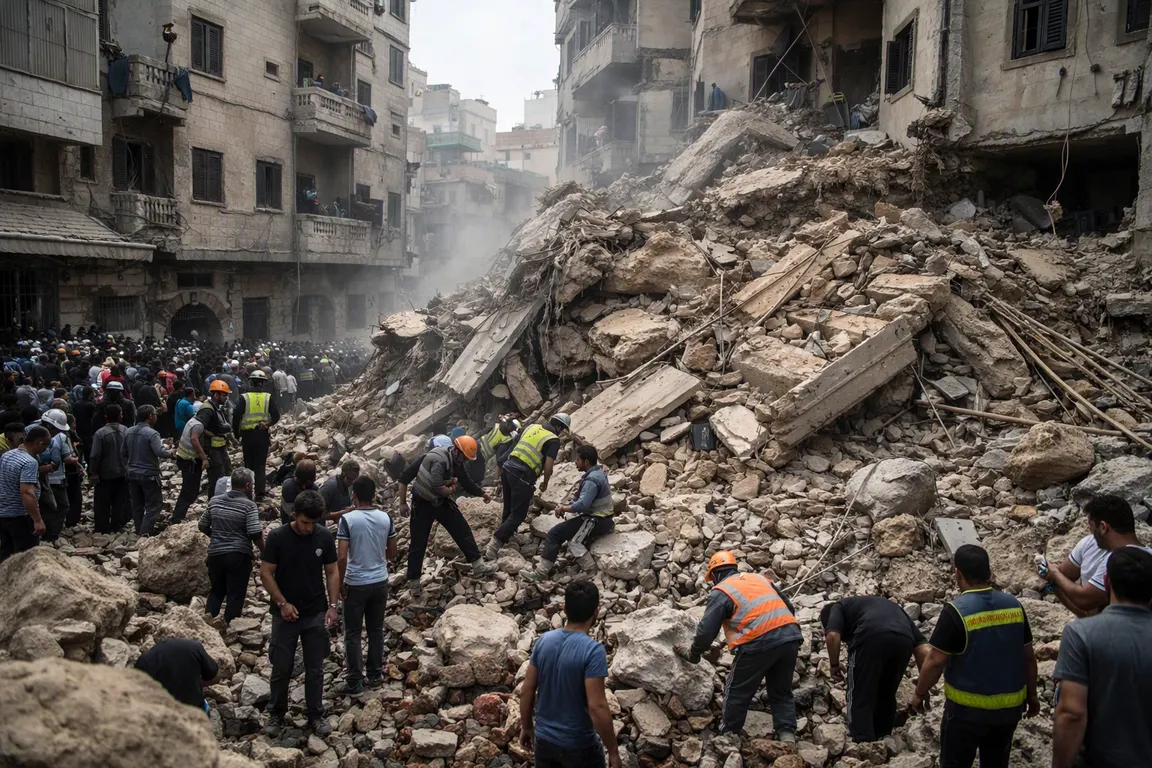
An apartment building in Gaza City's old quarter collapsed overnight, killing up to 20 people and leaving dozens missing. Early reports varied, with Al Jazeera initially citing at least ten deaths, later raising the figure to 16, while the BBC reported 20 fatalities. Between "dozens" and as many as 70 residents remain unaccounted for.
The block, already damaged by earlier strikes, forced ten families to stay inside a compromised unit. Weakened walls gave way, trapping occupants under concrete and brick. Rescue teams from the Gaza Ministry of Health and several international NGOs arrived within hours, but deep debris and ongoing hostilities limit continuous work.
The differing death tolls reflect the chaotic flow of information in the enclave. Al Jazeera’s first bulletin cited "at least 10 dead" based on statements from local health officials; a follow‑up raised the figure to 16 as more bodies were recovered. The BBC, quoting a different ministry spokesperson, reported 20 fatalities. No single authority has released an official count, and the Palestinian Authority has not confirmed a number. Estimates of the missing range from vague "dozens" used by multiple outlets to a specific figure of 70 cited by one Al Jazeera report.
Humanitarian agencies are urging the creation of protected rescue corridors. The United Nations Office for the Coordination of Humanitarian Affairs (OCHA) stressed that "uninterrupted access to the site is critical for saving lives." Without a ceasefire or guaranteed safe passage, rescue workers must navigate a volatile environment, risking further casualties.
The collapse underscores broader concerns for the roughly 1.5 million people still living in Gaza's densely packed neighborhoods. Many structures, already weakened by months of bombardment, lack the reinforcement needed to withstand additional stress. Experts warn that similar failures could occur elsewhere, compounding the displacement crisis.
Rescue operations continue around the clock, with teams using hand tools and small‑scale machinery to reach pockets of trapped survivors. Families of the missing gather at makeshift aid stations, hoping for news. The next steps hinge on whether combatants will agree to a temporary pause in fighting to allow a full‑scale search and the establishment of a humanitarian corridor.
The unanswered questions – the exact death toll, the precise number of missing, and the definitive cause of the collapse – highlight the difficulty of reporting from a battlefield where data are fragmented and verification is hazardous. Until a clear picture emerges, aid organizations must plan for the worst‑case scenario, allocating resources to both rescue efforts and the longer‑term need for safer shelter in Gaza’s war‑scarred urban landscape.