

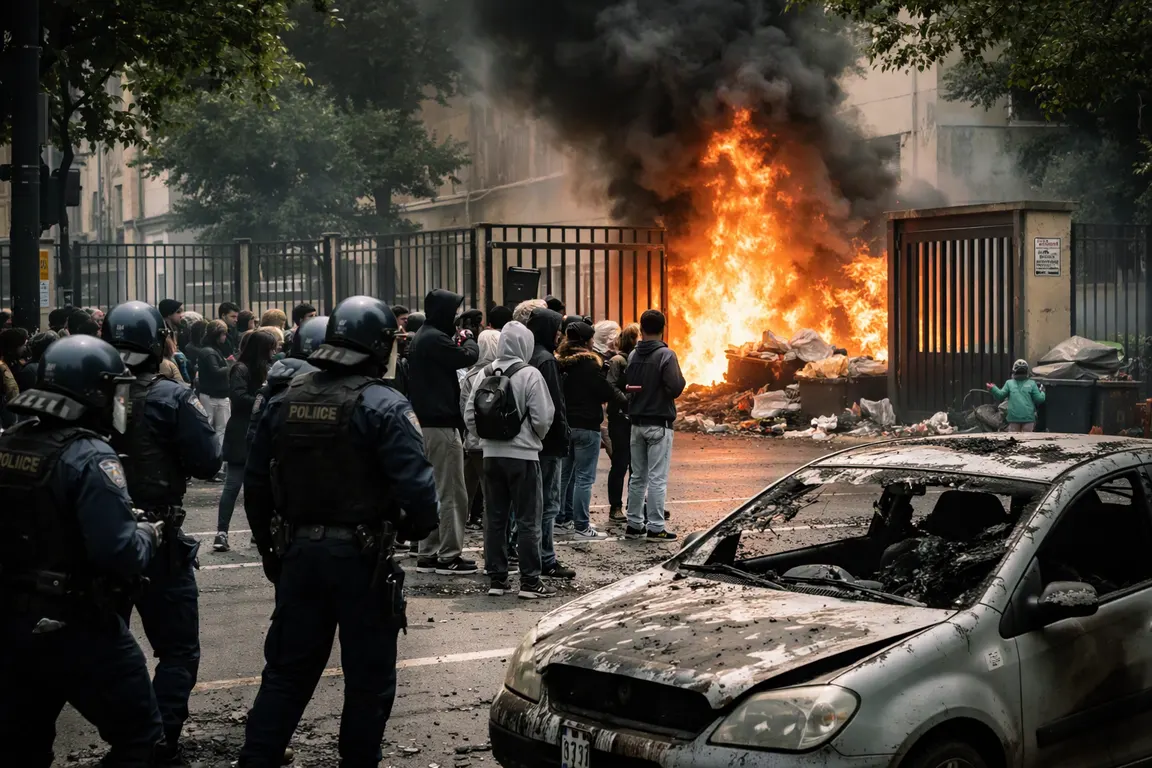
French police arrested more than 650 students on Oct. 1 after fires broke out at schools in Marseille and Nantes and a municipal bus was set ablaze in Marseille. The unrest, described as French school arson protests, prompted Prime Minister Sébastien Lecornu to call an emergency cabinet meeting and order ministers to cancel all official travel.
The violence follows a wave of student protests that began late last week in the Paris metro area over chronic teacher shortages, overcrowded classrooms and deteriorating facilities. By Oct. 1 the union L’Union Étudiante said blockades were in place at roughly 640 high schools and 30 universities nationwide, turning what started as peaceful rallies into a security emergency.
Hundreds of arrests were recorded on Oct. 1, according to AFP, and the Ministry of Education announced that affected schools will shift to online classes until safety can be restored. Emergency services in Marseille confirmed attacks on several buses; a fire‑truck incident reported by Remix News has not been verified. The disruption affects tens of thousands of students and teachers, and local businesses near blocked campuses report sudden closures and lost revenue.
Financial markets reacted quickly. Fidelity’s Mike Riddell noted a rise in France’s sovereign‑bond risk premium, and yields on French government debt have climbed since the crisis began. The fiscal pressure adds to President Emmanuel Macron’s already low 18 % approval rating, a factor that has boosted support for Marine Le Pen’s National Rally ahead of the 2027 presidential election.
Coverage of the unrest diverges. Mainstream outlets such as the BBC, Al Jazeera and the Guardian describe the rioters as students demanding better funding. Some alternative sites label the participants “migrant kids” and claim foreign‑backed agitation, but no independent verification of those allegations has emerged. Bloomberg cited unnamed intelligence sources linking the far‑left France Unbowed party to the protests, but offered no concrete evidence.
The government’s short‑term response focuses on restoring order and protecting pupils. Police have been deployed to secure campuses, and the education ministry’s online‑learning directive aims to keep classes running while repairs are made. Officials have pledged a review of education financing, though details remain vague.
The situation remains fluid. With bond markets watching closely and public confidence at historic lows, the next steps of the crisis cabinet—particularly any concrete budgetary commitments—will determine whether the protests subside or spark further unrest across France’s schools.