

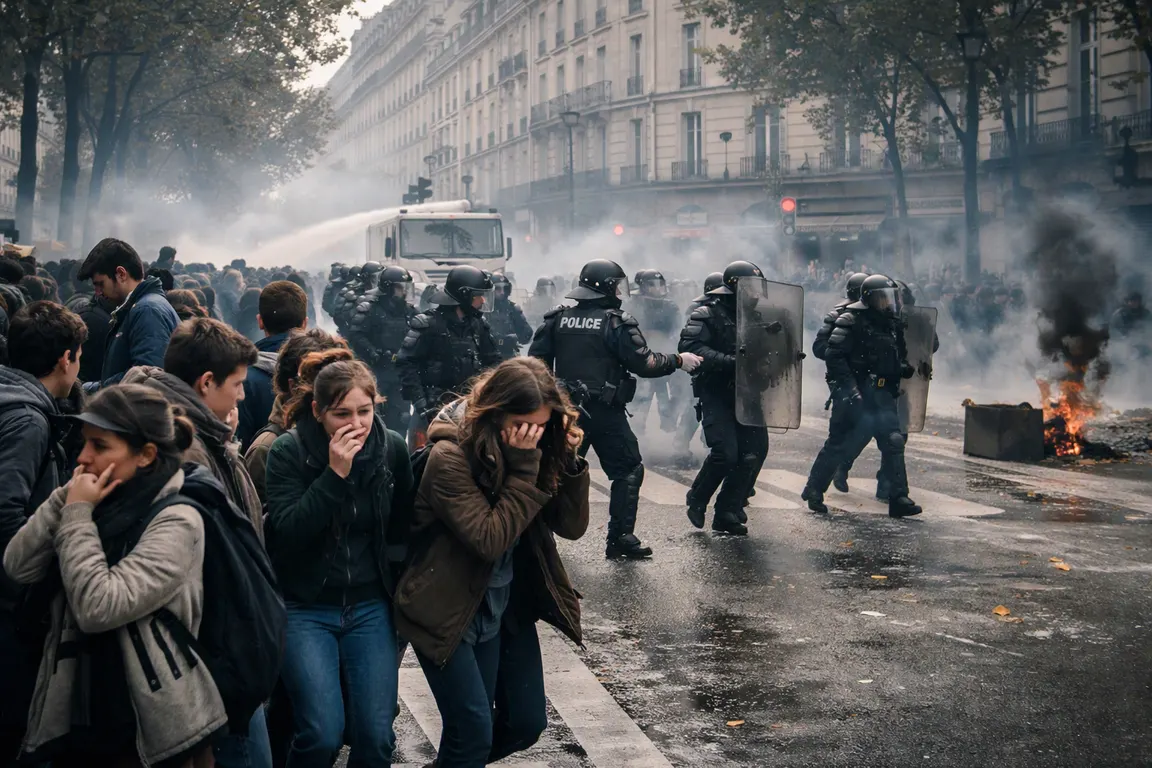
Police deployed tear gas, stun grenades and a water‑cannon on Tuesday as tens of thousands of students, teachers and union members gathered in Paris, Marseille, Nantes and Rennes. The demonstrations, which began as school‑yard protests against teacher shortages and crumbling facilities, escalated into street clashes that left hundreds injured and thousands arrested.
The interior ministry reported 86,000 participants nationwide, with up to 40,000 demonstrators in Paris alone. The scale of the mobilization, the severity of police tactics and the number of arrests have turned the protests into an immediate public‑safety flashpoint and a political headache for President Emmanuel Macron’s administration ahead of the 2027 presidential election.
The movement started in late September 2023 when students blocked high‑school entrances to demand more teachers and renovated classrooms. Early October saw isolated confrontations in which police used batons on small groups. On Monday, a stun‑grenade incident in Paris left a 15‑year‑old without a hand; another teenager suffered knocked‑out teeth after a grenade launcher was fired at a crowd. By Tuesday the unrest had spread to dozens of cities, prompting the ministry to record the 86,000‑person turnout.
Since the protests began, 215 students and 715 police officers have been reported injured. Police also used water‑cannon, sting‑ball grenades and batons in multiple locations. Authorities say more than 5,000 people—87 % of them minors—have been arrested. The education ministry confirmed that 24 schools were damaged or set on fire during the clashes.
Teachers’ unions, including the CGT, have joined the demonstrations, calling for additional staff, facility upgrades and realistic timetables. Rights groups and Amnesty International condemned the police response as disproportionate. The government opened ten internal investigations into alleged police brutality, and Prime Minister Sébastien Lecornu’s office urged “peaceful” gatherings while drafting a bill that would require perpetrators of public‑property damage to cover repair costs.
Political attribution remains contested. Government spokespeople suggested that the France Unbowed (LFI) party was backing the unrest, a charge LFI leader Jean‑Luc Mélenchon rejected, describing the actions as a grassroots student movement. The dispute reflects broader electoral dynamics, with far‑right leader Marine Le Pen polling strongly despite a graft conviction, and the education crisis emerging as a potential issue for voters in the run‑up to the 2027 race.
The disruptions have immediate consequences for students. Blocked entrances and damaged facilities have halted classes for thousands, jeopardising exam preparation and future earnings. Municipal budgets now face repair costs for the 24 damaged schools and related infrastructure; the proposed legislation seeks to shift those costs onto those responsible. Police deployments also strain law‑enforcement resources and risk affecting tourism and local commerce in cities with heavy protest activity.
The government’s next steps include completing the internal police investigations and presenting the repair‑cost bill to parliament. Education ministers have pledged to accelerate teacher recruitment and allocate funds for school renovations, but unions warn that without sustained financing the cycle of protests could resume. As the election calendar advances, how the Macron administration handles the school crisis may become a decisive factor for voters assessing its ability to safeguard public safety while addressing long‑standing educational deficits.