

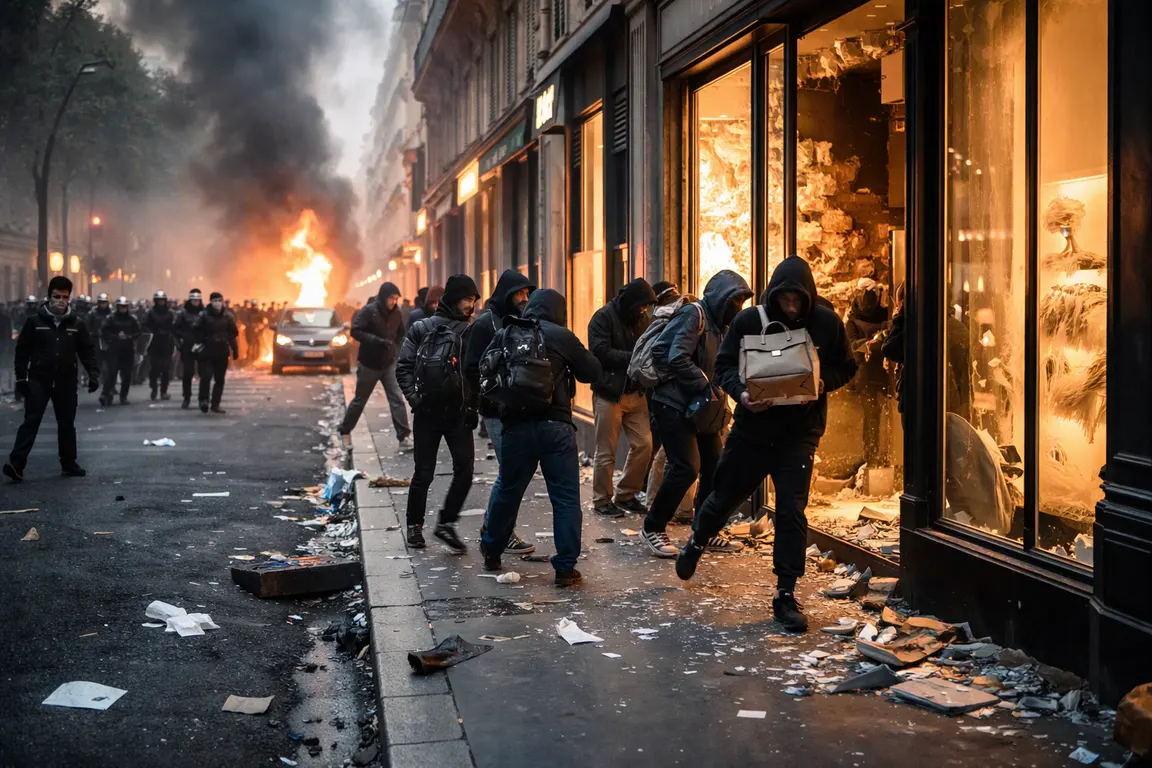
Demonstrations in Paris, Marseille, Lyon and Limoges escalated into French city riots on Saturday, with municipal buildings set on fire, police vehicles attacked and luxury shops looted. President Emmanuel Macron condemned the unrest, called for "calm and order" and announced extra police resources, but stopped short of declaring a state of emergency or imposing a curfew.
More than 1,200 people have been arrested nationwide, according to Prime Minister Sébastien Lécornu, who said the government will prosecute those responsible. Interior Minister Laurent Nûnez estimated that roughly 550,000 people took part in the protests that began in early May over teacher shortages and deteriorating school conditions; the CGT union put its own estimate at up to 800,000.
The unrest began as largely peaceful demonstrations in the northern suburbs of Paris and spread to other cities over the following weeks. On Saturday, fringe groups in several locations escalated the situation, setting fire to city halls, smashing police cars and breaking into high‑end boutiques. The police watchdog has opened investigations into at least two dozen complaints, including an incident in which a teenager lost a hand after a stun grenade was used. Officials describe those cases as isolated, while unions argue they reveal systemic strain on law‑enforcement.
Economic fallout is already evident. Luxury retailers in Paris and Marseille reported significant inventory losses, and supermarkets near the affected municipal buildings temporarily closed. Local merchants fear a longer‑term decline in foot traffic, and tourism officials warn that the perception of instability could deter visitors during the peak travel season.
Security officials said they are reviewing the deployment of additional police units and may tighten patrols in high‑risk neighborhoods, but have not invoked emergency powers. Macron’s decision to avoid a curfew reflects concerns about civil liberties and the political cost of sweeping restrictions just months before the 2027 presidential election.
Analysts note that the riots underscore broader cost‑of‑living discontent fueling the protests. While the government attributes the escalation to "ultra‑left" groups and criminal elements, many participants have voiced frustration over rising prices, stagnant wages and declining public services.
The government now faces a choice: seek temporary emergency powers or rely on existing law‑enforcement tools to restore order. The decision will shape public confidence in the state's ability to protect citizens and could influence voter sentiment as the 2027 presidential race approaches.