

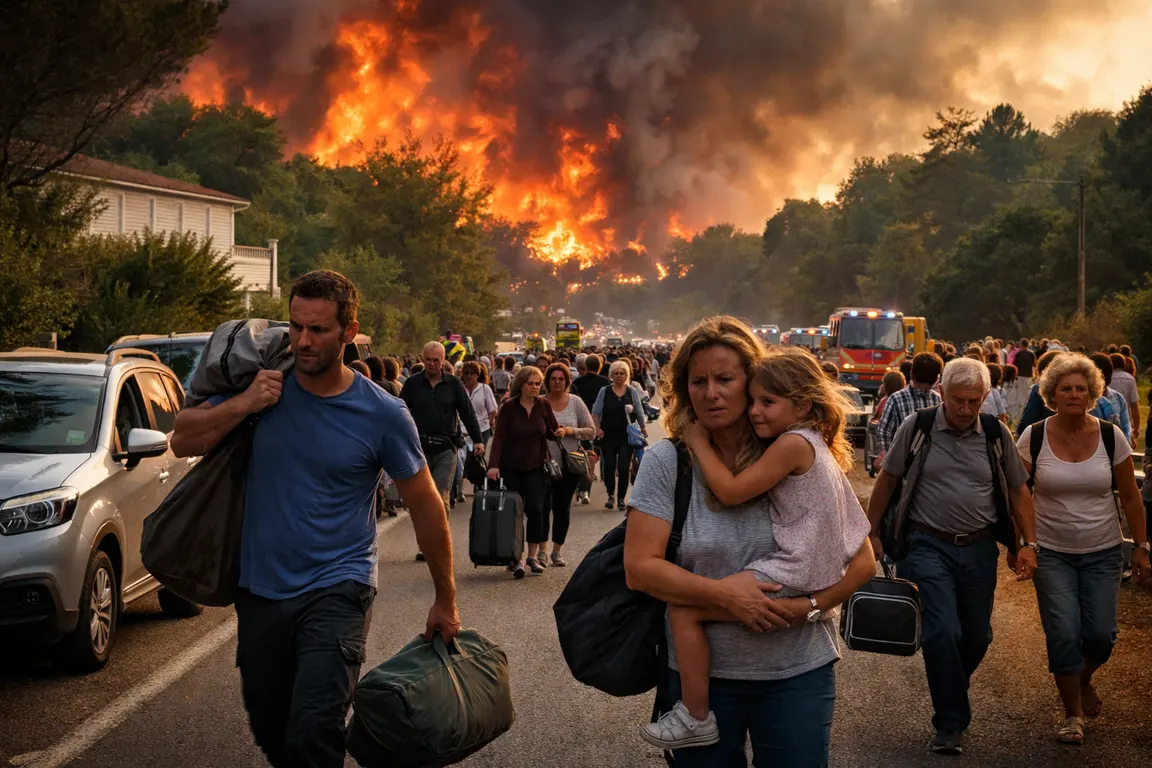
Mass evacuations are underway in southern Europe as wildfires rage across France and Spain, forcing over 250,000 people to flee their homes. The French government has deployed a massive A400M aircraft to drop flame retardants on the wildfires, with the Gironde region in southwestern France being severely affected.
The city of Bordeaux is under threat, and 197,000 people have been evacuated from France, including tens of thousands from the Bordeaux region. In Spain, 70,000 people were evacuated from central Spain, and wildfires have burned 130,000 hectares of forest this year, up from an annual average of 100,000 hectares over the past decade.
Several European countries, including Italy, Greece, and Portugal, are providing assistance to France and Spain to combat the wildfires. The international community is coming together to provide support and assistance to those affected, with many people forced to flee their homes and businesses, and concerns about the long-term effects on the environment and the economy.
As the situation unfolds, the focus will be on supporting those affected and preventing such disasters in the future. The economic and environmental consequences of the wildfires are still being assessed, but it is clear that the impact will be significant. The French and Spanish governments will need to work together with the international community to develop strategies for mitigating the effects of climate-related disasters and supporting those affected.
The scale of the disaster highlights the urgent need for effective disaster response and climate change mitigation. The international community's response to the wildfires will be crucial in the coming days and weeks, as those affected begin to rebuild and recover. With the situation still unfolding, one thing is certain: the impact of these wildfires will be felt for a long time to come.