

France deploys 70,000 police for cost‑of‑living protests
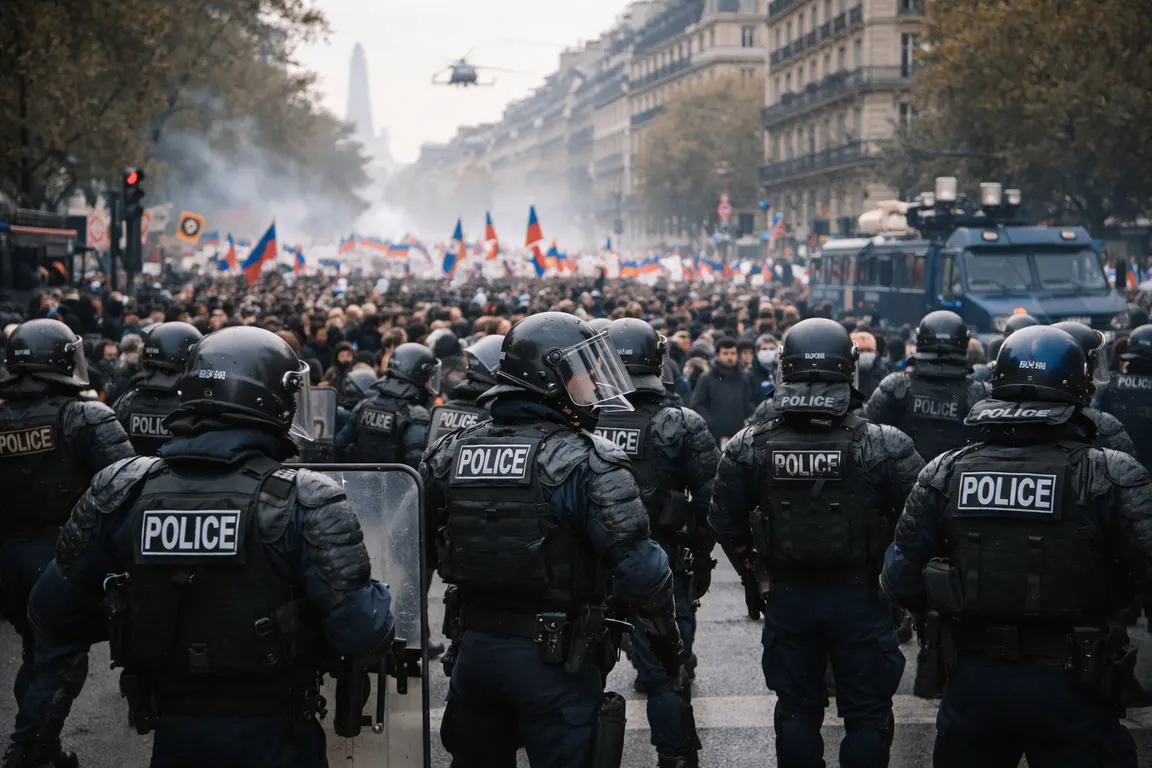
Paris will see an unprecedented peacetime police mobilization of roughly 70,000 officers on Saturday as part of a France police deployment protests effort. Interior Minister Laurent Nuñez announced the deployment on Friday, adding that elite counter‑terrorism units, helicopters, armored vehicles and water‑cannon teams will be on standby.
The security operation directly affects public safety, the retail and tourism economy, and the cultural sector. The Louvre, Musée d’Orsay, Musée Picasso and the Grand Palais have been ordered closed for visitor safety, and Art Basel Paris cancelled its weekend programme after offering a single public day on Friday.
Last weekend’s protests, sparked by soaring living costs, escalated into fires, building occupations, shop‑window smashings and looting – the most violent unrest in years, according to The Guardian and the Independent. In response, the government warned of “ultra‑left” calls on social media urging further violence and pledged a “very firm” arrest approach with legal consequences for anyone caught in violent acts. Businesses in Paris, Lyon and Marseille have boarded up windows and reinforced storefronts in anticipation of possible damage.
The force includes regular police, the gendarmerie, the RAID anti‑terrorist unit, the GIGN tactical team, police helicopters, dozens of armored vehicles and water‑cannon teams positioned near likely flashpoints. Mobile command centres will coordinate arrests and traffic management.
Protesters are expected to demand higher wages, lower taxes and more affordable housing – themes that have driven the movement since early May. Student groups, CGT union members and “yellow‑vest” activists are slated to march in major cities. Authorities have said any escalation will be met with immediate detention and charges that could include rioting, property damage and incitement.
The museum closures hit the tourism sector hard. The Louvre alone draws over eight million visitors annually; its shutdown for a day translates into lost ticket revenue, disrupted itineraries and potential refunds for international travelers. Nearby hotels and restaurants anticipate a dip in occupancy, while the art‑fair cancellation removes a key platform for galleries and collectors, compounding the strain on the cultural economy.
For ordinary citizens, the heightened police presence may mean road closures, checkpoints and the possibility of curfews in affected districts. Residents are advised to avoid protest routes and to keep identification handy in case of checks. French law allows extended detention of individuals suspected of participating in violent unrest, and courts are prepared to impose fines and short‑term imprisonment.
The operation will be reviewed after Saturday’s demonstrations. Police will report any incidents and assess whether the pre‑emptive deployment succeeded in preventing further violence. Observers will watch whether the heavy security posture deters unrest or merely postpones it, leaving the broader debate over France’s cost‑of‑living crisis unresolved.