

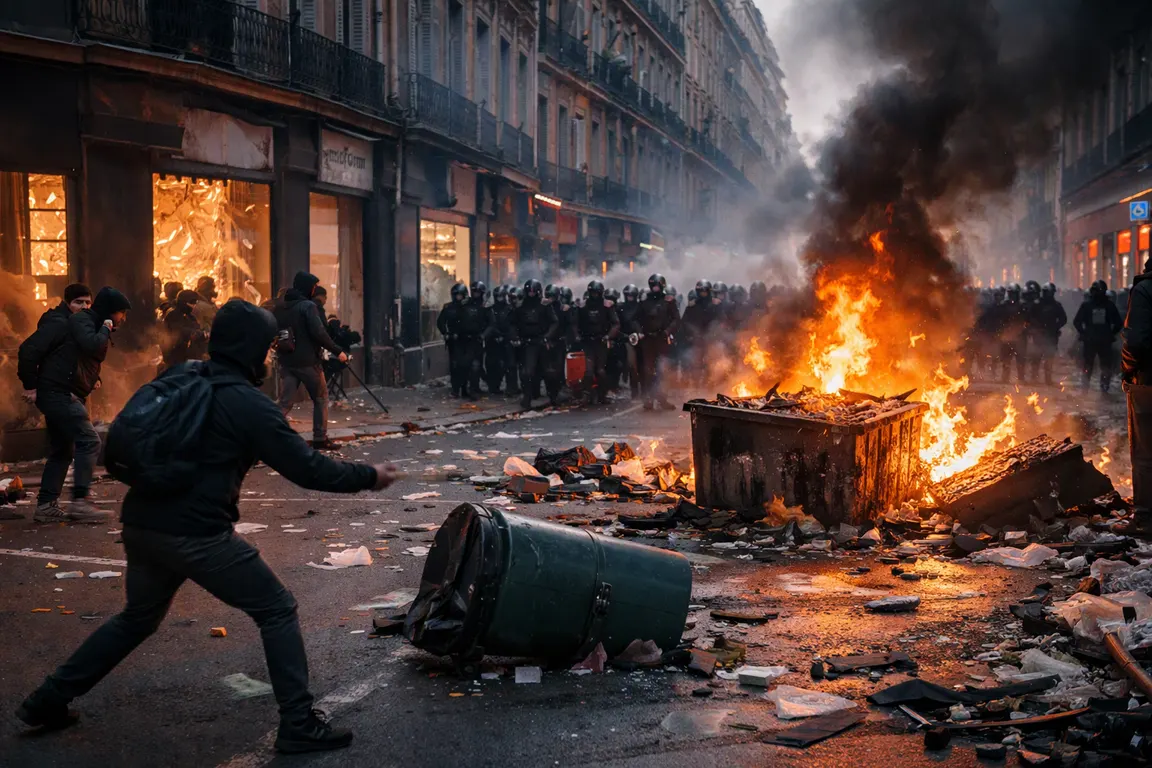
France’s interior ministry said more than 1,800 people were arrested after the France cost of living protests erupted into riots that burned municipal buildings and looted shops on Oct. 17‑18. The unrest spread from Paris to Marseille, Lyon, Bordeaux and several smaller cities, prompting President Emmanuel Macron to call an emergency cabinet meeting and address the nation on television.
Authorities estimate damage in the hundreds of millions of euros. Over 500 police officers, gendarmes and firefighters were injured, and Paris police reported one protester died of a heart attack.
The protests began peacefully on Oct. 17, with organizers estimating up to 800,000 participants nationwide; official counts placed the crowd at about 550,000. Late that afternoon, masked groups set fires, smashed bus stops and looted retail premises in multiple cities. In Limoges, a deliberately set blaze caused the roof of the 19th‑century city hall to collapse, injuring dozens of people in the ensuing clashes.
Police operations on the morning of Oct. 18 led to 1,800 arrests, including 855 in the Paris region, according to the Manila Times. Interior Minister Laurent Nuñez reiterated the constitutional “right to protest” while condemning the collective violence in a statement posted on X. He did not name any groups, noting that investigations are ongoing.
Business owners described extensive looting in Paris, Marseille, Lyon and Bordeaux. The mayor of Paris announced an emergency unit to assess damage to commercial districts and coordinate insurance claims. Retailers reported inventory losses and structural damage that could take weeks to repair, adding pressure to an economy already strained by high inflation and stagnant wages.
More than 500 law‑enforcement and emergency‑service personnel were treated for injuries ranging from minor bruises to serious wounds, a burden that could affect policing and fire‑service readiness in the weeks ahead.
Macron’s evening address called for calm, pledged additional resources to restore damaged public buildings and promised a review of social policies that have fueled the unrest. The emergency cabinet meeting is expected to produce concrete measures, though details remain pending.
The riots have sparked a broader political debate. Officials have pointed to “radical far‑left groups” and opportunistic looters, while opposition parties and some media outlets have suggested rival political factions may be behind the violence. International commentators have offered unverified theories, underscoring the difficulty of assigning responsibility in a chaotic environment.
For residents, the immediate impact is palpable: disrupted public services, damaged municipal facilities and a heightened sense of insecurity. Many citizens reported avoiding city centres, and some shop owners have temporarily closed their premises to assess losses.
The next steps will hinge on the government’s emergency measures and the outcomes of ongoing investigations. Whether the unrest will translate into lasting policy shifts or influence the upcoming 2027 presidential campaign remains uncertain, but the scale of damage and injuries suggests France faces a pressing public‑safety and economic challenge.