

Flydubai pilot vetting raises safety concerns after attack
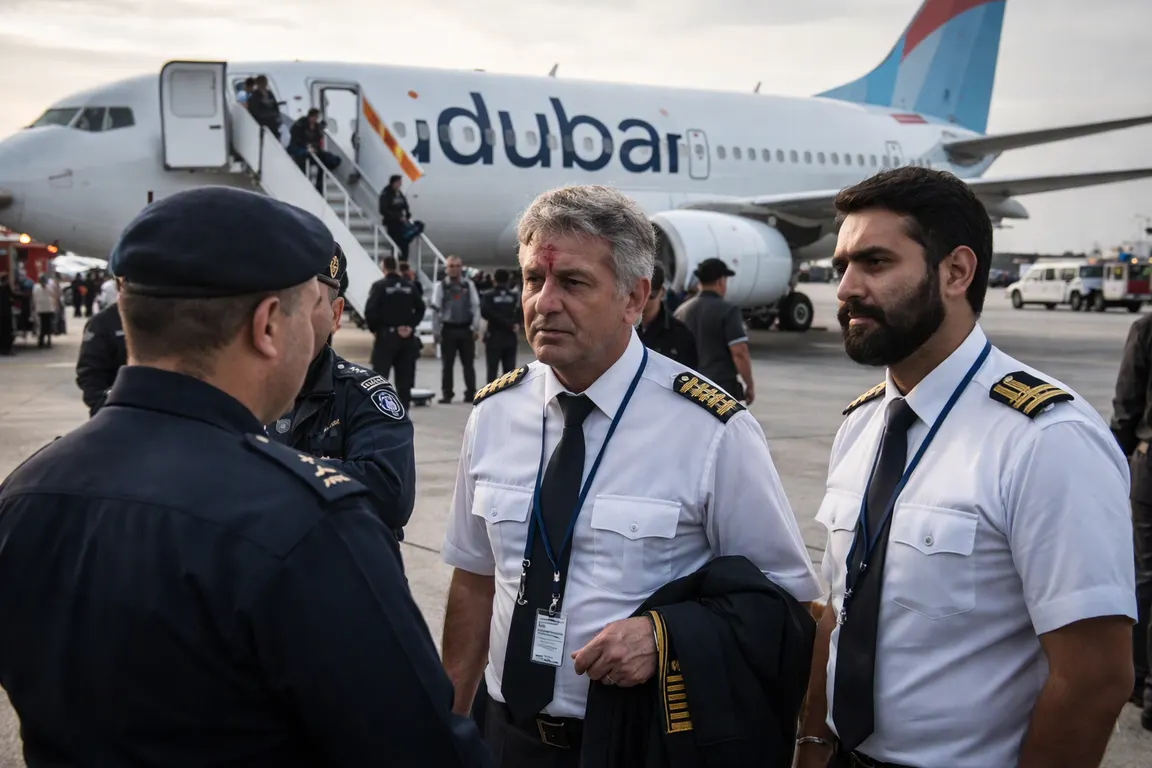
A co‑pilot who had been barred from flying in Oman for alleged extremist views boarded a Flydubai Boeing 737 bound for Tel Aviv on Oct. 27, attacked the captain and nearly caused a crash that endangered 182 passengers and crew. The incident has put Flydubai pilot vetting practices under intense scrutiny.
The attacker, an Omani national, was prohibited from operating aircraft by Omani authorities after the government flagged him for radicalisation, a ban first reported by the Wall Street Journal. Flydubai hired him later that month. During the flight the co‑pilot tried to stab Captain Smit Machchhar. The aircraft descended to about 15,000 ft before the captain regained control and landed safely in Tabuk, Saudi Arabia. Passengers restrained the assailant in the cabin; no weapon was recovered.
UAE authorities immediately suspended all commercial flights to Israel. Repatriation flights operated by Arkia, Israir and El Al began on Oct. 28 to bring stranded travelers home. Israeli Prime Minister Benjamin Netanyahu called the incident evidence of "Islamist radicalisation," while former U.S. President Donald Trump suggested a possible Iranian link, though neither claim was backed by publicly available evidence.
The episode highlights gaps in the regional pilot‑screening framework. Oman’s ban was based on undisclosed criteria, and Flydubai’s hiring process has not been fully disclosed. Sources say the airline may not have repeated background checks after the Omani restriction, raising questions about coordination of security information between Gulf states.
A joint investigation led by the UAE, with Israeli officials participating, is underway in Saudi Arabia, where the attacker is being held. Preliminary findings have not identified a direct link to any foreign intelligence service. The lack of concrete evidence underscores the difficulty of separating individual radicalisation from broader geopolitical narratives.
Survivors describe a terrifying plunge and a frantic effort to subdue the attacker, leaving many with psychological trauma. The incident also has an economic impact: the suspension of UAE‑Israel flights disrupts a corridor projected to generate millions of dollars in tourism, business travel and cargo each year. Regional airlines may face tighter pilot‑screening regulations, potentially raising hiring costs and causing schedule disruptions.
Regulators are responding quickly. The UAE’s General Civil Aviation Authority announced a review of all pilot vetting procedures and pledged tighter data‑sharing with neighbouring states. Oman has not yet clarified whether its ban will be expanded or how it will coordinate with other carriers. Saudi Arabia’s aviation regulator said it will audit airline hiring practices for flights that transit its airspace.
The Flydubai case serves as a live‑fire test of Gulf aviation security. As airlines seek to normalise routes between the Gulf and Israel, the incident forces policymakers to balance commercial ambitions with the imperative to protect passengers. The next steps will hinge on the investigation’s final report and any regulatory changes it prompts. Until then, travelers and industry observers will watch closely to see whether the region’s emerging air network can restore confidence after a near‑disaster that began with a single, overlooked security lapse.